flower
DecorativeAfrican Violet
Saintpaulia
Considered non-toxic to cats and dogs (source: ASPCA).
Some direct sun — an east or west window, or a few hours of direct light.
Keep evenly moist — water when the top inch of soil is dry.
Needs a little consistency, but nothing fancy.
The African violet is a compact, pet-safe flowering plant that can bloom much of the year on a bright windowsill. It is a little fussy about water on its leaves.
About African Violet
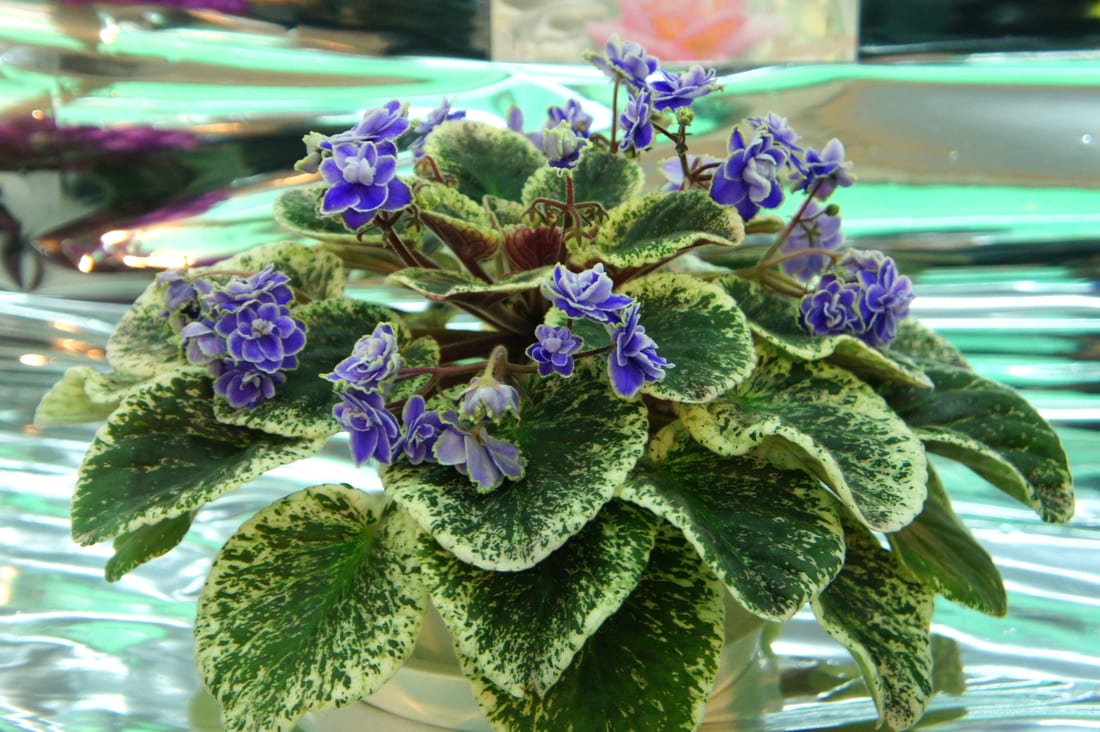
The African violet (Saintpaulia) is a small flowering plant that can bloom for much of the year on a windowsill. As the name says, it comes from the cloud forests of East Africa, where it grows in dappled light and steady warmth. It forms a low rosette of fuzzy leaves only a hand's width across, with clusters of small flowers held above. Its compact size, year-round flowers, and pet-safe status make it a tidy, cheerful plant for a bright spot in a rental.
The one habit to learn is how it likes to be watered. Water from below or at the soil line and keep the fuzzy leaves dry, because cold water sitting on them causes pale spots. Give it bright indirect light to keep the flowers coming, and avoid cold drafts. Once you've got the watering routine down, it's a steady, long-flowering plant rather than a difficult one.
What it’s like to grow
A little particular but not hard once you adjust your watering. Ring-shaped pale spots on the leaves come from cold water splashing them, so water at the base instead. A shortage of flowers means it wants more light. Good for anyone who enjoys a small flowering plant on a bright sill and doesn't mind the bottom-watering habit. It is non-toxic to cats and dogs, so it's a safe choice for homes with pets nearby.
What to expect
It asks for a little consistency, but nothing fancy. No sunny window? It also does fine under a clip-on grow light.
See what you’ll need to get started ↓Grow it alongside
Houseplants that want the same light, water and humidity are happy sharing a spot. See what thrives with African Violet →
Tips
- Water from below or at the soil line; cold water on the leaves causes spotting.
- Give it bright indirect light to keep it blooming.
- Keep the fuzzy leaves dry and avoid cold drafts.
Common problems
- Ring-shaped spots on leaves from cold water splashes.
- Few or no flowers in too little light.
Common questions
Is African Violet toxic to cats and dogs?
African Violet is non-toxic to cats and dogs, which makes it a safe pick if you have pets. Source: ASPCA.
How much light does African Violet need?
African Violet does best in medium, indirect light: near an east or west window, or a little back from a bright one. Direct midday sun can scorch it.
How often should I water African Violet?
Water African Violet when the top inch of soil feels dry, then let it drain. Aim for evenly moist, not soggy.
What temperature does African Violet need?
African Violet is happiest around 18–24 °C. It tolerates brief dips to about 13 °C, but cold drafts and sudden chills set it back.
Can I grow African Violet without a sunny window?
Yes. African Violet does well under an affordable clip-on grow light, so a bright window isn't essential.
How big does African Violet get?
A low rosette of fuzzy leaves ~10–15 cm across, with clusters of small flowers above.
How do I propagate African Violet?
Root a healthy leaf with its stalk in water or moist mix until plantlets form.
What pests affect African Violet?
Watch for mealybugs, thrips, spider mites and fungus gnats. Check new growth and the undersides of leaves often, and treat early with a rinse or insecticidal soap before they spread.
Is African Violet easy to grow?
African Violet is moderately easy. It asks for some consistency with light and water, but nothing advanced.
Gear for African Violet
Gear suggestions to get you started — general picks, not paid placements.
Pet-toxicity from the ASPCA. Care details are general guidance, not professional or veterinary advice. Photo: Mk2010, CC BY-SA 3.0, via Wikimedia Commons (CC-BY-SA). Care info last updated 2026-06-02.