foliage
DecorativeAir Plant
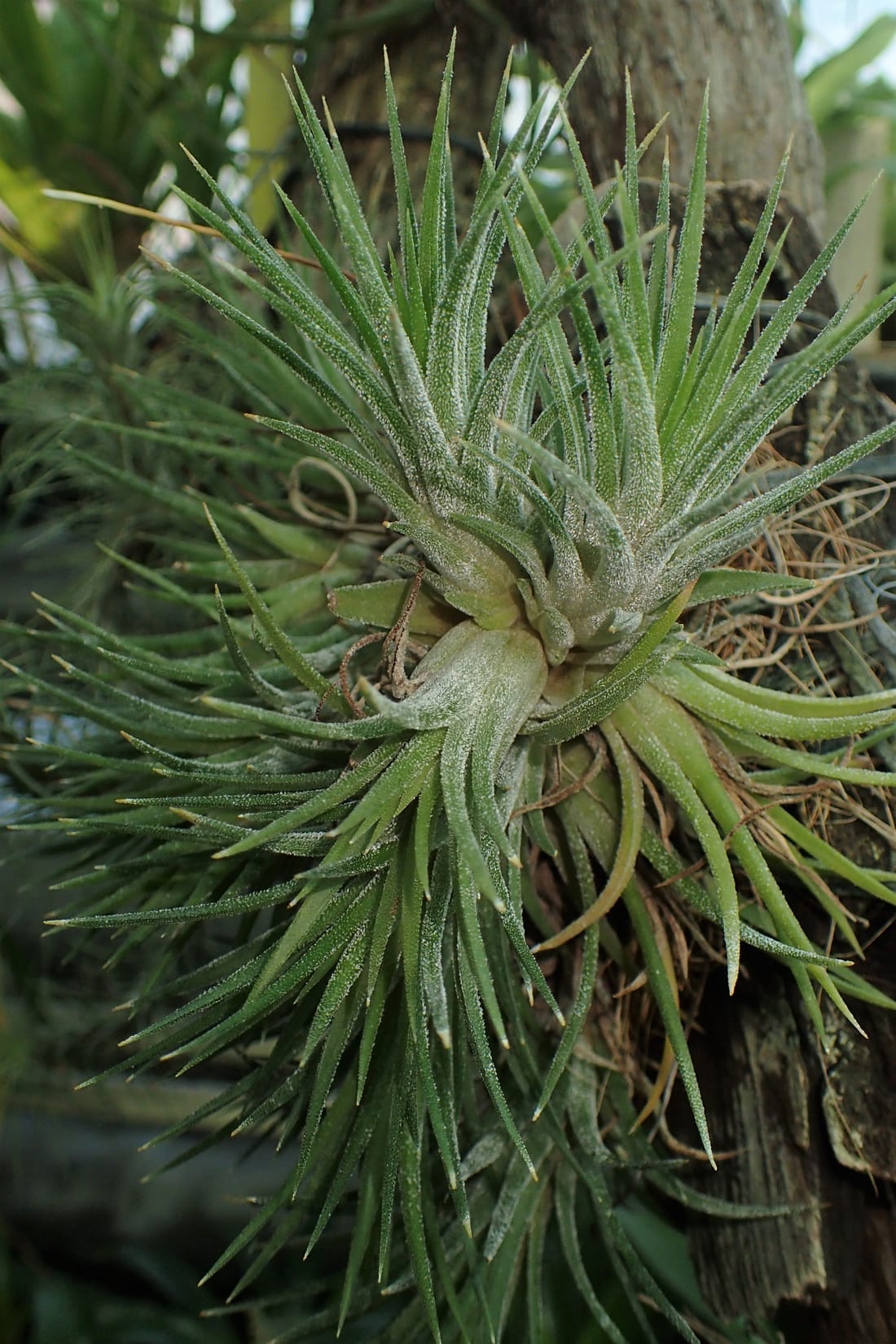
Tillandsia ionantha
Considered non-toxic to cats and dogs (source: ASPCA (not specifically listed; treated pet-safe)).
A sunny south-facing window with 6+ hours, or a grow light.
Keep evenly moist — water when the top inch of soil is dry.
Needs a little consistency, but nothing fancy.
Air plants are small rootless bromeliads that grow without soil, absorbing water and nutrients through their leaves. They are generally pet-safe and need no pot, but they do need regular soaking, not just misting.
About Air Plant
Air plants (Tillandsia ionantha) are small, rootless bromeliads from Central America that grow without soil, drawing water and nutrients in through their silvery leaves. Each rosette is only 5 to 10 centimetres and needs no pot at all, so it can sit in a dish or be mounted on almost anything. For a renter, that no-soil, no-pot quality makes it about the most flexible plant going.
The catch is watering: it needs a real soak rather than a quick misting. Soak it in water for 20 to 30 minutes about weekly, then shake it out and dry it fully upside down so no water sits in the centre. Give it bright indirect light, since with no roots, light and the soak are everything. The species isn't specifically listed by the ASPCA and is treated as pet-safe.
What it’s like to grow
Air plants are moderately fussy in an unusual way, because all the care happens through the leaves. Rot in the centre is the classic mistake, caused by water left sitting after a soak, so drying it upside down matters as much as the soak itself. Dry, curling, crispy tips mean it isn't getting enough water and needs longer or more frequent soaking. Worth it if you'll commit to a weekly routine. Not specifically listed by the ASPCA and treated as pet-safe.
What to expect
It asks for a little consistency, but nothing fancy. No sunny window? It also does fine under a clip-on grow light.
See what you’ll need to get started ↓Grow it alongside
Houseplants that want the same light, water and humidity are happy sharing a spot. See what thrives with Air Plant →
Tips
- Soak it in water for 20–30 minutes about weekly, then shake it out and dry it fully upside down.
- Give it bright indirect light; with no roots, light and the soak are everything.
- Don’t pot it in soil; mount it or sit it in a dish with airflow around it.
Common problems
- Rot in the centre from water left sitting after soaking.
- Dry, curling, crispy leaf tips from too little water.
Common questions
Is Air Plant toxic to cats and dogs?
Air Plant is non-toxic to cats and dogs, which makes it a safe pick if you have pets. Source: ASPCA (not specifically listed; treated pet-safe).
How much light does Air Plant need?
Air Plant wants bright light — a south-facing window with six or more hours of sun, or a grow light to make up for it.
How often should I water Air Plant?
Water Air Plant when the top inch of soil feels dry, then let it drain. Aim for evenly moist, not soggy.
What temperature does Air Plant need?
Air Plant is happiest around 16–27 °C. It tolerates brief dips to about 7 °C, but cold drafts and sudden chills set it back.
Can I grow Air Plant without a sunny window?
Yes. Air Plant does well under an affordable clip-on grow light, so a bright window isn't essential.
How big does Air Plant get?
A small soilless rosette of silvery leaves, 5–10 cm across, that blushes red and flowers when mature.
How do I propagate Air Plant?
Separate the pups (offsets) that form at the base after the parent flowers.
What pests affect Air Plant?
Watch for mealybugs and scale. Check new growth and the undersides of leaves often, and treat early with a rinse or insecticidal soap before they spread.
Is Air Plant easy to grow?
Air Plant is moderately easy. It asks for some consistency with light and water, but nothing advanced.
Gear for Air Plant
Gear suggestions to get you started — general picks, not paid placements.
Pet-toxicity from the ASPCA. Care details are general guidance, not professional or veterinary advice. Photo: Krzysztof Ziarnek, Kenraiz, CC BY-SA 4.0, via Wikimedia Commons (CC-BY-SA). Care info last updated 2026-06-02.