succulent
DecorativeAloe Vera
Aloe vera
Toxic to cats and dogs — keep it out of reach (source: ASPCA).
A sunny south-facing window with 6+ hours, or a grow light.
Let the soil dry out between waterings; it dislikes staying wet.
Forgiving and beginner-friendly.
Aloe vera is an easy, drought-tolerant succulent that wants bright light and very little water. Note it is toxic to cats and dogs if chewed, despite the gel’s use on human skin.
About Aloe Vera
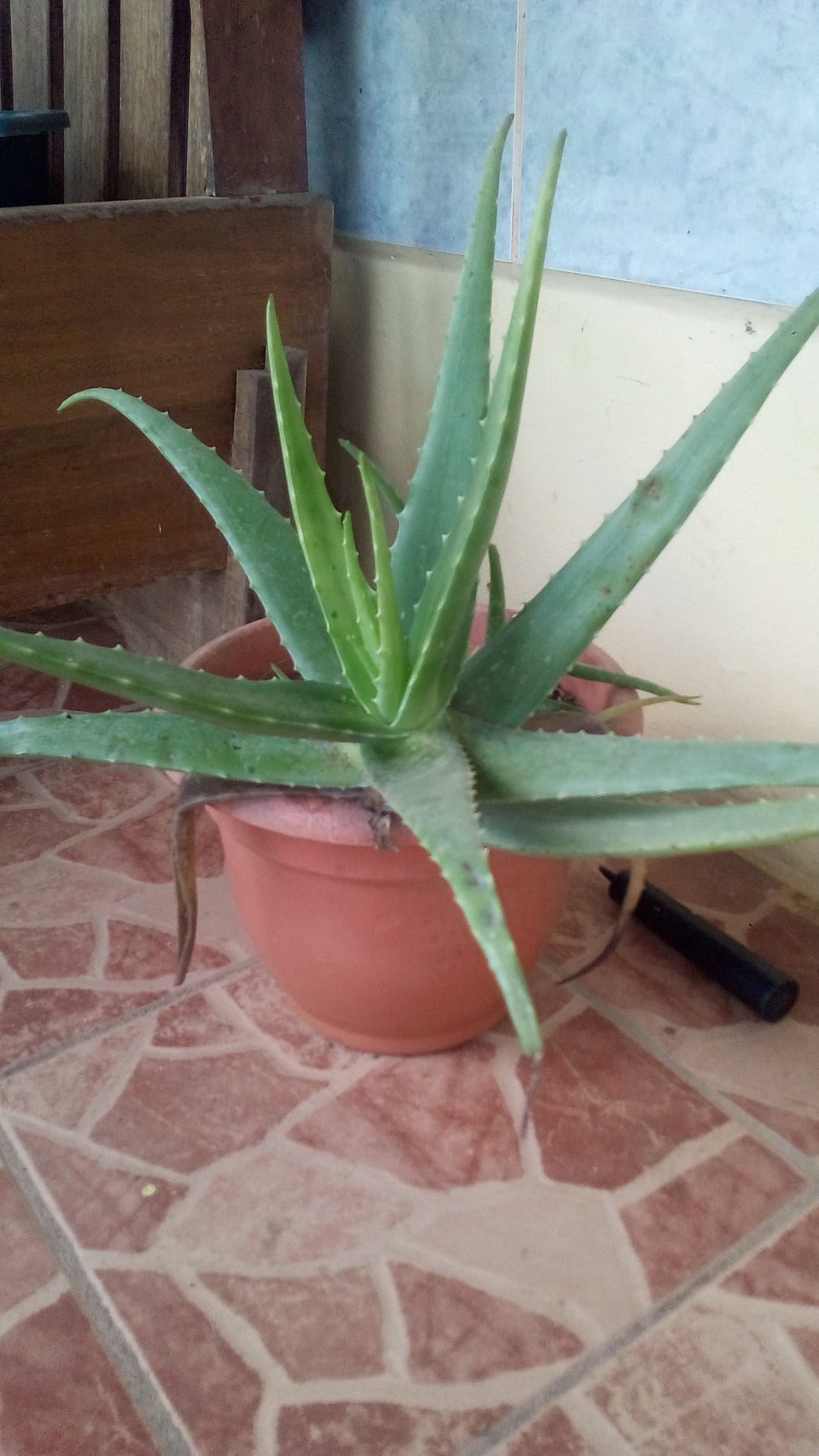
Aloe vera is a thick-leaved succulent grown indoors for its sculptural rosette of spiky, fleshy leaves. Its exact wild origin is uncertain, but it belongs to the dry regions of the Arabian Peninsula and has been cultivated for thousands of years. Like other succulents it stores water in its leaves and wants bright light with very little watering, so it suits a sunny windowsill in a rental. It stays manageable in a small pot and offsets into pups you can separate.
Water deeply but rarely, letting the soil dry out completely first, and use a gritty cactus or succulent mix in a pot with drainage. Give it the brightest spot you have, because in dim light it stretches and pales. Despite the gel's familiar use on human skin, aloe is toxic to cats and dogs if chewed, so keep it well out of their reach.
What it’s like to grow
Aloe is easy as long as you resist the urge to water it often. Mushy, translucent leaves are the warning sign of overwatering and the root rot that follows, so let it dry hard between drinks. Thin leaves that flop and reach mean it wants far more light. It's a good plant for sunny sills and people who tend to forget watering. Note that it is toxic to cats and dogs, so site it somewhere pets can't get at the leaves.
What to expect
It’s forgiving, so it’s a good one to learn on. No sunny window? It also does fine under a clip-on grow light.
See what you’ll need to get started ↓Grow it alongside
Houseplants that want the same light, water and humidity are happy sharing a spot. See what thrives with Aloe Vera →
Tips
- Water deeply but infrequently, letting the soil dry out fully first.
- Use a gritty cactus or succulent mix and a pot with drainage.
- Give it the brightest spot you can; it stretches and pales in low light.
Common problems
- Mushy, translucent leaves from overwatering and root rot.
- Thin, flopping leaves reaching for more light.
Common questions
Is Aloe Vera toxic to cats and dogs?
Aloe Vera is toxic to cats and dogs if eaten, so keep it out of reach of pets that chew. Source: ASPCA.
How much light does Aloe Vera need?
Aloe Vera wants bright light — a south-facing window with six or more hours of sun, or a grow light to make up for it.
How often should I water Aloe Vera?
Water Aloe Vera sparingly. Let the soil dry out fully between waterings — it's far more likely to rot from overwatering than to suffer from neglect.
What temperature does Aloe Vera need?
Aloe Vera is happiest around 18–27 °C. It tolerates brief dips to about 5 °C, but cold drafts and sudden chills set it back.
Can I grow Aloe Vera without a sunny window?
Yes. Aloe Vera does well under an affordable clip-on grow light, so a bright window isn't essential.
How big does Aloe Vera get?
A rosette of thick, spiky, fleshy leaves ~0.3–0.6 m across; produces offset pups.
How do I propagate Aloe Vera?
Separate the pups that form around the base and pot them in gritty mix.
What pests affect Aloe Vera?
Watch for mealybugs, scale and fungus gnats. Check new growth and the undersides of leaves often, and treat early with a rinse or insecticidal soap before they spread.
Is Aloe Vera easy to grow?
Yes. Aloe Vera is forgiving and one of the better plants to learn on.
Gear for Aloe Vera
Gear suggestions to get you started — general picks, not paid placements.
Pet-toxicity from the ASPCA. Care details are general guidance, not professional or veterinary advice. Photo: Lionsleeps23, CC BY-SA 4.0, via Wikimedia Commons (CC-BY-SA). Care info last updated 2026-06-02.