flower
DecorativeAnthurium (Flamingo Flower)
Anthurium andraeanum
Toxic to cats and dogs — keep it out of reach (source: ASPCA).
Some direct sun — an east or west window, or a few hours of direct light.
Keep evenly moist — water when the top inch of soil is dry.
Needs a little consistency, but nothing fancy.
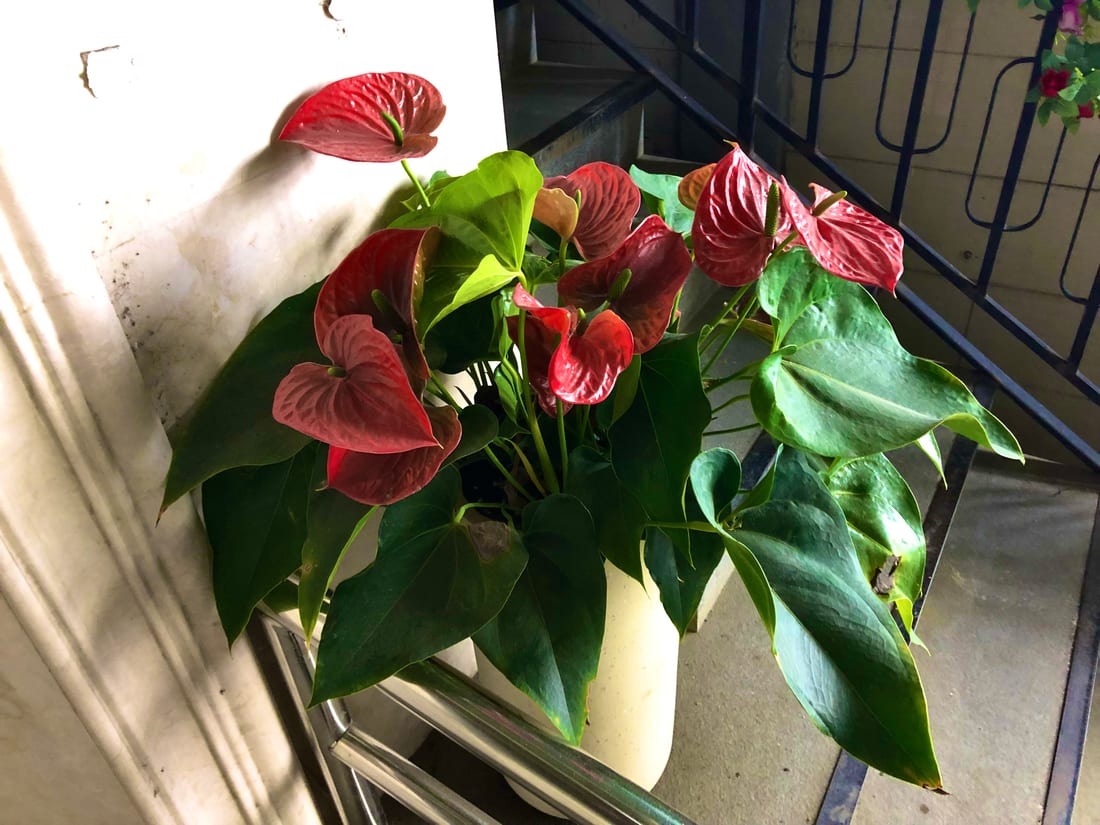
The anthurium is grown for its glossy, long-lasting waxy red or pink flower spathes. It is toxic to cats and dogs if chewed.
About Anthurium (Flamingo Flower)
The anthurium (Anthurium andraeanum) hails from the wet forests of Colombia and Ecuador, and it is grown for the glossy, long-lasting red or pink spathes that read as waxy flowers. The plant stays compact, around 30 to 50 cm, so a 3-litre pot on a side table or bright sill holds it comfortably. That small size and months-long bloom display make it an easy way to add colour to a small space.
Give it bright indirect light to keep the spathes coming, and let the top of the soil dry slightly before watering. It appreciates humidity, and dry air shortens the display. It is toxic to cats and dogs if chewed, so place it out of their reach.
What it’s like to grow
Anthurium sits in the middle for fuss. The clearest signal is bloom: too little light and it stops flowering and just sits there in leaf. Overwatering shows as yellowing leaves and, left unchecked, root rot, so let the surface dry between drinks. It flowers best in bright indirect light with some humidity. It is toxic to cats and dogs, so it is not a pick for a home where pets chew leaves, though anyone wanting steady colour on a bright sill will be glad of it.
What to expect
It asks for a little consistency, but nothing fancy. No sunny window? It also does fine under a clip-on grow light.
See what you’ll need to get started ↓Grow it alongside
Houseplants that want the same light, water and humidity are happy sharing a spot. See what thrives with Anthurium (Flamingo Flower) →
Tips
- Give it bright indirect light to keep it flowering.
- Let the top of the soil dry slightly between waterings.
- It appreciates humidity; dry air shortens the bloom display.
Common problems
- Few or no flowers in too little light.
- Yellowing leaves and root rot from overwatering.
Common questions
Is Anthurium (Flamingo Flower) toxic to cats and dogs?
Anthurium (Flamingo Flower) is toxic to cats and dogs if eaten, so keep it out of reach of pets that chew. Source: ASPCA.
How much light does Anthurium (Flamingo Flower) need?
Anthurium (Flamingo Flower) does best in medium, indirect light: near an east or west window, or a little back from a bright one. Direct midday sun can scorch it.
How often should I water Anthurium (Flamingo Flower)?
Water Anthurium (Flamingo Flower) when the top inch of soil feels dry, then let it drain. Aim for evenly moist, not soggy.
What temperature does Anthurium (Flamingo Flower) need?
Anthurium (Flamingo Flower) is happiest around 18–27 °C. It tolerates brief dips to about 13 °C, but cold drafts and sudden chills set it back.
Does Anthurium (Flamingo Flower) need high humidity?
Anthurium (Flamingo Flower) prefers humid air. Group it with other plants, stand it on a pebble tray, or run a humidifier — dry indoor air tends to brown the leaf tips.
Can I grow Anthurium (Flamingo Flower) without a sunny window?
Yes. Anthurium (Flamingo Flower) does well under an affordable clip-on grow light, so a bright window isn't essential.
How big does Anthurium (Flamingo Flower) get?
A compact plant ~0.3–0.5 m tall with heart-shaped leaves and waxy spathes.
How do I propagate Anthurium (Flamingo Flower)?
Separate offshoots with their own roots from the parent and pot them up individually.
What pests affect Anthurium (Flamingo Flower)?
Watch for mealybugs, scale, spider mites and aphids. Check new growth and the undersides of leaves often, and treat early with a rinse or insecticidal soap before they spread.
Is Anthurium (Flamingo Flower) easy to grow?
Anthurium (Flamingo Flower) is moderately easy. It asks for some consistency with light and water, but nothing advanced.
Gear for Anthurium (Flamingo Flower)
Gear suggestions to get you started — general picks, not paid placements.
Pet-toxicity from the ASPCA. Care details are general guidance, not professional or veterinary advice. Photo: Qian2007, CC BY-SA 4.0, via Wikimedia Commons (CC-BY-SA). Care info last updated 2026-06-02.