cactus
DecorativeBunny Ear Cactus
Opuntia microdasys
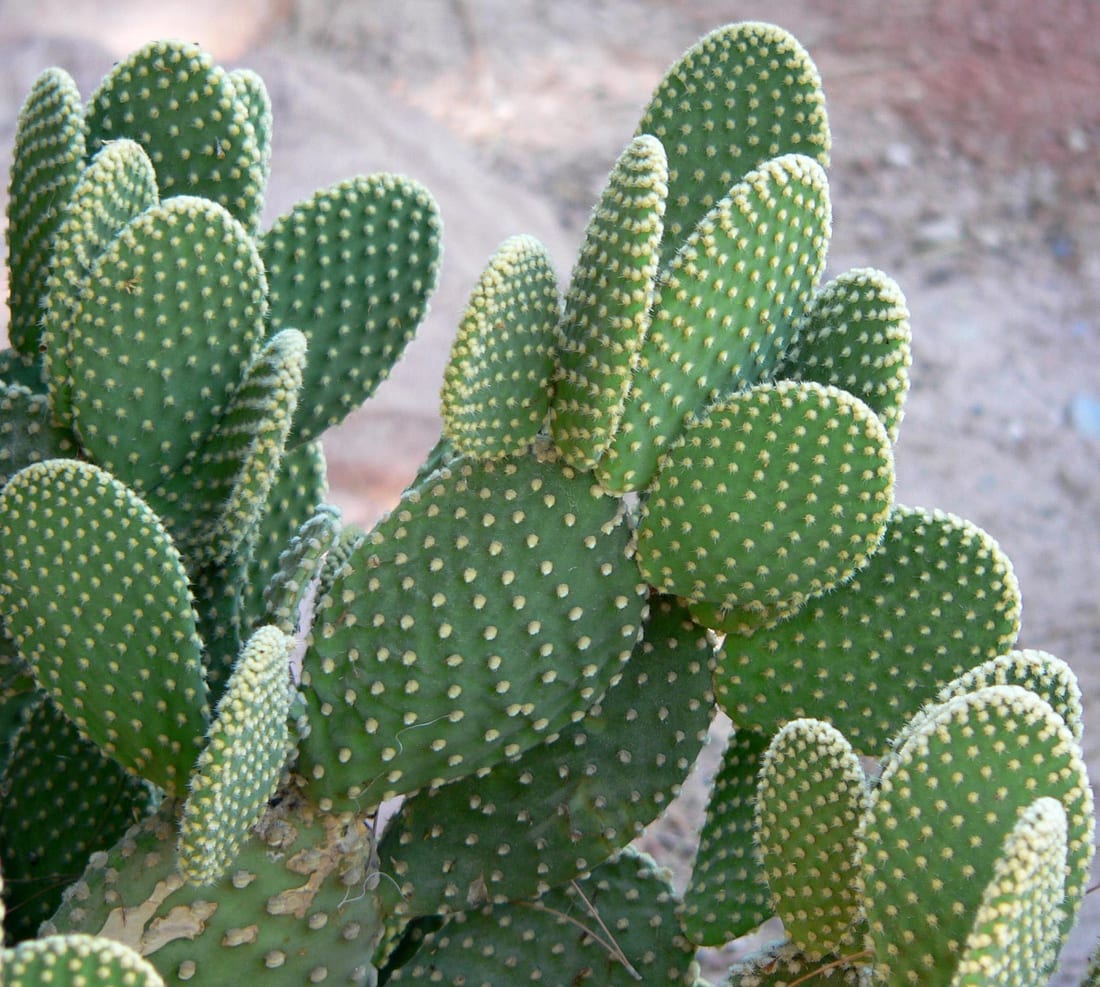
Considered non-toxic to cats and dogs (source: ASPCA (not chemically toxic; barbed glochids are a hazard)).
A sunny south-facing window with 6+ hours, or a grow light.
Let the soil dry out between waterings; it dislikes staying wet.
Forgiving and beginner-friendly.
The bunny ear cactus is a spineless-looking Opuntia whose flat pads sprout in pairs like ears. It is not chemically poisonous, but its dense tufts of tiny barbed glochids detach at a touch and lodge painfully in skin — a poor choice around curious pets or small children.
About Bunny Ear Cactus
The bunny ear cactus (Opuntia microdasys) comes from the deserts of northern Mexico, and its flat oval pads sprout in pairs that look like ears. It has no large spines, but the dotted tufts on the pads are glochids, tiny barbed bristles that detach at a touch. It reaches 30 to 60 cm indoors and lives happily in a small pot, making it a low-water plant for a sunny rental sill.
Give it the brightest, sunniest spot you have. Water sparingly through the growing season and keep it nearly dry in winter. Handle it only with thick gloves or folded paper, because the glochids are nearly invisible and miserable to remove from skin. It isn't chemically poisonous, but those barbed tufts make it a poor choice around curious pets or small children.
What it’s like to grow
This cactus is easy to grow and hard to handle. Soft brown rot at the base is the overwatering warning, so keep it dry, especially in winter. Shed glochids collect around the pot, which is why placement away from reach matters as much as care. Give it a bright, sunny spot and then leave it well alone. It is not chemically toxic to cats and dogs, but the barbed glochids lodge painfully in skin and mouths, so it's a bad fit for homes with pets or children.
What to expect
It’s forgiving, so it’s a good one to learn on. No sunny window? It also does fine under a clip-on grow light.
See what you’ll need to get started ↓Grow it alongside
Houseplants that want the same light, water and humidity are happy sharing a spot. See what thrives with Bunny Ear Cactus →
Tips
- Handle only with thick gloves or folded paper; the glochids are nearly invisible and hard to remove.
- Water sparingly in the growing season and keep it nearly dry in winter.
- Give it the brightest, sunniest spot you have.
Common problems
- Soft brown rot at the base from overwatering.
- Shed glochids around the pot; site it away from reach.
Common questions
Is Bunny Ear Cactus toxic to cats and dogs?
Bunny Ear Cactus is non-toxic to cats and dogs, which makes it a safe pick if you have pets. Source: ASPCA (not chemically toxic; barbed glochids are a hazard).
How much light does Bunny Ear Cactus need?
Bunny Ear Cactus wants bright light — a south-facing window with six or more hours of sun, or a grow light to make up for it.
How often should I water Bunny Ear Cactus?
Water Bunny Ear Cactus sparingly. Let the soil dry out fully between waterings — it's far more likely to rot from overwatering than to suffer from neglect.
What temperature does Bunny Ear Cactus need?
Bunny Ear Cactus is happiest around 18–27 °C. It tolerates brief dips to about 5 °C, but cold drafts and sudden chills set it back.
Can I grow Bunny Ear Cactus without a sunny window?
Yes. Bunny Ear Cactus does well under an affordable clip-on grow light, so a bright window isn't essential.
How big does Bunny Ear Cactus get?
A clumping cactus of flat oval pads dotted with glochid tufts; reaches 0.3–0.6 m indoors.
How do I propagate Bunny Ear Cactus?
Snap off a pad, let it callus for a few days, then set it upright in dry mix to root.
What pests affect Bunny Ear Cactus?
Watch for mealybugs, scale and spider mites. Check new growth and the undersides of leaves often, and treat early with a rinse or insecticidal soap before they spread.
Is Bunny Ear Cactus easy to grow?
Yes. Bunny Ear Cactus is forgiving and one of the better plants to learn on.
Gear for Bunny Ear Cactus
Gear suggestions to get you started — general picks, not paid placements.
Pet-toxicity from the ASPCA. Care details are general guidance, not professional or veterinary advice. Photo: Stan Shebs, CC BY-SA 3.0, via Wikimedia Commons (CC-BY-SA). Care info last updated 2026-06-02.