fruit
EdibleCalamondin / Calamansi
Citrus × microcarpa
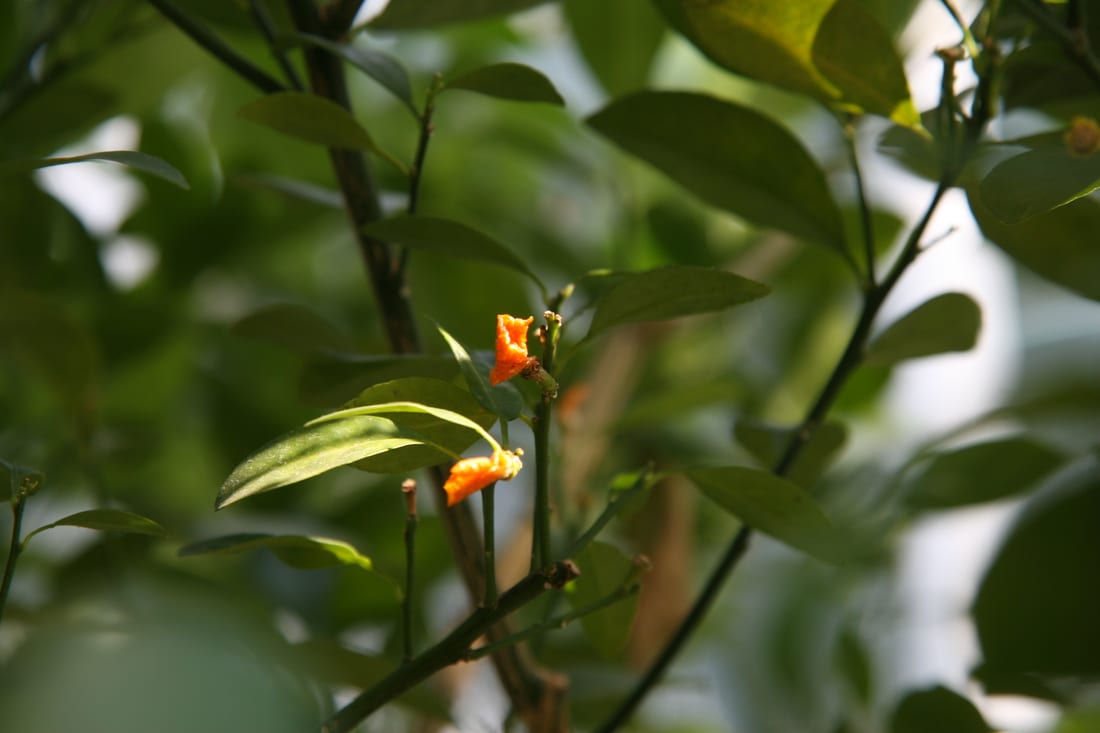
Toxic to cats and dogs — keep it out of reach (source: ASPCA (Citrus genus — oils & psoralens)).
A sunny south-facing window with 6+ hours, or a grow light.
Keep evenly moist — water when the top inch of soil is dry.
Needs a little consistency, but nothing fancy.
Calamondin (calamansi) is one of the easiest citrus to keep indoors — a naturally small, ornamental tree that fruits readily with tart little orange fruits used for juice and marmalade. The foliage and peel oils are toxic to pets.
About Calamondin / Calamansi
Calamondin (Citrus × microcarpa), also known as calamansi, is one of the easiest citrus to keep indoors. A naturally small, ornamental tree from Southeast Asia, it fruits readily with tart little orange fruits used for juice and marmalade rather than eaten fresh. Its compact size and willing cropping make it a good fit for a renter with a bright window and a 15-litre pot. A mature plant can carry dozens of small sour fruits at once.
Calamondin is moderate to grow and slow like all citrus, with fruit taking from 120 days to most of a year to ripen. Keep it in the brightest spot you have and supplement with a grow light in winter. Water when the top of the soil dries and never leave it standing in water. The foliage and peel oils are toxic to cats and dogs.
What it’s like to grow
Calamondin is among the more forgiving citrus, but it still flags stress clearly. Leaf yellowing or drop follows cold, low light, or overwatering, while sticky leaves and sooty mold usually mean scale or mealybug have moved in indoors. Keep it bright, water only when the surface dries, and check the leaves for pests. The foliage and peel oils are toxic to cats and dogs. Good for a grower who wants an attractive, heavy-fruiting little tree for juice and cooking and can give it a bright window.
What to expect
First harvest in about 120–365 days. It asks for a little consistency, but nothing fancy. No sunny window? It also does fine under a clip-on grow light.
See what you’ll need to get started ↓Tips
- Keep it in the brightest spot available and supplement with a grow light in winter.
- Water when the top of the soil dries; never leave it standing in water.
- The fruit is very sour — used for juice, cooking, and marmalade rather than eaten fresh.
Common problems
- Leaf yellowing or drop from cold, low light, or overwatering.
- Sticky leaves and sooty mold from scale or mealybug indoors.
Common questions
Is Calamondin / Calamansi toxic to cats and dogs?
Calamondin / Calamansi is toxic to cats and dogs if eaten, so keep it out of reach of pets that chew. Source: ASPCA (Citrus genus — oils & psoralens).
How much light does Calamondin / Calamansi need?
Calamondin / Calamansi wants bright light — a south-facing window with six or more hours of sun, or a grow light to make up for it.
How often should I water Calamondin / Calamansi?
Water Calamondin / Calamansi when the top inch of soil feels dry, then let it drain. Aim for evenly moist, not soggy.
What temperature does Calamondin / Calamansi need?
Calamondin / Calamansi is happiest around 18–27 °C. It tolerates brief dips to about 7 °C, but cold drafts and sudden chills set it back.
How long does Calamondin / Calamansi take to grow?
Expect a first harvest about 120–365 days from sowing under good conditions. A compact, heavy-bearing little citrus that can carry dozens of small sour fruits at once on a windowsill tree.
Can I grow Calamondin / Calamansi without a sunny window?
Yes. Calamondin / Calamansi does well under an affordable clip-on grow light, so a bright window isn't essential.
How big does Calamondin / Calamansi get?
A single potted citrus tree ~1–1.5 m tall; self-fertile, one tree per large pot.
How do I propagate Calamondin / Calamansi?
Root a semi-hardwood cutting in moist mix under warmth and humidity to keep the cultivar true.
What pests affect Calamondin / Calamansi?
Watch for spider mites, scale, mealybugs and aphids. Check new growth and the undersides of leaves often, and treat early with a rinse or insecticidal soap before they spread.
Is Calamondin / Calamansi easy to grow?
Calamondin / Calamansi is moderately easy. It asks for some consistency with light and water, but nothing advanced.
Gear for Calamondin / Calamansi
Gear suggestions to get you started — general picks, not paid placements.
Pet-toxicity from the ASPCA. Care details are general guidance, not professional or veterinary advice; only eat plants you can positively identify as the edible plant and part described. Photo: David J. Stang, CC BY-SA 4.0, via Wikimedia Commons (CC-BY-SA). Care info last updated 2026-06-02.