cactus
DecorativeChristmas Cactus
Schlumbergera truncata
Considered non-toxic to cats and dogs (source: ASPCA).
Some direct sun — an east or west window, or a few hours of direct light.
Keep evenly moist — water when the top inch of soil is dry.
Forgiving and beginner-friendly.
The Christmas cactus is a pet-safe, easy-flowering jungle cactus that blooms in pink, red, or white around the winter holidays. Unlike desert cacti, it has no spines and wants more regular water.
About Christmas Cactus
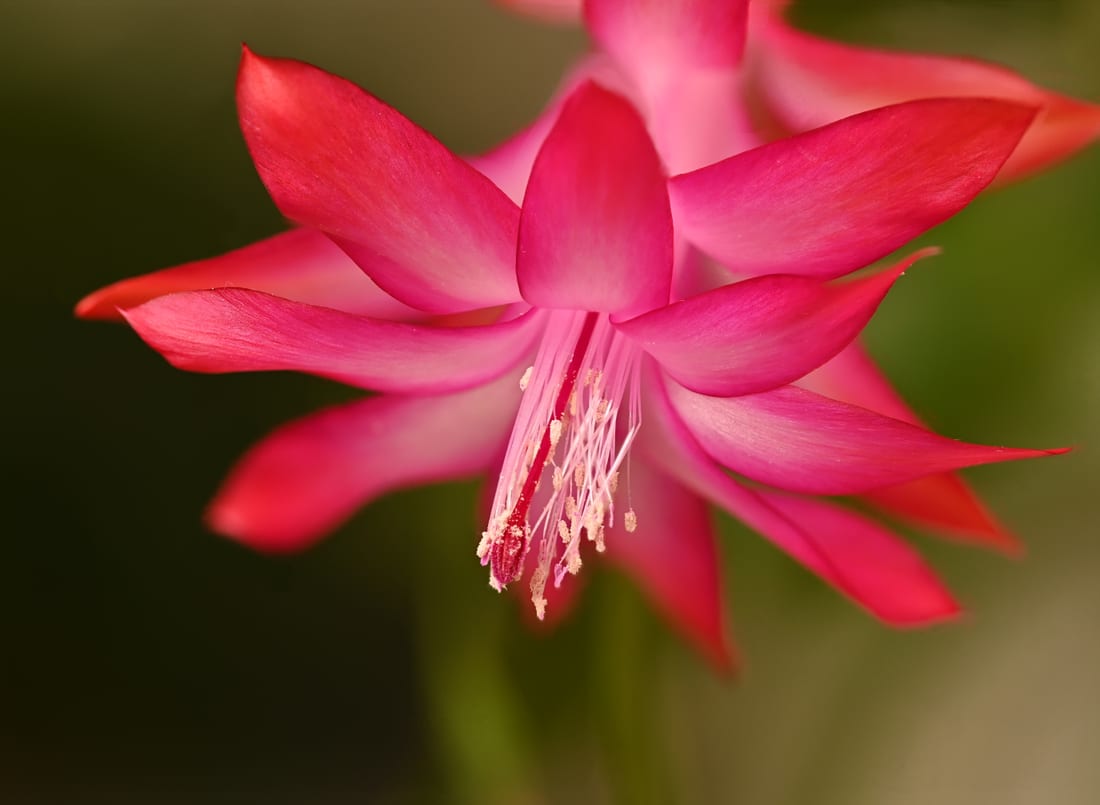
The Christmas cactus (Schlumbergera truncata) is a jungle cactus from the coastal mountains of Brazil, where it grows on trees and rocks rather than in dry desert. It has flattened, segmented stems that trail half a metre or so, good for a hanging pot, and it flowers in pink, red, or white around the winter holidays. It has no spines, stays compact in a 2-litre pot, and is safe to keep around cats and dogs.
Because it comes from a humid forest, it wants more water than a desert cactus. Water when the top of the soil dries, and give it bright indirect light rather than harsh sun. To set buds, it needs cool nights and long, uninterrupted darkness through autumn.
What it’s like to grow
The Christmas cactus is easy day to day but particular about blooming. It drops its flower buds if you move it or change its light, temperature, or watering while buds are forming, so leave it put once they appear. Limp, shrivelled segments signal watering trouble in either direction. It likes bright indirect light and moderate water. Non-toxic to cats and dogs, it is a good pick for someone who wants reliable winter flowers and can leave a budding plant undisturbed.
What to expect
It’s forgiving, so it’s a good one to learn on. No sunny window? It also does fine under a clip-on grow light.
See what you’ll need to get started ↓Grow it alongside
Houseplants that want the same light, water and humidity are happy sharing a spot. See what thrives with Christmas Cactus →
Tips
- Water when the top of the soil dries; it likes more moisture than a desert cactus.
- To trigger blooms, give it cool nights and long darkness in autumn.
- Give it bright indirect light, not harsh direct sun.
Common problems
- Dropped flower buds from sudden changes in light, temperature, or watering.
- Limp, shriveled segments from over- or under-watering.
Common questions
Is Christmas Cactus toxic to cats and dogs?
Christmas Cactus is non-toxic to cats and dogs, which makes it a safe pick if you have pets. Source: ASPCA.
How much light does Christmas Cactus need?
Christmas Cactus does best in medium, indirect light: near an east or west window, or a little back from a bright one. Direct midday sun can scorch it.
How often should I water Christmas Cactus?
Water Christmas Cactus when the top inch of soil feels dry, then let it drain. Aim for evenly moist, not soggy.
What temperature does Christmas Cactus need?
Christmas Cactus is happiest around 18–24 °C. It tolerates brief dips to about 10 °C, but cold drafts and sudden chills set it back.
Can I grow Christmas Cactus without a sunny window?
Yes. Christmas Cactus does well under an affordable clip-on grow light, so a bright window isn't essential.
How big does Christmas Cactus get?
A trailing plant of flattened segmented stems, spreading 0.3–0.6 m; good for hanging pots.
How do I propagate Christmas Cactus?
Twist off a two- to three-segment piece, let it callus a day, then plant in moist mix.
What pests affect Christmas Cactus?
Watch for mealybugs, fungus gnats and spider mites. Check new growth and the undersides of leaves often, and treat early with a rinse or insecticidal soap before they spread.
Is Christmas Cactus easy to grow?
Yes. Christmas Cactus is forgiving and one of the better plants to learn on.
Gear for Christmas Cactus
Gear suggestions to get you started — general picks, not paid placements.
Pet-toxicity from the ASPCA. Care details are general guidance, not professional or veterinary advice. Photo: Krzysztof Ziarnek, Kenraiz, CC BY 4.0, via Wikimedia Commons (CC-BY). Care info last updated 2026-06-02.