leafy green
EdibleClaytonia (Miner’s Lettuce)
Claytonia perfoliata
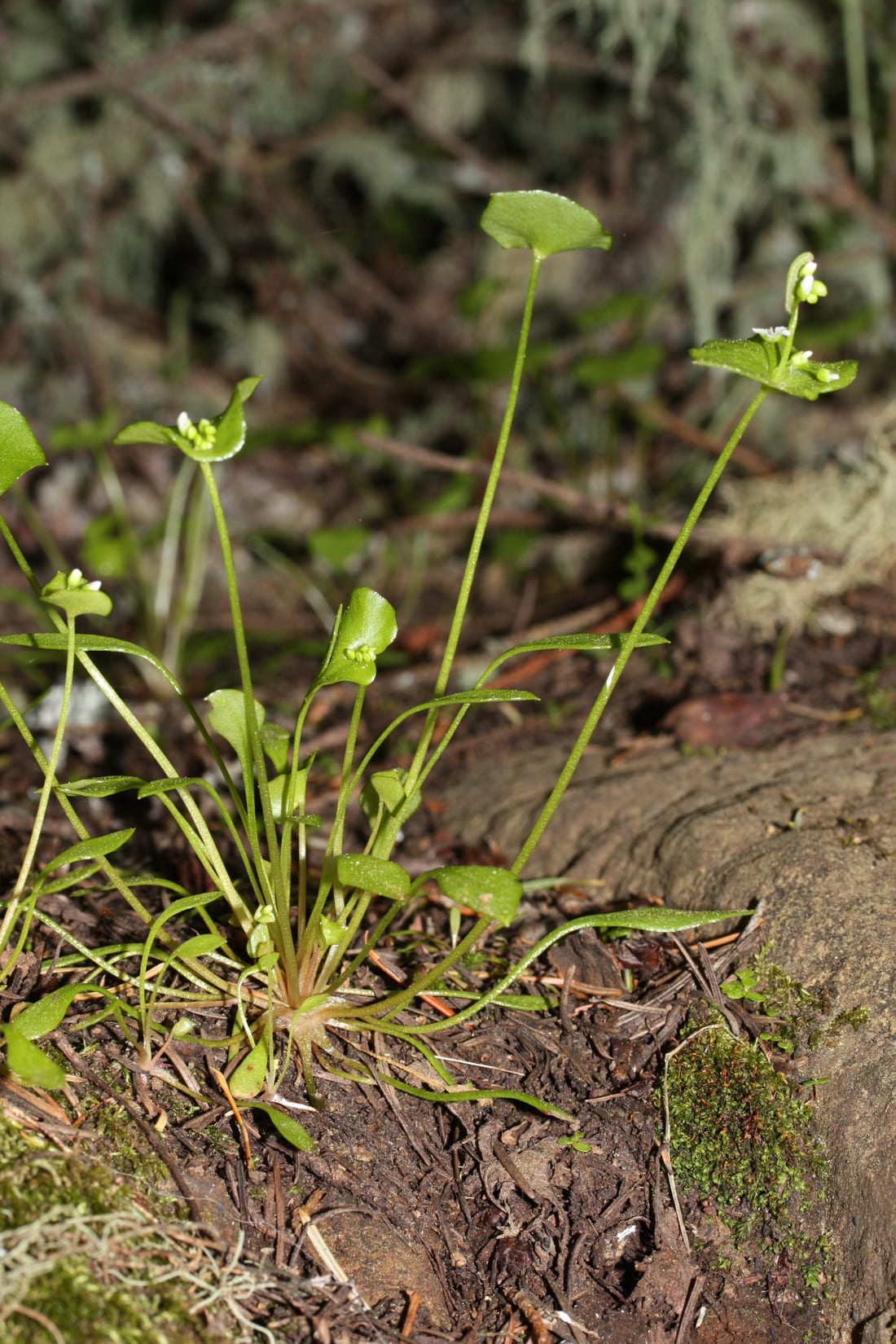
Considered non-toxic to cats and dogs (source: ASPCA (not listed; edible wild green)).
A north-facing window or a few hours of indirect light is plenty.
Keep evenly moist — water when the top inch of soil is dry.
Forgiving and beginner-friendly.
Claytonia, also called miner’s lettuce or winter purslane, is a cold-hardy green with succulent, mild, faintly sweet leaves that thrives in cool, low-light conditions where other greens struggle. It is one of the best choices for a dim winter windowsill.
About Claytonia (Miner’s Lettuce)
Claytonia (Claytonia perfoliata), also called miner's lettuce or winter purslane, is a cold-hardy green native to western North America with succulent, mild, faintly sweet round leaves. Its standout trait is that it crops in cool, low-light conditions where most greens give up, which makes it one of the best choices for a dim winter windowsill in a rental. A small 3-litre pot, sown thickly, gives a useful patch.
Grow it cool and don't worry about strong light; it is the rare green rated for low light. Cut the leaves and it regrows for several harvests through the cool months, and letting a few plants self-seed keeps a continuous supply going. It takes moderate water. First harvests come around 40 to 60 days. The one limit is warmth, which it dislikes, so it is a cool-season crop rather than a year-round one.
What it’s like to grow
Claytonia is easy and forgiving, especially for a shady, cool spot. Its weakness is warm weather, which makes it bolt and turn bitter, so it is a winter and early-spring green rather than a summer one. In cold, soggy soil young seedlings can damp off, so keep it moist but not waterlogged. It tolerates low light and moderate water. It is close to ideal for someone with a dim, cool room and no grow light, and it is non-toxic to cats and dogs.
What to expect
First harvest in about 40–60 days. It’s forgiving, so it’s a good one to learn on. No sunny window? It also does fine under a clip-on grow light.
See what you’ll need to get started ↓Companions
Tips
- Grow it cool; it tolerates cold and low light better than lettuce.
- Cut leaves and let it regrow; it crops repeatedly in cool weather.
- Let a few plants self-seed for a continuous supply.
Common problems
- Bolting and bitterness once warm weather arrives.
- Damping-off in cold, soggy soil.
Common questions
Is Claytonia (Miner’s Lettuce) toxic to cats and dogs?
Claytonia (Miner’s Lettuce) is non-toxic to cats and dogs, which makes it a safe pick if you have pets. Source: ASPCA (not listed; edible wild green).
How much light does Claytonia (Miner’s Lettuce) need?
Claytonia (Miner’s Lettuce) tolerates low light and can sit away from a window. It still grows faster with more light, but it won't sulk in a dim corner.
How often should I water Claytonia (Miner’s Lettuce)?
Water Claytonia (Miner’s Lettuce) when the top inch of soil feels dry, then let it drain. Aim for evenly moist, not soggy.
What temperature does Claytonia (Miner’s Lettuce) need?
Claytonia (Miner’s Lettuce) is happiest around 7–18 °C. It tolerates brief dips to about -10 °C, but cold drafts and sudden chills set it back.
How long does Claytonia (Miner’s Lettuce) take to grow?
Expect a first harvest about 40–60 days from sowing under good conditions. A cool-season green with succulent, mild, round leaves on the stem; cut-and-come-again through cool months, even in low light.
Can I grow Claytonia (Miner’s Lettuce) without a sunny window?
Yes. Claytonia (Miner’s Lettuce) does well under an affordable clip-on grow light, so a bright window isn't essential.
How big does Claytonia (Miner’s Lettuce) get?
A low succulent rosette ~0.1–0.2 m tall; sow thickly and harvest as a patch.
How do I propagate Claytonia (Miner’s Lettuce)?
Sow seed in cool conditions and thin lightly; it self-seeds readily once established.
What pests affect Claytonia (Miner’s Lettuce)?
Watch for aphids and slugs. Check new growth and the undersides of leaves often, and treat early with a rinse or insecticidal soap before they spread.
Is Claytonia (Miner’s Lettuce) easy to grow?
Yes. Claytonia (Miner’s Lettuce) is forgiving and one of the better plants to learn on.
Gear for Claytonia (Miner’s Lettuce)
Gear suggestions to get you started — general picks, not paid placements.
Pet-toxicity from the ASPCA. Care details are general guidance, not professional or veterinary advice; only eat plants you can positively identify as the edible plant and part described. Photo: Walter Siegmund, CC BY-SA 3.0, via Wikimedia Commons (CC-BY-SA). Care info last updated 2026-06-02.