foliage
DecorativeCroton (Garden Croton)
Codiaeum variegatum
Toxic to cats and dogs — keep it out of reach (source: ASPCA).
A sunny south-facing window with 6+ hours, or a grow light.
Keep evenly moist — water when the top inch of soil is dry.
Needs a little consistency, but nothing fancy.
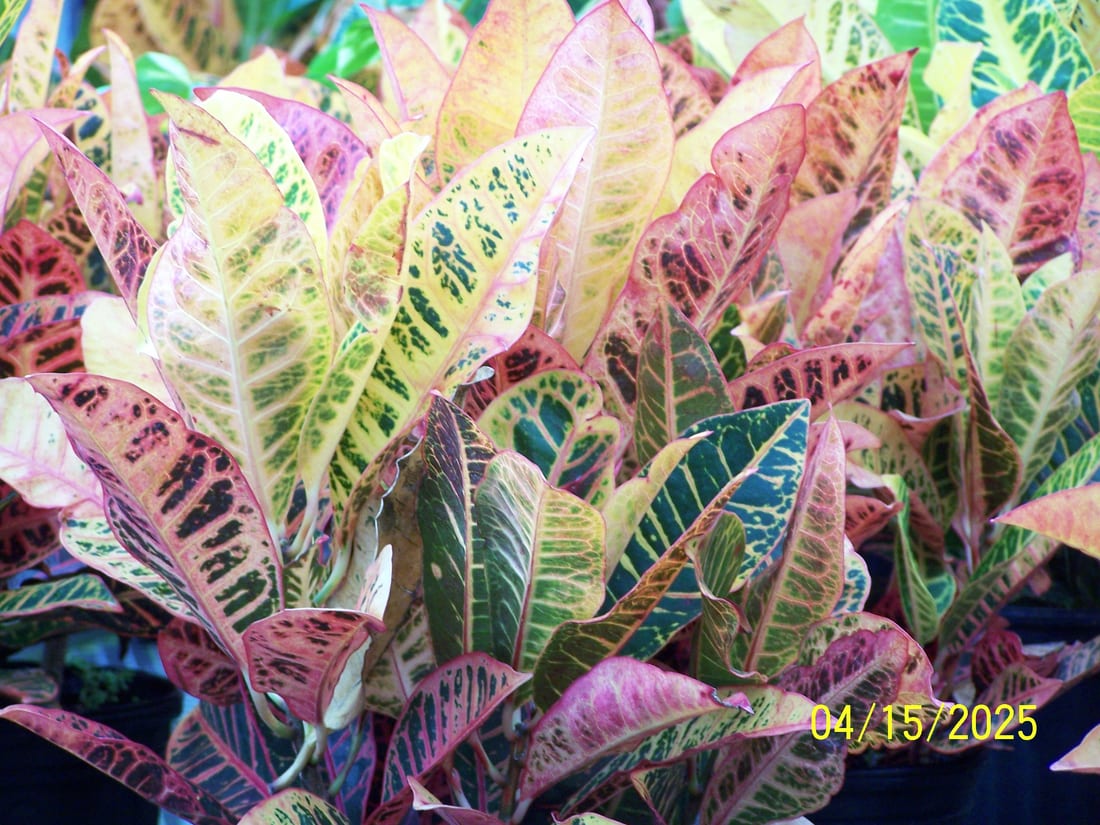
The croton is grown for its vivid red, orange, and yellow leaves, which need strong light to stay bright. It is toxic to pets and its sap can irritate skin.
About Croton (Garden Croton)
The croton (Codiaeum variegatum) is grown for leaves splashed in red, orange, and yellow, which need strong light to stay that vivid. It comes from the tropics of Southeast Asia and the western Pacific, and indoors it forms a bushy upright shrub up to about a metre tall. Because the colour depends on bright light, it's best for a sunny rental spot rather than a dim one, and it brings more colour than most foliage plants.
Give it the brightest light you have, since the leaves fade toward plain green in shade. Keep the soil evenly moist and the air on the humid side. It dislikes being moved and will drop leaves when shocked, so find it a good spot and leave it there. The croton is toxic to cats and dogs, and its sap can irritate skin, so handle it with care and keep pets away from the leaves.
What it’s like to grow
Colourful but a bit temperamental, the croton reacts strongly to change. A sudden move, a draft, or a swing in conditions can make it drop leaves, so settle it somewhere stable. Dull green leaves instead of bright ones mean it isn't getting enough light. Offer it a bright, steady spot and resist relocating it, and you'll have a happy plant. It is toxic to cats and dogs and its sap irritates skin, so keep it out of reach and wash up after handling.
What to expect
It asks for a little consistency, but nothing fancy. No sunny window? It also does fine under a clip-on grow light.
See what you’ll need to get started ↓Grow it alongside
Houseplants that want the same light, water and humidity are happy sharing a spot. See what thrives with Croton (Garden Croton) →
Tips
- Give it the brightest light you have; colour fades to green in low light.
- Keep the soil evenly moist and the air humid.
- Avoid moving it around; it drops leaves when shocked.
Common problems
- Leaf drop after a move, draft, or sudden change.
- Dull green leaves from insufficient light.
Common questions
Is Croton (Garden Croton) toxic to cats and dogs?
Croton (Garden Croton) is toxic to cats and dogs if eaten, so keep it out of reach of pets that chew. Source: ASPCA.
How much light does Croton (Garden Croton) need?
Croton (Garden Croton) wants bright light — a south-facing window with six or more hours of sun, or a grow light to make up for it.
How often should I water Croton (Garden Croton)?
Water Croton (Garden Croton) when the top inch of soil feels dry, then let it drain. Aim for evenly moist, not soggy.
What temperature does Croton (Garden Croton) need?
Croton (Garden Croton) is happiest around 18–27 °C. It tolerates brief dips to about 13 °C, but cold drafts and sudden chills set it back.
Does Croton (Garden Croton) need high humidity?
Croton (Garden Croton) prefers humid air. Group it with other plants, stand it on a pebble tray, or run a humidifier — dry indoor air tends to brown the leaf tips.
Can I grow Croton (Garden Croton) without a sunny window?
Yes. Croton (Garden Croton) does well under an affordable clip-on grow light, so a bright window isn't essential.
How big does Croton (Garden Croton) get?
A bushy, upright shrub with thick leathery multicoloured leaves; reaches 0.6–1.2 m indoors.
How do I propagate Croton (Garden Croton)?
Root a stem-tip cutting in water or warm moist soil; keep humidity high.
What pests affect Croton (Garden Croton)?
Watch for spider mites, mealybugs, scale and thrips. Check new growth and the undersides of leaves often, and treat early with a rinse or insecticidal soap before they spread.
Is Croton (Garden Croton) easy to grow?
Croton (Garden Croton) is moderately easy. It asks for some consistency with light and water, but nothing advanced.
Gear for Croton (Garden Croton)
Gear suggestions to get you started — general picks, not paid placements.
Pet-toxicity from the ASPCA. Care details are general guidance, not professional or veterinary advice. Photo: Satin66Flower, CC BY-SA 4.0, via Wikimedia Commons (CC-BY-SA). Care info last updated 2026-06-02.