herb
EdibleCuban Oregano
Plectranthus amboinicus
Toxic to cats and dogs — keep it out of reach (source: ASPCA (Plectranthus/Coleus, toxic)).
Some direct sun — an east or west window, or a few hours of direct light.
Let the soil dry out between waterings; it dislikes staying wet.
Forgiving and beginner-friendly.
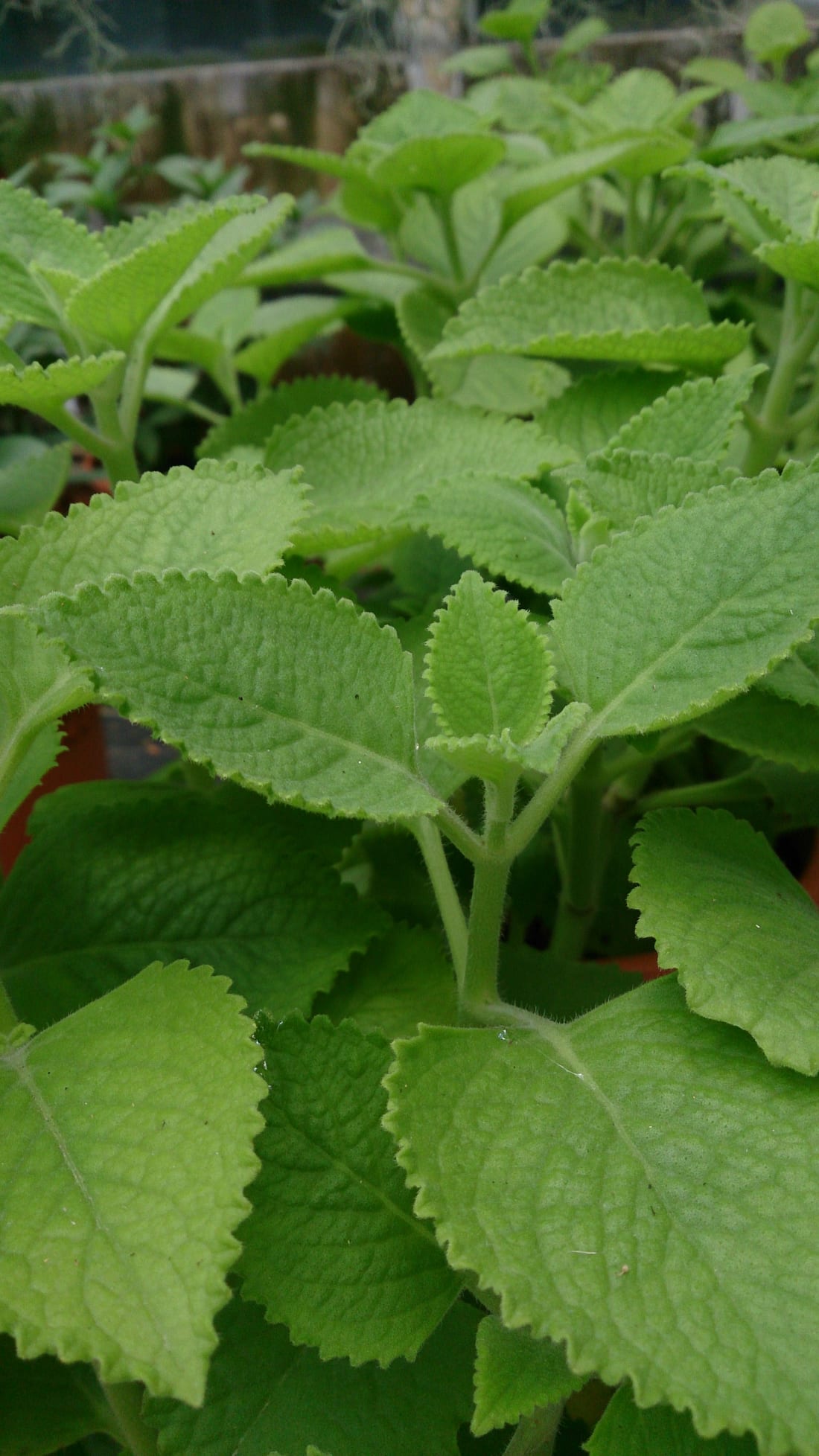
Cuban oregano is a true global crossover — an oregano substitute in the Caribbean and Latin America, karpooravalli in South India, used across Africa and Southeast Asia. The fleshy, fuzzy leaves make it one of the easiest plants to keep, though it is toxic to pets.
About Cuban Oregano
Cuban oregano (Plectranthus amboinicus) is one of those plants that turns up everywhere: an oregano substitute in the Caribbean and Latin America, karpooravalli in South India, and a kitchen and medicinal herb across Africa and Southeast Asia. The thick, fuzzy, fragrant leaves are almost succulent, which is part of why it is so easy. A renter can keep it in a 3-litre pot and propagate it endlessly from cuttings.
Treat it more like a succulent than a leafy herb. Let it dry between waterings and avoid soggy soil, which is the one thing it will not forgive. It roots so readily that a cut stem in water or straight into moist soil becomes a new plant within weeks. Pinch it regularly, since it sprawls if left alone. A first harvest comes around 50 to 80 days.
What it’s like to grow
Cuban oregano is easy and quick to grow, a good plant for a beginner or anyone who likes to share cuttings. Mushy stems are the clear sign of overwatering, the main way people lose it. Sparse, leggy growth means it wants more light, though it tolerates medium light better than the Mediterranean herbs. One caution: it is listed as toxic to cats and dogs, so keep the pot out of their reach.
What to expect
First harvest in about 50–80 days. It’s forgiving, so it’s a good one to learn on. No sunny window? It also does fine under a clip-on grow light.
See what you’ll need to get started ↓♻ Regrow from scraps
Root a stem cutting in water or straight into moist soil; it strikes very easily.
Tips
- It is succulent-like — let it dry between waterings and avoid soggy soil.
- Root cuttings in water to make new plants almost any time.
- Pinch regularly; it can sprawl if left alone.
Common problems
- Mushy stems and rot from overwatering.
- Sparse, leggy growth in low light.
Common questions
Is Cuban Oregano toxic to cats and dogs?
Cuban Oregano is toxic to cats and dogs if eaten, so keep it out of reach of pets that chew. Source: ASPCA (Plectranthus/Coleus, toxic).
How much light does Cuban Oregano need?
Cuban Oregano does best in medium, indirect light: near an east or west window, or a little back from a bright one. Direct midday sun can scorch it.
How often should I water Cuban Oregano?
Water Cuban Oregano sparingly. Let the soil dry out fully between waterings — it's far more likely to rot from overwatering than to suffer from neglect.
What temperature does Cuban Oregano need?
Cuban Oregano is happiest around 18–30 °C. It tolerates brief dips to about 7 °C, but cold drafts and sudden chills set it back.
How long does Cuban Oregano take to grow?
Expect a first harvest about 50–80 days from sowing under good conditions. Fleshy, fragrant leaves used like oregano across the Caribbean, Latin America, India, and Africa; one plant supplies plenty.
Can I grow Cuban Oregano without a sunny window?
Yes. Cuban Oregano does well under an affordable clip-on grow light, so a bright window isn't essential.
How big does Cuban Oregano get?
A sprawling succulent-leaved herb ~0.3–0.5 m wide; one plant per pot, pinched to shape.
How do I propagate Cuban Oregano?
Root a stem cutting in water or moist soil; it strikes very easily.
What pests affect Cuban Oregano?
Watch for mealybugs and aphids. Check new growth and the undersides of leaves often, and treat early with a rinse or insecticidal soap before they spread.
Is Cuban Oregano easy to grow?
Yes. Cuban Oregano is forgiving and one of the better plants to learn on.
Gear for Cuban Oregano
Gear suggestions to get you started — general picks, not paid placements.
Pet-toxicity from the ASPCA. Care details are general guidance, not professional or veterinary advice; only eat plants you can positively identify as the edible plant and part described. Photo: Mokkie, CC BY-SA 3.0, via Wikimedia Commons (CC-BY-SA). Care info last updated 2026-06-08.