herb
EdibleCulantro / Recao
Eryngium foetidum
Considered non-toxic to cats and dogs (source: ASPCA (not listed as toxic)).
Some direct sun — an east or west window, or a few hours of direct light.
Keep evenly moist — water when the top inch of soil is dry.
Needs a little consistency, but nothing fancy.
Culantro is the heat-tolerant cousin of cilantro behind Puerto Rican sofrito (recao) and Vietnamese pho (ngo gai). Unlike cilantro it prefers some shade, which suits a dimmer kitchen, though it is slow to start.
About Culantro / Recao
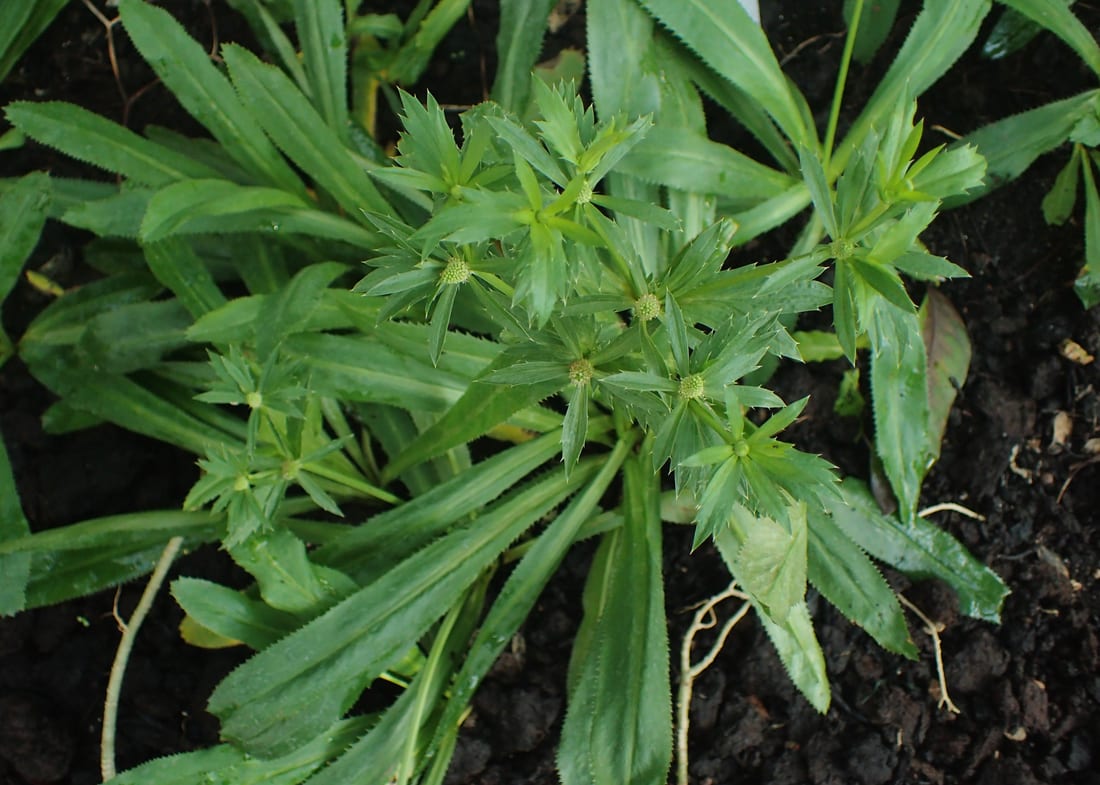
Culantro (Eryngium foetidum) is the heat-tolerant relative of cilantro, with the same bright flavour in long, serrated leaves. It is the recao in Puerto Rican sofrito, the ngo gai beside a bowl of pho, and a common herb across the Caribbean, Latin America, and Southeast Asia. Unlike cilantro it prefers some shade, which makes it a rare edible that suits a dimmer kitchen and a 3-litre pot.
Give it medium light or part shade rather than a hot, bright sill. It is slow to germinate, so the early weeks test your patience before it settles into a low rosette. Cut the outer leaves and remove any flower stalks to keep leaf production going. A first proper harvest comes around 60 to 90 days from sowing.
What it’s like to grow
Culantro is rated moderate, mostly for its slow, erratic germination. Once growing it is easy, though strong heat and full sun push it to bolt, so a cooler, shadier spot keeps it leafy for longer. Tidy off flower stalks as they appear. It is not listed as toxic to cats and dogs, so it is a safe herb to keep within reach of pets.
What to expect
First harvest in about 60–90 days. It asks for a little consistency, but nothing fancy. No sunny window? It also does fine under a clip-on grow light.
See what you’ll need to get started ↓Tips
- Give it medium light or part shade rather than a hot, bright sill.
- Be patient with germination — it is slow, then settles in.
- Cut the outer leaves and remove flower stalks to keep leaf production going.
Common problems
- Slow, erratic germination.
- Bolting to flower in strong heat and full sun.
Common questions
Is Culantro / Recao toxic to cats and dogs?
Culantro / Recao is non-toxic to cats and dogs, which makes it a safe pick if you have pets. Source: ASPCA (not listed as toxic).
How much light does Culantro / Recao need?
Culantro / Recao does best in medium, indirect light: near an east or west window, or a little back from a bright one. Direct midday sun can scorch it.
How often should I water Culantro / Recao?
Water Culantro / Recao when the top inch of soil feels dry, then let it drain. Aim for evenly moist, not soggy.
What temperature does Culantro / Recao need?
Culantro / Recao is happiest around 18–30 °C. It tolerates brief dips to about 5 °C, but cold drafts and sudden chills set it back.
Does Culantro / Recao need high humidity?
Culantro / Recao prefers humid air. Group it with other plants, stand it on a pebble tray, or run a humidifier — dry indoor air tends to brown the leaf tips.
How long does Culantro / Recao take to grow?
Expect a first harvest about 60–90 days from sowing under good conditions. A rosette gives long, serrated leaves with a strong cilantro flavour, cut from the outside over a long run.
Can I grow Culantro / Recao without a sunny window?
Yes. Culantro / Recao does well under an affordable clip-on grow light, so a bright window isn't essential.
How big does Culantro / Recao get?
A low, flat rosette ~0.2–0.3 m wide; grow a few plants in part shade.
How do I propagate Culantro / Recao?
Sow seed and keep warm and moist; germination is slow and erratic.
What pests affect Culantro / Recao?
Watch for aphids and slugs. Check new growth and the undersides of leaves often, and treat early with a rinse or insecticidal soap before they spread.
Is Culantro / Recao easy to grow?
Culantro / Recao is moderately easy. It asks for some consistency with light and water, but nothing advanced.
Gear for Culantro / Recao
Gear suggestions to get you started — general picks, not paid placements.
Pet-toxicity from the ASPCA. Care details are general guidance, not professional or veterinary advice; only eat plants you can positively identify as the edible plant and part described. Photo: Krzysztof Ziarnek, Kenraiz, CC BY-SA 4.0, via Wikimedia Commons (CC-BY-SA). Care info last updated 2026-06-08.