herb
EdibleCurry Leaf
Murraya koenigii
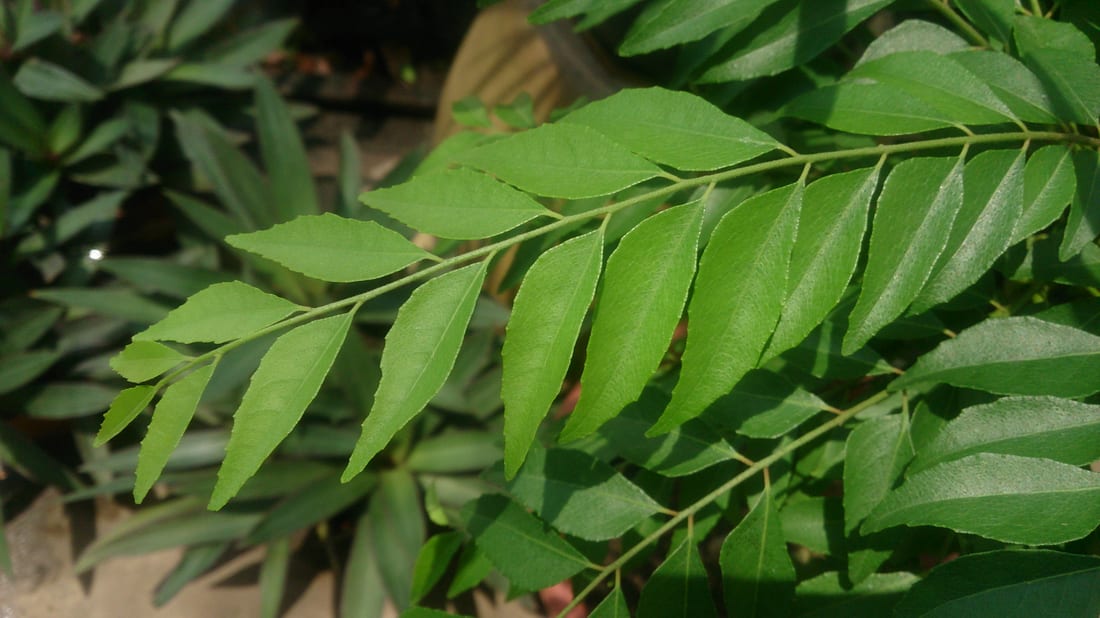
Considered non-toxic to cats and dogs (source: ASPCA (not listed as toxic)).
A sunny south-facing window with 6+ hours, or a grow light.
Keep evenly moist — water when the top inch of soil is dry.
Needs a little consistency, but nothing fancy.
Curry leaf is the aromatic backbone of South Indian and Sri Lankan tempering, and nothing in the spice rack substitutes for the fresh leaf. It grows as a small container shrub but needs your sunniest spot.
About Curry Leaf
Curry leaf (Murraya koenigii) is the aromatic backbone of South Indian and Sri Lankan cooking, the leaf that goes into hot oil at the start of a dish. Dried leaves lose most of what makes them worth using, which is why a fresh plant matters. It grows as a small shrub rather than a quick herb, so a renter should give it an 8-litre pot and the sunniest position in the home.
This is a slower, more demanding plant than the soft herbs. It needs the brightest window you have, or a strong grow light through winter, and warmth, since it drops leaves and sulks below about 10 °C. Let the top of the soil dry between waterings, because it dislikes staying wet. It establishes over a couple of years, giving more sprigs as it matures, so the first useful pickings come months in rather than weeks.
What it’s like to grow
Curry leaf is rated moderate, and almost all of the difficulty is light and warmth. Leaf drop is its main warning, usually meaning the spot is too dim or too cold, especially in winter. Slow, stalled growth points the same way, or to a plant that wants feeding. Give it heat and your strongest light and it settles into a steady supply. It is not listed as toxic to cats and dogs, so the pot is safe around pets.
What to expect
First harvest in about 120–365 days. It asks for a little consistency, but nothing fancy. No sunny window? It also does fine under a clip-on grow light.
See what you’ll need to get started ↓Tips
- Give it the brightest window you have, or a strong grow light through winter.
- Keep it warm; it drops leaves and sulks below about 10 °C.
- Let the top of the soil dry between waterings — it dislikes staying wet.
Common problems
- Leaf drop in low winter light or cold draughts.
- Slow, stalled growth when under-lit or under-fed.
Common questions
Is Curry Leaf toxic to cats and dogs?
Curry Leaf is non-toxic to cats and dogs, which makes it a safe pick if you have pets. Source: ASPCA (not listed as toxic).
How much light does Curry Leaf need?
Curry Leaf wants bright light — a south-facing window with six or more hours of sun, or a grow light to make up for it.
How often should I water Curry Leaf?
Water Curry Leaf when the top inch of soil feels dry, then let it drain. Aim for evenly moist, not soggy.
What temperature does Curry Leaf need?
Curry Leaf is happiest around 18–35 °C. It tolerates brief dips to about 2 °C, but cold drafts and sudden chills set it back.
How long does Curry Leaf take to grow?
Expect a first harvest about 120–365 days from sowing under good conditions. A small potted shrub gives sprigs of aromatic leaves once it establishes, more as it matures over a couple of years.
Can I grow Curry Leaf without a sunny window?
Yes. Curry Leaf does well under an affordable clip-on grow light, so a bright window isn't essential.
How big does Curry Leaf get?
A slow woody shrub kept ~1–1.5 m in a pot; grow one plant in a large container.
How do I propagate Curry Leaf?
Sow very fresh seed promptly, as it loses viability fast; rooted suckers can also be separated.
What pests affect Curry Leaf?
Watch for scale, spider mites and aphids. Check new growth and the undersides of leaves often, and treat early with a rinse or insecticidal soap before they spread.
Is Curry Leaf easy to grow?
Curry Leaf is moderately easy. It asks for some consistency with light and water, but nothing advanced.
Gear for Curry Leaf
Gear suggestions to get you started — general picks, not paid placements.
Pet-toxicity from the ASPCA. Care details are general guidance, not professional or veterinary advice; only eat plants you can positively identify as the edible plant and part described. Photo: Mokkie, CC BY-SA 3.0, via Wikimedia Commons (CC-BY-SA). Care info last updated 2026-06-08.