herb
EdibleGarlic Chives
Allium tuberosum
Toxic to cats and dogs — keep it out of reach (source: ASPCA (Allium spp., toxic)).
Some direct sun — an east or west window, or a few hours of direct light.
Keep evenly moist — water when the top inch of soil is dry.
Forgiving and beginner-friendly.
Garlic chives (gau choy, nira, buchu) are a staple across China, Korea, Japan, and Vietnam — flat leaves with a mild garlic flavour for dumplings and stir-fries. They are a hardy, cut-and-come-again clump, but toxic to pets like all onions.
About Garlic Chives
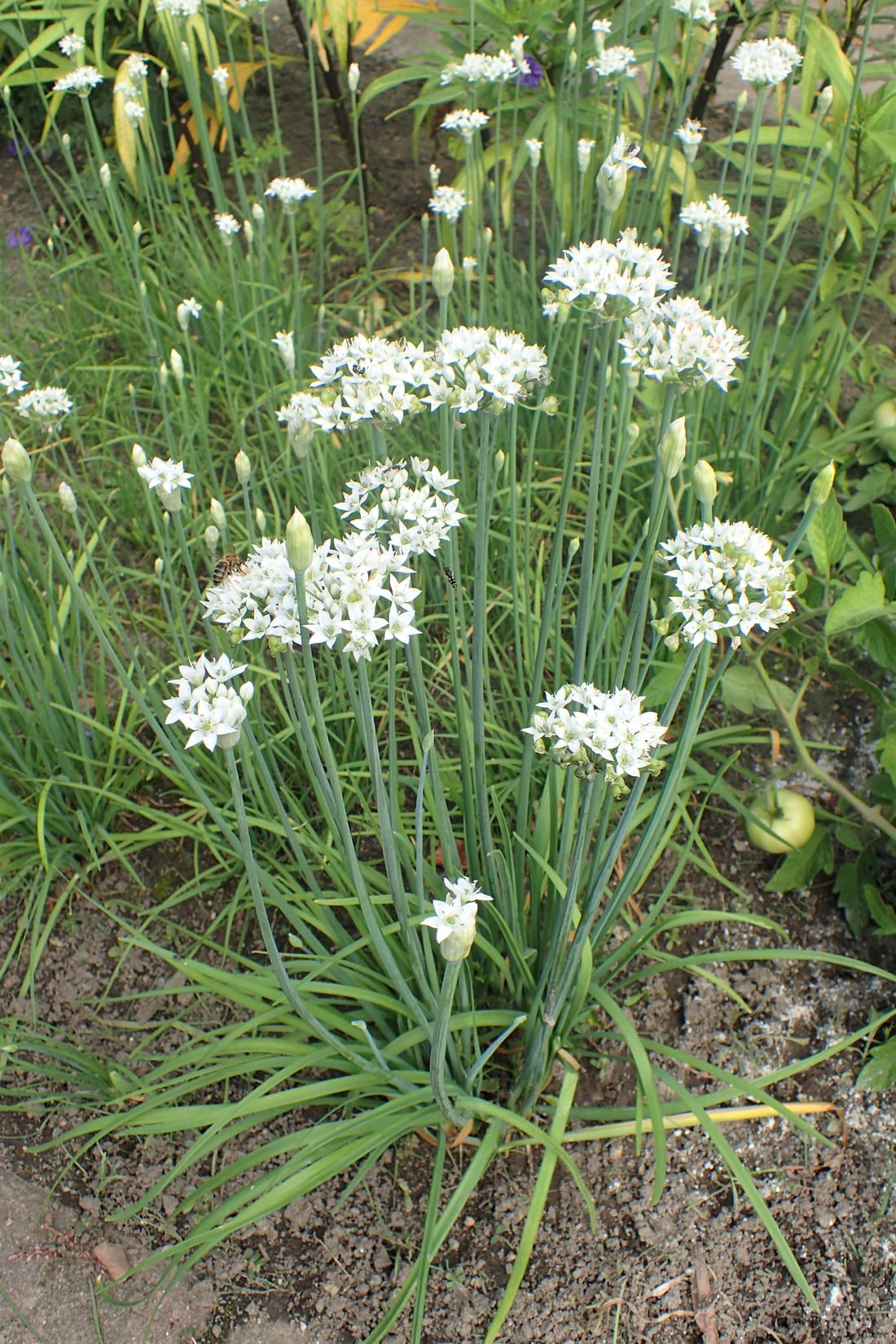
Garlic chives (Allium tuberosum), known as gau choy, nira, or buchu, are a staple across China, Korea, Japan, and Vietnam. The flat leaves carry a mild garlic flavour and go into dumplings, kimchi, and stir-fries, distinct from the round, oniony leaves of ordinary chives. For a renter they need only a 3-litre pot in medium light and form a tidy clump you cut from over a long season.
Cut whole leaves near the base rather than snipping the tips, which lets the clump regrow cleanly. A first harvest comes around 60 to 90 days, and the plant keeps coming for years. Snip off the flower stalks to keep the leaves tender, or leave them, since the buds and white flowers are edible too. When a clump gets crowded, divide it to make more plants.
What it’s like to grow
Garlic chives are easy and long-lived, a good pick for someone who wants a perennial they can ignore between cuttings. Thinning, paler leaves usually mean the clump has grown crowded and wants dividing. It is slow to fill out in its first season from seed, so the early wait is the main test. One important caution: like all onions, garlic chives are toxic to cats and dogs, so keep the pot out of their reach.
What to expect
First harvest in about 60–90 days. It’s forgiving, so it’s a good one to learn on. No sunny window? It also does fine under a clip-on grow light.
See what you’ll need to get started ↓Tips
- Cut whole leaves near the base so the clump regrows cleanly.
- Snip off flower stalks to keep the leaves tender, or leave them to eat the buds.
- Divide a crowded clump to make more plants.
Common problems
- Thinning, paler leaves when the clump gets crowded.
- Slow to fill out in its first season from seed.
Common questions
Is Garlic Chives toxic to cats and dogs?
Garlic Chives is toxic to cats and dogs if eaten, so keep it out of reach of pets that chew. Source: ASPCA (Allium spp., toxic).
How much light does Garlic Chives need?
Garlic Chives does best in medium, indirect light: near an east or west window, or a little back from a bright one. Direct midday sun can scorch it.
How often should I water Garlic Chives?
Water Garlic Chives when the top inch of soil feels dry, then let it drain. Aim for evenly moist, not soggy.
What temperature does Garlic Chives need?
Garlic Chives is happiest around 13–26 °C. It tolerates brief dips to about -15 °C, but cold drafts and sudden chills set it back.
How long does Garlic Chives take to grow?
Expect a first harvest about 60–90 days from sowing under good conditions. A clump gives flat, garlicky leaves you cut like grass over a long season, regrowing from the base each time.
Can I grow Garlic Chives without a sunny window?
Yes. Garlic Chives does well under an affordable clip-on grow light, so a bright window isn't essential.
How big does Garlic Chives get?
A grassy clumping herb ~0.3–0.4 m tall; grow as a dense clump in one pot.
How do I propagate Garlic Chives?
Lift and divide an established clump, or sow seed.
What pests affect Garlic Chives?
Watch for aphids and thrips. Check new growth and the undersides of leaves often, and treat early with a rinse or insecticidal soap before they spread.
Is Garlic Chives easy to grow?
Yes. Garlic Chives is forgiving and one of the better plants to learn on.
Gear for Garlic Chives
Gear suggestions to get you started — general picks, not paid placements.
Pet-toxicity from the ASPCA. Care details are general guidance, not professional or veterinary advice; only eat plants you can positively identify as the edible plant and part described. Photo: Krzysztof Ziarnek, Kenraiz, CC BY-SA 4.0, via Wikimedia Commons (CC-BY-SA). Care info last updated 2026-06-08.