flower
DecorativeGerbera Daisy
Gerbera jamesonii
Considered non-toxic to cats and dogs (source: ASPCA).
A sunny south-facing window with 6+ hours, or a grow light.
Keep evenly moist — water when the top inch of soil is dry.
Needs a little consistency, but nothing fancy.
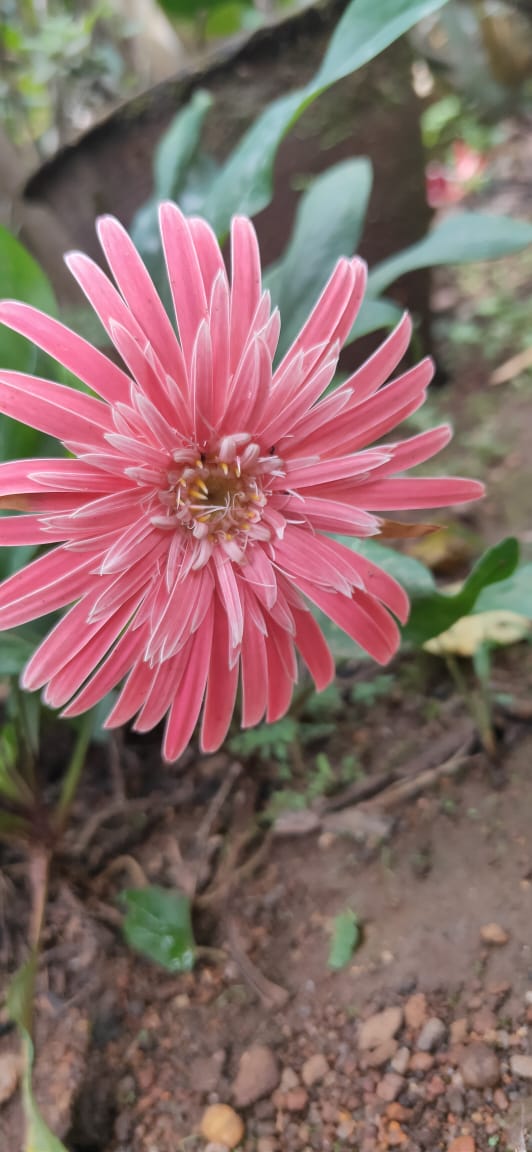
The gerbera daisy is a cheerful, pet-safe flowering plant with large daisy blooms in bright colours over a low rosette of leaves. It needs strong light to keep flowering and is often grown as a short-term indoor bloomer.
About Gerbera Daisy
The gerbera daisy (Gerbera jamesonii) is a cheerful flowering plant from South Africa, with large daisy blooms in bright colours held on long stems above a low rosette of lobed leaves. It stays around 20 to 30 cm in a small pot, so it suits a bright windowsill, and it's often grown as a short-term indoor bloomer rather than a long-lived houseplant.
Strong light keeps it flowering; without it the plant stops blooming and stretches. Give it bright light including some direct sun. Water at the soil line and let the surface dry slightly, since crown rot is the main risk. Removing spent flowers at the base encourages more buds. The plant is non-toxic to cats and dogs, so it's a safe pick for a home with pets.
What it’s like to grow
The gerbera is moderate to keep, and most of its troubles come down to light and water placement. Few or no flowers, paired with stretching, mean it isn't getting enough light, so the brightest spot you have is the answer. Crown rot and collapse follow water left sitting in the centre of the rosette, so always water at the soil line. Good for anyone who wants colour on a sunny sill and accepts it may be short-lived. It is non-toxic to cats and dogs.
What to expect
It asks for a little consistency, but nothing fancy. No sunny window? It also does fine under a clip-on grow light.
See what you’ll need to get started ↓Grow it alongside
Houseplants that want the same light, water and humidity are happy sharing a spot. See what thrives with Gerbera Daisy →
Tips
- Give it bright light, including some direct sun, or it stops flowering and stretches.
- Water at the soil line and let the surface dry slightly; crown rot is the main risk.
- Remove spent flowers at the base to encourage more buds.
Common problems
- Crown rot and collapse from water sitting in the centre of the rosette.
- Few or no flowers in too little light.
Common questions
Is Gerbera Daisy toxic to cats and dogs?
Gerbera Daisy is non-toxic to cats and dogs, which makes it a safe pick if you have pets. Source: ASPCA.
How much light does Gerbera Daisy need?
Gerbera Daisy wants bright light — a south-facing window with six or more hours of sun, or a grow light to make up for it.
How often should I water Gerbera Daisy?
Water Gerbera Daisy when the top inch of soil feels dry, then let it drain. Aim for evenly moist, not soggy.
What temperature does Gerbera Daisy need?
Gerbera Daisy is happiest around 16–24 °C. It tolerates brief dips to about 5 °C, but cold drafts and sudden chills set it back.
Can I grow Gerbera Daisy without a sunny window?
Yes. Gerbera Daisy does well under an affordable clip-on grow light, so a bright window isn't essential.
How big does Gerbera Daisy get?
A low rosette of lobed leaves ~0.2–0.3 m tall, with large daisy flowers on long stems above.
How do I propagate Gerbera Daisy?
Lift and split a mature crown into sections each with roots and growth, then replant.
What pests affect Gerbera Daisy?
Watch for aphids, whiteflies, spider mites and thrips. Check new growth and the undersides of leaves often, and treat early with a rinse or insecticidal soap before they spread.
Is Gerbera Daisy easy to grow?
Gerbera Daisy is moderately easy. It asks for some consistency with light and water, but nothing advanced.
Gear for Gerbera Daisy
Gear suggestions to get you started — general picks, not paid placements.
Pet-toxicity from the ASPCA. Care details are general guidance, not professional or veterinary advice. Photo: Marisankar Mk, CC BY-SA 4.0, via Wikimedia Commons (CC-BY-SA). Care info last updated 2026-06-02.