cactus
DecorativeGolden Barrel Cactus
Echinocactus grusonii
Considered non-toxic to cats and dogs (source: ASPCA (not chemically toxic; spines are a hazard)).
A sunny south-facing window with 6+ hours, or a grow light.
Let the soil dry out between waterings; it dislikes staying wet.
Forgiving and beginner-friendly.
The golden barrel is a classic round, ribbed cactus that asks for bright light and almost no water. It is not chemically toxic, but its stiff spines can injure pets and people.
About Golden Barrel Cactus
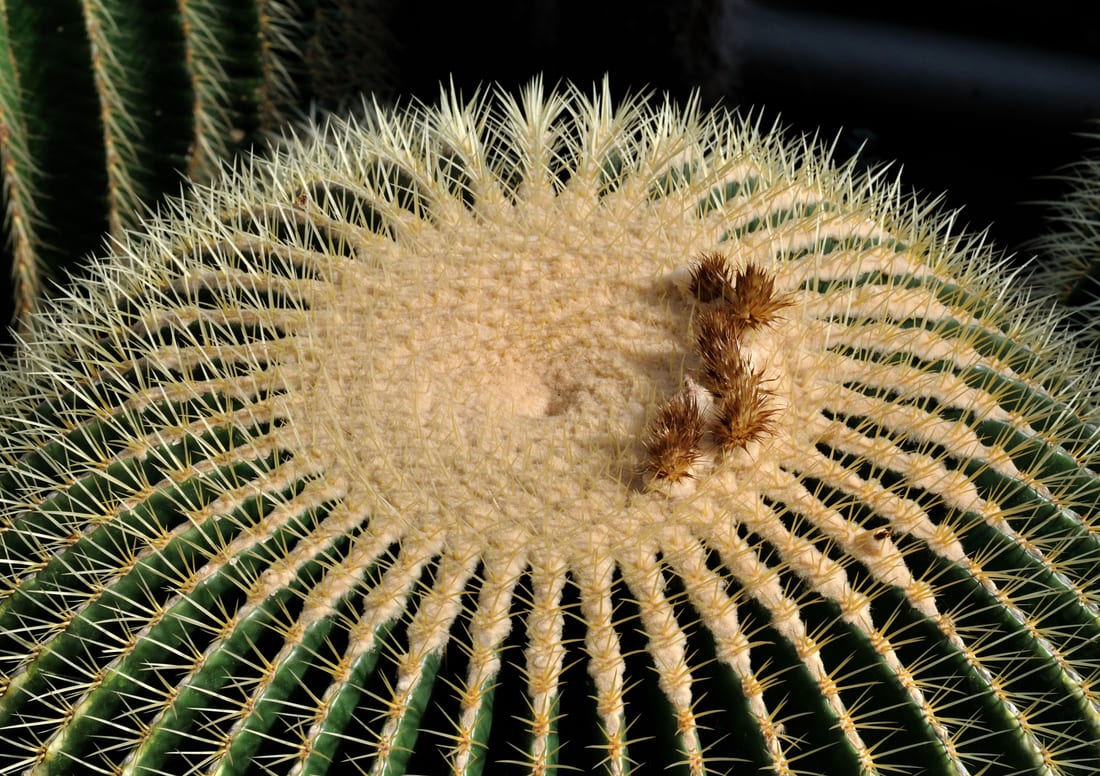
The golden barrel cactus (Echinocactus grusonii) is a round, ribbed cactus covered in stiff golden spines. It comes from a small region of central Mexico, where it's actually rare in the wild despite being common in cultivation. It grows very slowly into a globe a couple of hand-spans wide over many years, so it stays small and tidy for a long time. With its need for bright light and almost no water, it's an easy, space-saving plant for a sunny rental windowsill.
Water sparingly during the growing season and keep it nearly dry through winter, always in a gritty mix with good drainage. Give it the brightest, sunniest position you can find. It isn't chemically toxic to pets, but the sharp spines are a real hazard, so handle it with thick gloves or folded paper and place it where curious animals and people won't brush against it.
What it’s like to grow
This cactus thrives on being left almost entirely alone. Soft brown rot at the base is the main thing to watch for and comes from too much water, so keep it dry and let the soil drain freely. Pale or distorted growth means it isn't getting enough light. Give it a sunny spot and otherwise leave it be, and it does the rest. It is not chemically toxic to cats or dogs, but the stiff spines can injure them, so keep it out of the way of pets and bare hands.
What to expect
It’s forgiving, so it’s a good one to learn on. No sunny window? It also does fine under a clip-on grow light.
See what you’ll need to get started ↓Grow it alongside
Houseplants that want the same light, water and humidity are happy sharing a spot. See what thrives with Golden Barrel Cactus →
Tips
- Water sparingly in the growing season and keep it nearly dry in winter.
- Give it the brightest, sunniest spot available.
- Handle with thick gloves or folded paper; the spines are sharp.
Common problems
- Soft brown rot at the base from overwatering.
- Pale or distorted growth in too little light.
Common questions
Is Golden Barrel Cactus toxic to cats and dogs?
Golden Barrel Cactus is non-toxic to cats and dogs, which makes it a safe pick if you have pets. Source: ASPCA (not chemically toxic; spines are a hazard).
How much light does Golden Barrel Cactus need?
Golden Barrel Cactus wants bright light — a south-facing window with six or more hours of sun, or a grow light to make up for it.
How often should I water Golden Barrel Cactus?
Water Golden Barrel Cactus sparingly. Let the soil dry out fully between waterings — it's far more likely to rot from overwatering than to suffer from neglect.
What temperature does Golden Barrel Cactus need?
Golden Barrel Cactus is happiest around 18–30 °C. It tolerates brief dips to about 4 °C, but cold drafts and sudden chills set it back.
Can I grow Golden Barrel Cactus without a sunny window?
Yes. Golden Barrel Cactus does well under an affordable clip-on grow light, so a bright window isn't essential.
How big does Golden Barrel Cactus get?
A solitary golden-spined globe; slow-growing, reaching 0.2–0.4 m wide over many years.
How do I propagate Golden Barrel Cactus?
Sow seed on gritty mix and keep warm; offsets are rare on this species.
What pests affect Golden Barrel Cactus?
Watch for mealybugs, scale and spider mites. Check new growth and the undersides of leaves often, and treat early with a rinse or insecticidal soap before they spread.
Is Golden Barrel Cactus easy to grow?
Yes. Golden Barrel Cactus is forgiving and one of the better plants to learn on.
Gear for Golden Barrel Cactus
Gear suggestions to get you started — general picks, not paid placements.
Pet-toxicity from the ASPCA. Care details are general guidance, not professional or veterinary advice. Photo: Quartl, CC BY-SA 3.0, via Wikimedia Commons (CC-BY-SA). Care info last updated 2026-06-02.