foliage
DecorativeHeartleaf Philodendron
Philodendron hederaceum
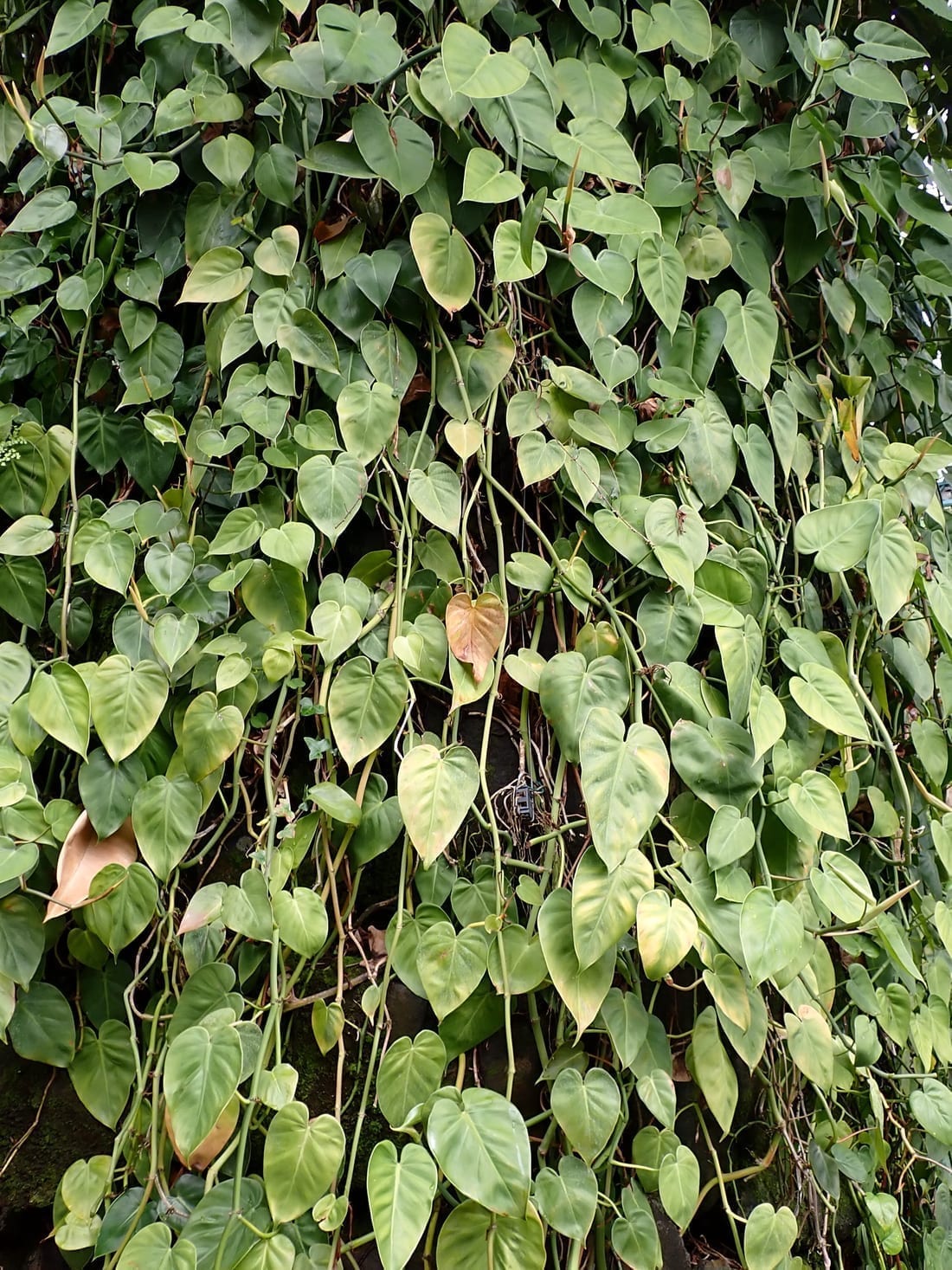
Toxic to cats and dogs — keep it out of reach (source: ASPCA).
A north-facing window or a few hours of indirect light is plenty.
Keep evenly moist — water when the top inch of soil is dry.
Forgiving and beginner-friendly.
Heartleaf philodendron is a forgiving trailing vine that tolerates low light and looks similar to pothos. It is toxic to cats and dogs if chewed.
About Heartleaf Philodendron
Heartleaf philodendron (Philodendron hederaceum) is a soft-leaved trailing vine that looks a lot like pothos and is just as forgiving. It's native to Central America and the Caribbean, where it climbs through warm, shaded forest. Indoors it trails or climbs to one or two metres with heart-shaped leaves, and it tolerates low light better than most, which makes it useful for a rental that doesn't get much sun. It stays manageable in a small pot and asks little of you.
Let the top of the soil dry between waterings and pinch the growing tips now and then to keep it full instead of stringy. It roots readily from stem cuttings dropped in a glass of water, so one plant becomes several. Give it a stake or moss pole if you'd rather it climb. Heartleaf philodendron is toxic to cats and dogs if chewed, so keep the vines out of their reach.
What it’s like to grow
An easy, adaptable plant that signals trouble in obvious ways. Yellow leaves usually mean it's been watered too often, while leggy stems with wide gaps between leaves point to light that's too dim. Regular pinching keeps it bushy. A friendly choice for beginners, lower-light rooms, and anyone who likes propagating cuttings to fill out a shelf. It is toxic to cats and dogs, so hang it or set it somewhere pets can't graze on the trailing growth.
What to expect
It’s forgiving, so it’s a good one to learn on. No sunny window? It also does fine under a clip-on grow light.
See what you’ll need to get started ↓Grow it alongside
Houseplants that want the same light, water and humidity are happy sharing a spot. See what thrives with Heartleaf Philodendron →
Tips
- Let the top of the soil dry between waterings.
- Pinch the tips to keep it full rather than leggy.
- Roots easily from stem cuttings in water.
Common problems
- Yellow leaves from overwatering.
- Leggy, sparse growth in very low light.
Common questions
Is Heartleaf Philodendron toxic to cats and dogs?
Heartleaf Philodendron is toxic to cats and dogs if eaten, so keep it out of reach of pets that chew. Source: ASPCA.
How much light does Heartleaf Philodendron need?
Heartleaf Philodendron tolerates low light and can sit away from a window. It still grows faster with more light, but it won't sulk in a dim corner.
How often should I water Heartleaf Philodendron?
Water Heartleaf Philodendron when the top inch of soil feels dry, then let it drain. Aim for evenly moist, not soggy.
What temperature does Heartleaf Philodendron need?
Heartleaf Philodendron is happiest around 18–27 °C. It tolerates brief dips to about 10 °C, but cold drafts and sudden chills set it back.
Can I grow Heartleaf Philodendron without a sunny window?
Yes. Heartleaf Philodendron does well under an affordable clip-on grow light, so a bright window isn't essential.
How big does Heartleaf Philodendron get?
A trailing or climbing vine with soft heart-shaped leaves; reaches 1–2 m indoors.
How do I propagate Heartleaf Philodendron?
Snip a vine below a node and root the cutting easily in a glass of water.
What pests affect Heartleaf Philodendron?
Watch for aphids, mealybugs, spider mites and scale. Check new growth and the undersides of leaves often, and treat early with a rinse or insecticidal soap before they spread.
Is Heartleaf Philodendron easy to grow?
Yes. Heartleaf Philodendron is forgiving and one of the better plants to learn on.
Gear for Heartleaf Philodendron
Gear suggestions to get you started — general picks, not paid placements.
Pet-toxicity from the ASPCA. Care details are general guidance, not professional or veterinary advice. Photo: Krzysztof Ziarnek, Kenraiz, CC BY-SA 4.0, via Wikimedia Commons (CC-BY-SA). Care info last updated 2026-06-02.