foliage
DecorativeHoya (Wax Plant)
Hoya carnosa
Considered non-toxic to cats and dogs (source: ASPCA (not specifically listed; treated pet-safe)).
A sunny south-facing window with 6+ hours, or a grow light.
Let the soil dry out between waterings; it dislikes staying wet.
Forgiving and beginner-friendly.
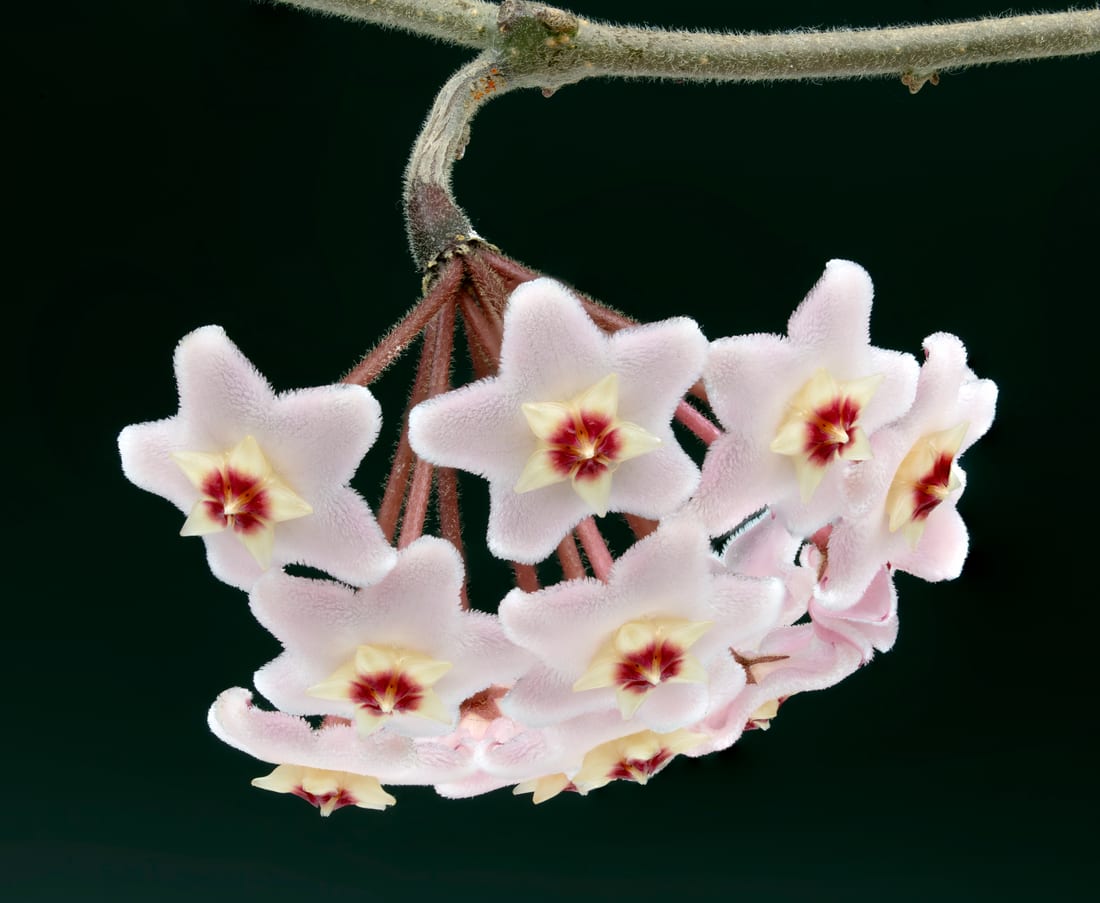
The wax plant is an easy, long-lived trailing vine with thick waxy leaves and clusters of star-shaped scented flowers. It is generally considered pet-safe.
About Hoya (Wax Plant)
The wax plant (Hoya carnosa) is a trailing vine from eastern Asia and Australia, with thick, waxy leaves and clusters of star-shaped, scented flowers. Indoors the stems reach a metre or two and train well on a trellis or moss pole, or trail from a hanging pot, so it adapts to whatever space a rental offers. It is long-lived, slow to need repotting, and generally treated as safe around cats and dogs.
The waxy leaves store water, so let the soil dry out well between waterings. Bright indirect light is what brings on the flower clusters. One quirk worth knowing: leave the spent flower spurs in place, because new blooms form from the same spots year after year.
What it’s like to grow
Hoya is easy and patient, well suited to someone who wants flowers without a lot of fuss. Its signals are clear in both directions: shrivelled leaves mean it has gone too dry, while soft or yellowing ones mean it has been overwatered. If it refuses to bloom, it almost always wants more light. Let it dry between waterings and give it a bright indirect spot. It is generally considered pet-safe, which adds to its appeal in a home with animals.
What to expect
It’s forgiving, so it’s a good one to learn on. No sunny window? It also does fine under a clip-on grow light.
See what you’ll need to get started ↓Grow it alongside
Houseplants that want the same light, water and humidity are happy sharing a spot. See what thrives with Hoya (Wax Plant) →
Tips
- Let the soil dry out well between waterings; the thick leaves store water.
- Give it bright indirect light to encourage the flower clusters.
- Leave the spent flower spurs on; new blooms form from the same spots.
Common problems
- Few or no flowers in too little light.
- Shriveled leaves from under-watering, or rot from overwatering.
Common questions
Is Hoya (Wax Plant) toxic to cats and dogs?
Hoya (Wax Plant) is non-toxic to cats and dogs, which makes it a safe pick if you have pets. Source: ASPCA (not specifically listed; treated pet-safe).
How much light does Hoya (Wax Plant) need?
Hoya (Wax Plant) wants bright light — a south-facing window with six or more hours of sun, or a grow light to make up for it.
How often should I water Hoya (Wax Plant)?
Water Hoya (Wax Plant) sparingly. Let the soil dry out fully between waterings — it's far more likely to rot from overwatering than to suffer from neglect.
What temperature does Hoya (Wax Plant) need?
Hoya (Wax Plant) is happiest around 18–27 °C. It tolerates brief dips to about 10 °C, but cold drafts and sudden chills set it back.
Can I grow Hoya (Wax Plant) without a sunny window?
Yes. Hoya (Wax Plant) does well under an affordable clip-on grow light, so a bright window isn't essential.
How big does Hoya (Wax Plant) get?
A trailing or climbing vine with thick waxy leaves; vines reach 1–2 m and can train on a trellis.
How do I propagate Hoya (Wax Plant)?
Root a stem cutting with one or two leaf nodes in water, then pot once roots form.
What pests affect Hoya (Wax Plant)?
Watch for mealybugs, aphids, spider mites and scale. Check new growth and the undersides of leaves often, and treat early with a rinse or insecticidal soap before they spread.
Is Hoya (Wax Plant) easy to grow?
Yes. Hoya (Wax Plant) is forgiving and one of the better plants to learn on.
Gear for Hoya (Wax Plant)
Gear suggestions to get you started — general picks, not paid placements.
Pet-toxicity from the ASPCA. Care details are general guidance, not professional or veterinary advice. Photo: Acroterion, CC BY-SA 4.0, via Wikimedia Commons (CC-BY-SA). Care info last updated 2026-06-02.