succulent
DecorativeKalanchoe (Florist Kalanchoe)
Kalanchoe blossfeldiana
Toxic to cats and dogs — keep it out of reach (source: ASPCA).
A sunny south-facing window with 6+ hours, or a grow light.
Let the soil dry out between waterings; it dislikes staying wet.
Forgiving and beginner-friendly.
Florist kalanchoe is an easy succulent grown for its long-lasting clusters of small bright flowers. It is toxic to cats and dogs if chewed.
About Kalanchoe (Florist Kalanchoe)
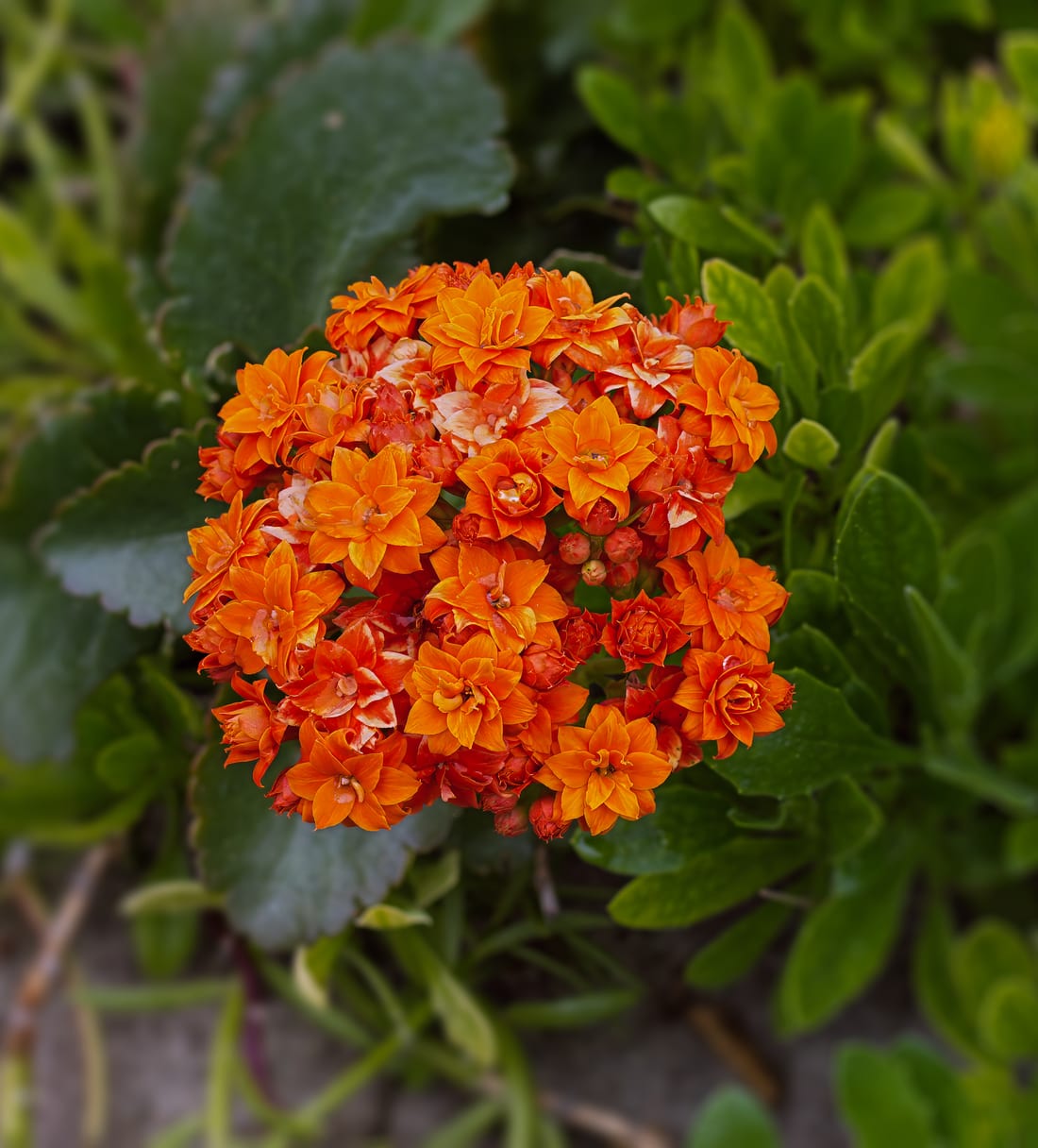
Florist kalanchoe (Kalanchoe blossfeldiana) is a succulent from Madagascar, grown for the dense clusters of small, bright flowers that sit above its thick scalloped leaves. It stays compact at 20 to 40 cm and the blooms last for weeks, so a 2-litre pot on a bright sill earns its keep in a small space. The fleshy leaves store water, which makes it forgiving of a missed watering.
Water only when the soil is dry and give it bright light to keep it compact and flowering. After the first flush fades, a stretch of longer nights over several weeks coaxes it to rebloom. It is toxic to cats and dogs if chewed, so keep it somewhere they cannot reach it.
What it’s like to grow
Kalanchoe is an easy succulent that mainly suffers from kindness. Water sitting in the crown or soggy soil brings rot, so let it dry out fully between drinks. In low light it stretches leggy and flowers poorly, so a bright sill is the answer. It stores water in its leaves and forgives the odd skipped watering. It is toxic to cats and dogs, so it is not for a pet household that nibbles plants, but otherwise a cheerful, low-fuss bloomer.
What to expect
It’s forgiving, so it’s a good one to learn on. No sunny window? It also does fine under a clip-on grow light.
See what you’ll need to get started ↓Grow it alongside
Houseplants that want the same light, water and humidity are happy sharing a spot. See what thrives with Kalanchoe (Florist Kalanchoe) →
Tips
- Water only when the soil is dry; its fleshy leaves store water.
- Give it bright light to keep it compact and encourage reblooming.
- To rebloom, give it longer nights for several weeks.
Common problems
- Rot from overwatering or water in the crown.
- Leggy growth and few flowers in low light.
Common questions
Is Kalanchoe (Florist Kalanchoe) toxic to cats and dogs?
Kalanchoe (Florist Kalanchoe) is toxic to cats and dogs if eaten, so keep it out of reach of pets that chew. Source: ASPCA.
How much light does Kalanchoe (Florist Kalanchoe) need?
Kalanchoe (Florist Kalanchoe) wants bright light — a south-facing window with six or more hours of sun, or a grow light to make up for it.
How often should I water Kalanchoe (Florist Kalanchoe)?
Water Kalanchoe (Florist Kalanchoe) sparingly. Let the soil dry out fully between waterings — it's far more likely to rot from overwatering than to suffer from neglect.
What temperature does Kalanchoe (Florist Kalanchoe) need?
Kalanchoe (Florist Kalanchoe) is happiest around 18–27 °C. It tolerates brief dips to about 10 °C, but cold drafts and sudden chills set it back.
Can I grow Kalanchoe (Florist Kalanchoe) without a sunny window?
Yes. Kalanchoe (Florist Kalanchoe) does well under an affordable clip-on grow light, so a bright window isn't essential.
How big does Kalanchoe (Florist Kalanchoe) get?
A compact succulent ~0.2–0.4 m tall with thick scalloped leaves and dense flower clusters.
How do I propagate Kalanchoe (Florist Kalanchoe)?
Let a leaf or stem cutting callus for a few days, then root it in dry, well-drained mix.
What pests affect Kalanchoe (Florist Kalanchoe)?
Watch for mealybugs, aphids and spider mites. Check new growth and the undersides of leaves often, and treat early with a rinse or insecticidal soap before they spread.
Is Kalanchoe (Florist Kalanchoe) easy to grow?
Yes. Kalanchoe (Florist Kalanchoe) is forgiving and one of the better plants to learn on.
Gear for Kalanchoe (Florist Kalanchoe)
Gear suggestions to get you started — general picks, not paid placements.
Pet-toxicity from the ASPCA. Care details are general guidance, not professional or veterinary advice. Photo: Sabalo22, CC0, via Wikimedia Commons (CC0). Care info last updated 2026-06-02.