succulent
DecorativeLiving Stones (Lithops)
Lithops spp.
Considered non-toxic to cats and dogs (source: ASPCA (not specifically listed; treated pet-safe)).
A sunny south-facing window with 6+ hours, or a grow light.
Let the soil dry out between waterings; it dislikes staying wet.
Rewards patience and steady attention.
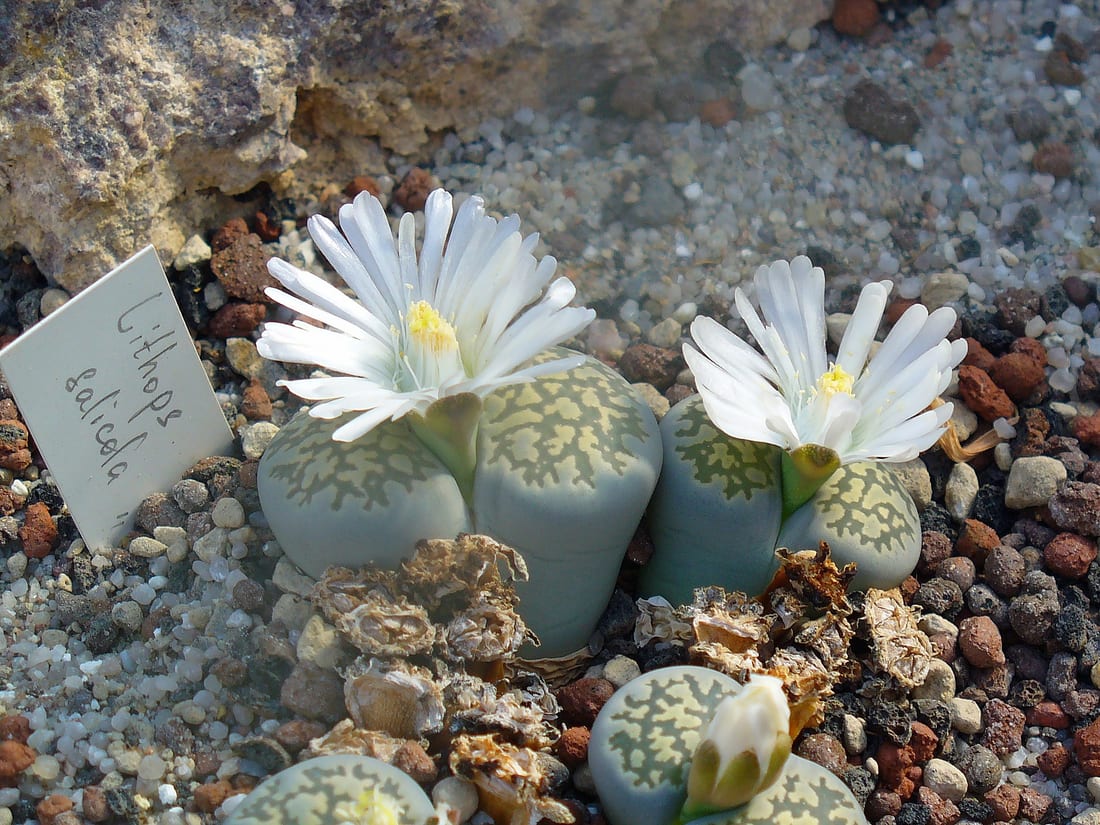
Lithops are tiny stone-mimic succulents that look like a pair of pebbles and store nearly all their water internally. They are generally pet-safe but demanding about a strict dry/wet cycle, so they suit patient growers.
About Living Stones (Lithops)
Lithops (Lithops spp.) are tiny stone-mimic succulents from the deserts of southern Africa, looking so much like a pair of pebbles that they hide from grazing animals. Each plant is just a fused pair of fleshy leaves, two to four centimetres across, storing nearly all its water inside. A single 1-litre pot can hold several, so they're a curiosity that fits the smallest windowsill.
The difficulty is the watering, which follows a strict seasonal dry-and-wet cycle. Water very little, and not at all while the plant is splitting and absorbing its old leaves into new ones. Give it very bright light, including direct sun, or it bloats and topples. Use a gritty, fast-draining mineral mix. The genus isn't specifically listed by the ASPCA and is treated as pet-safe.
What it’s like to grow
Lithops are advanced, and almost every failure traces back to water at the wrong moment. A body that splits, bursts or rots usually got a drink during its dormant or leaf-renewal phase, so timing matters more than amount. Tall, distorted, pale growth means it's starved of light. One for the patient grower who can resist the urge to water and read the plant's cycle. Not specifically listed by the ASPCA and treated as pet-safe, though their oddity is more likely to puzzle a pet than tempt one.
What to expect
It rewards patience and steady attention. No sunny window? It also does fine under a clip-on grow light.
See what you’ll need to get started ↓Grow it alongside
Houseplants that want the same light, water and humidity are happy sharing a spot. See what thrives with Living Stones (Lithops) →
Tips
- Water very little, and not at all while the plant is splitting and absorbing its old leaves.
- Give it very bright light, including direct sun, or it bloats and topples.
- Use a very gritty, fast-draining mineral mix.
Common problems
- Splitting, bursting or rotting bodies from watering at the wrong time of year.
- Tall, distorted, pale growth from too little light.
Common questions
Is Living Stones (Lithops) toxic to cats and dogs?
Living Stones (Lithops) is non-toxic to cats and dogs, which makes it a safe pick if you have pets. Source: ASPCA (not specifically listed; treated pet-safe).
How much light does Living Stones (Lithops) need?
Living Stones (Lithops) wants bright light — a south-facing window with six or more hours of sun, or a grow light to make up for it.
How often should I water Living Stones (Lithops)?
Water Living Stones (Lithops) sparingly. Let the soil dry out fully between waterings — it's far more likely to rot from overwatering than to suffer from neglect.
What temperature does Living Stones (Lithops) need?
Living Stones (Lithops) is happiest around 18–27 °C. It tolerates brief dips to about 5 °C, but cold drafts and sudden chills set it back.
Can I grow Living Stones (Lithops) without a sunny window?
Yes. Living Stones (Lithops) does well under an affordable clip-on grow light, so a bright window isn't essential.
How big does Living Stones (Lithops) get?
A pair of fused fleshy leaves, 2–4 cm across, that splits to reveal new leaves.
How do I propagate Living Stones (Lithops)?
Sow the fine seed on gritty mix and keep barely moist; seedlings grow very slowly.
What pests affect Living Stones (Lithops)?
Watch for mealybugs, spider mites and fungus gnats. Check new growth and the undersides of leaves often, and treat early with a rinse or insecticidal soap before they spread.
Is Living Stones (Lithops) easy to grow?
Living Stones (Lithops) is more demanding than most. It rewards experience and steady attention rather than a hands-off approach.
Gear for Living Stones (Lithops)
Gear suggestions to get you started — general picks, not paid placements.
Pet-toxicity from the ASPCA. Care details are general guidance, not professional or veterinary advice. Photo: H. Zell, CC BY-SA 3.0, via Wikimedia Commons (CC-BY-SA). Care info last updated 2026-06-02.