foliage
DecorativeMaidenhair Fern
Adiantum raddianum
Considered non-toxic to cats and dogs (source: ASPCA).
Some direct sun — an east or west window, or a few hours of direct light.
Likes consistently moist soil; don’t let it dry out.
Rewards patience and steady attention.
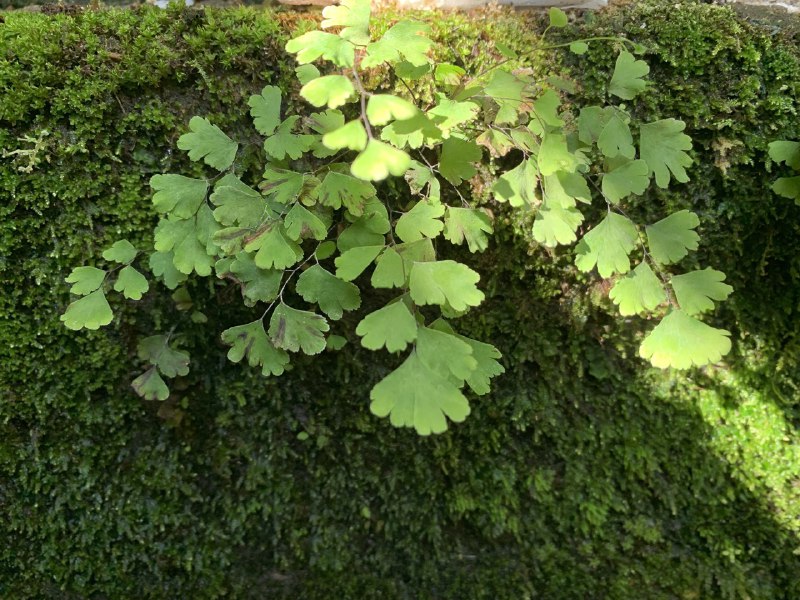
The maidenhair fern is a delicate fern with fine, fan-shaped leaflets on wiry black stems. It is pet-safe but unforgiving about drying out, so it suits growers who can keep it consistently moist and humid.
About Maidenhair Fern
The maidenhair fern (Adiantum raddianum) is a delicate fern with fine, fan-shaped leaflets on wiry black stems, found across warm, humid regions of the Americas. It forms a soft, airy clump around 30 to 50 cm and lives in a small pot, so it doesn't need much room. What it does need is the kind of steady humidity a bathroom or kitchen window can supply.
This is not a plant for the forgetful. Never let it dry out, because even one missed watering can crisp the fronds. Keep humidity high and keep it away from heaters and drafts. Give it bright indirect light rather than direct sun, which scorches the fine leaflets. On the plus side, it is non-toxic to cats and dogs, so it's safe to keep in a pet household.
What it’s like to grow
The maidenhair is demanding, mostly about never drying out. Crispy, browning fronds are its constant complaint, triggered by a single dry-out or by dry household air, so consistent moisture and humidity are non-negotiable. Bleached, scorched leaflets mean it's caught direct sun it can't take. Reliable waterers who can offer a humid corner will love it, while anyone hoping for a hands-off plant will be frustrated. It is non-toxic to cats and dogs, which makes it a safe choice around pets despite the fuss.
What to expect
It rewards patience and steady attention. No sunny window? It also does fine under a clip-on grow light.
See what you’ll need to get started ↓Grow it alongside
Houseplants that want the same light, water and humidity are happy sharing a spot. See what thrives with Maidenhair Fern →
Tips
- Never let it dry out; even one missed watering can crisp the fronds.
- Keep humidity high, away from heaters and drafts — a bathroom or kitchen often suits it.
- Give it bright indirect light, not direct sun, which scorches the fine leaflets.
Common problems
- Crispy, browning fronds from a single dry-out or dry air.
- Scorched, bleached leaflets in direct sun.
Common questions
Is Maidenhair Fern toxic to cats and dogs?
Maidenhair Fern is non-toxic to cats and dogs, which makes it a safe pick if you have pets. Source: ASPCA.
How much light does Maidenhair Fern need?
Maidenhair Fern does best in medium, indirect light: near an east or west window, or a little back from a bright one. Direct midday sun can scorch it.
How often should I water Maidenhair Fern?
Keep Maidenhair Fern's soil consistently moist. It likes regular water and dislikes drying out, so check it often in warm or dry rooms.
What temperature does Maidenhair Fern need?
Maidenhair Fern is happiest around 16–24 °C. It tolerates brief dips to about 10 °C, but cold drafts and sudden chills set it back.
Does Maidenhair Fern need high humidity?
Maidenhair Fern prefers humid air. Group it with other plants, stand it on a pebble tray, or run a humidifier — dry indoor air tends to brown the leaf tips.
Can I grow Maidenhair Fern without a sunny window?
Yes. Maidenhair Fern does well under an affordable clip-on grow light, so a bright window isn't essential.
How big does Maidenhair Fern get?
A soft, airy clump of lacy fronds on wiry black stems, about 0.3–0.5 m tall and wide.
How do I propagate Maidenhair Fern?
Split a mature rootball into clumps, each with fronds and roots, and repot.
What pests affect Maidenhair Fern?
Watch for scale, mealybugs, aphids and fungus gnats. Check new growth and the undersides of leaves often, and treat early with a rinse or insecticidal soap before they spread.
Is Maidenhair Fern easy to grow?
Maidenhair Fern is more demanding than most. It rewards experience and steady attention rather than a hands-off approach.
Gear for Maidenhair Fern
Gear suggestions to get you started — general picks, not paid placements.
Pet-toxicity from the ASPCA. Care details are general guidance, not professional or veterinary advice. Photo: Saniatricahyati, CC BY-SA 4.0, via Wikimedia Commons (CC-BY-SA). Care info last updated 2026-06-02.