leafy green
EdibleMalabar Spinach
Basella alba
Considered non-toxic to cats and dogs (source: ASPCA (not listed; high in oxalates)).
A sunny south-facing window with 6+ hours, or a grow light.
Likes consistently moist soil; don’t let it dry out.
Forgiving and beginner-friendly.
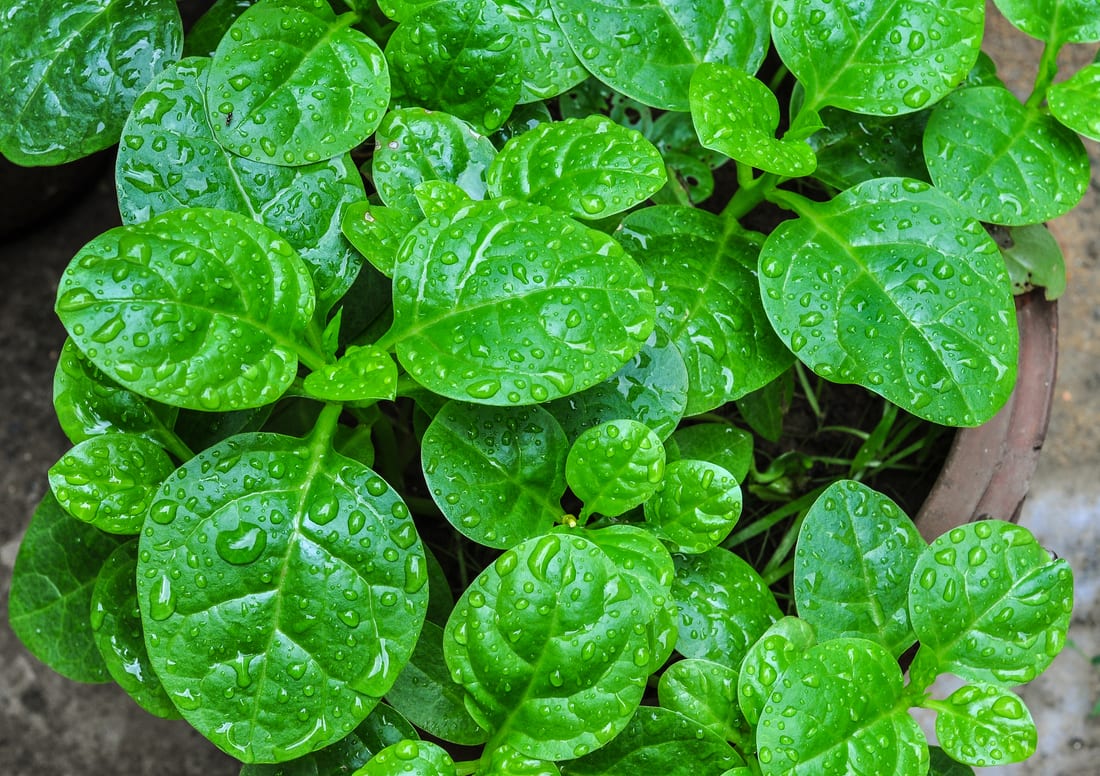
Malabar spinach is a tropical climbing vine grown for its thick, mild, slightly mucilaginous leaves used like spinach in stir-fries and soups. Unlike true spinach it loves heat and keeps producing through summer, but it needs support and warmth.
About Malabar Spinach
Malabar spinach (Basella alba) is a tropical climbing vine from South and Southeast Asia, grown for thick, glossy, mildly mucilaginous leaves used like spinach in stir-fries and soups. Its real selling point is heat tolerance: where true spinach bolts in summer, this keeps producing. It climbs to 1.5–2 m, so it needs a trellis and a large 8-litre pot, but a single plant gives a long warm-season supply.
Give it bright light, warmth, and plenty of water, and train it up a support as it climbs. Harvest the leaves and growing tips regularly to keep it branching rather than running to a single long stem. Cuttings root easily in water, so one plant becomes several. It does not bolt the way spinach does, which makes it a reliable hot-weather green. First harvests come around 55 to 75 days.
What it’s like to grow
Malabar spinach is easy as long as it has heat. Its main failing is the opposite of most greens: in cool rooms it stalls and grows slowly and stunted rather than thriving. It is a vigorous climber, so without a trellis it tangles. It wants bright light and high, steady water. This is a green for someone with a warm, sunny spot and room for a vine, ideal if true spinach keeps bolting on them. It is non-toxic to cats and dogs, though high in oxalates.
What to expect
First harvest in about 55–75 days. It’s forgiving, so it’s a good one to learn on. No sunny window? It also does fine under a clip-on grow light.
See what you’ll need to get started ↓♻ Regrow from scraps
Root a cut stem in water until roots form, then pot it; cuttings root readily.
Companions
Tips
- Give it a trellis or stake; it is a vigorous climber.
- Keep it warm and well watered; it sulks in cold rooms.
- Harvest leaves and tips regularly to encourage branching.
Common problems
- Slow, stunted growth in cool conditions.
- Can self-seed and spread if seeds drop outdoors.
Common questions
Is Malabar Spinach toxic to cats and dogs?
Malabar Spinach is non-toxic to cats and dogs, which makes it a safe pick if you have pets. Source: ASPCA (not listed; high in oxalates).
How much light does Malabar Spinach need?
Malabar Spinach wants bright light — a south-facing window with six or more hours of sun, or a grow light to make up for it.
How often should I water Malabar Spinach?
Keep Malabar Spinach's soil consistently moist. It likes regular water and dislikes drying out, so check it often in warm or dry rooms.
What temperature does Malabar Spinach need?
Malabar Spinach is happiest around 21–32 °C. It tolerates brief dips to about 10 °C, but cold drafts and sudden chills set it back.
Does Malabar Spinach need high humidity?
Malabar Spinach prefers humid air. Group it with other plants, stand it on a pebble tray, or run a humidifier — dry indoor air tends to brown the leaf tips.
How long does Malabar Spinach take to grow?
Expect a first harvest about 55–75 days from sowing under good conditions. A heat-loving climbing vine with thick glossy leaves; once established it produces steadily through warm weather and does not bolt like true spinach.
Can I grow Malabar Spinach without a sunny window?
Yes. Malabar Spinach does well under an affordable clip-on grow light, so a bright window isn't essential.
How big does Malabar Spinach get?
A climbing vine 1.5–2 m long that needs a trellis; one plant per large pot.
How do I propagate Malabar Spinach?
Root a cut stem in water until roots form, then pot it; cuttings root readily.
What pests affect Malabar Spinach?
Watch for aphids, spider mites and whitefly. Check new growth and the undersides of leaves often, and treat early with a rinse or insecticidal soap before they spread.
Is Malabar Spinach easy to grow?
Yes. Malabar Spinach is forgiving and one of the better plants to learn on.
Gear for Malabar Spinach
Gear suggestions to get you started — general picks, not paid placements.
Pet-toxicity from the ASPCA. Care details are general guidance, not professional or veterinary advice; only eat plants you can positively identify as the edible plant and part described. Photo: Joydeep, CC BY-SA 3.0, via Wikimedia Commons (CC-BY-SA). Care info last updated 2026-06-02.