foliage
DecorativePurple Shamrock
Oxalis triangularis
Toxic to cats and dogs — keep it out of reach (source: ASPCA).
A sunny south-facing window with 6+ hours, or a grow light.
Keep evenly moist — water when the top inch of soil is dry.
Forgiving and beginner-friendly.
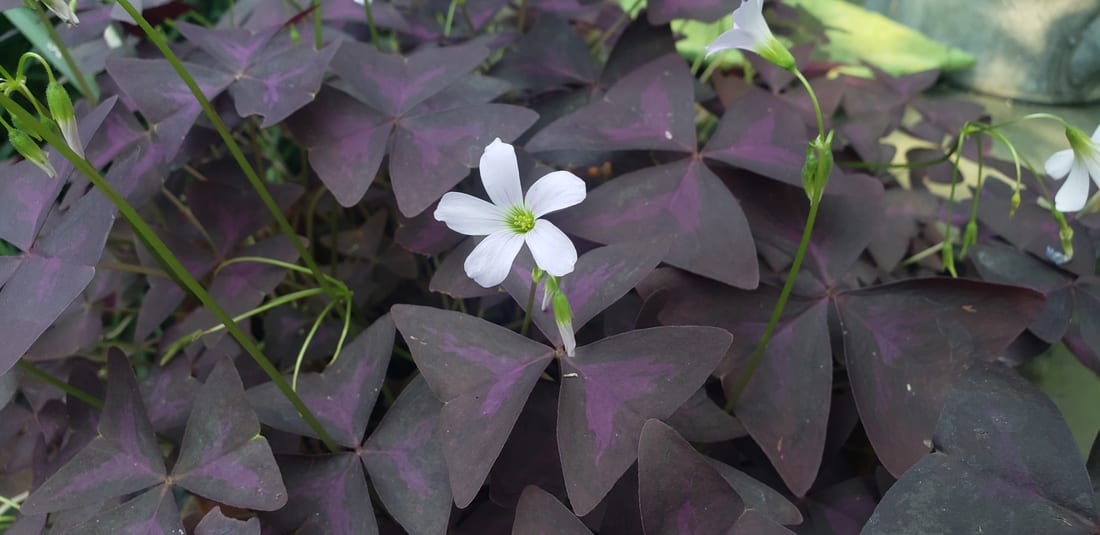
The purple shamrock is grown for its deep-purple triangular leaves that fold up and down with the daily light cycle, and it produces small pale flowers. It is toxic to cats and dogs if eaten.
About Purple Shamrock
The purple shamrock (Oxalis triangularis) grows from small bulbs and comes from southern Brazil. Its deep-purple, three-lobed leaves open and close with the daily light cycle, and it throws up small pale flowers along the way. It stays under about 30 cm and clumps tidily, so a 2-litre pot in a bright spot is all the space it needs in a small flat.
It's easy to keep. Give it bright light to hold the purple colour and keep the plant compact, and let the top of the soil dry slightly between waterings. If it dies back at some point, that's normal dormancy rather than death; rest the bulbs and it returns. Note that it is toxic to cats and dogs if eaten, so keep it where pets can't graze.
What it’s like to grow
Oxalis is forgiving and tells you plainly what it wants. Leggy, pale stems reaching across the room mean it needs more light. A sudden collapse and die-back can look alarming but is usually just the bulbs going dormant, so ease off the water and wait for regrowth rather than tossing it. An easy one for a beginner with a bright sill. One warning: it is toxic to cats and dogs if chewed, so it's a poor pick for a home where animals nibble plants.
What to expect
It’s forgiving, so it’s a good one to learn on. No sunny window? It also does fine under a clip-on grow light.
See what you’ll need to get started ↓Grow it alongside
Houseplants that want the same light, water and humidity are happy sharing a spot. See what thrives with Purple Shamrock →
Tips
- Give it bright light to keep the purple colour deep and the plant compact.
- Let the top of the soil dry slightly between waterings.
- If it dies back, that is normal dormancy; rest the bulbs and it will regrow.
Common problems
- Dying back to the bulbs, which is dormancy rather than death.
- Leggy, pale stems reaching for light in dim spots.
Common questions
Is Purple Shamrock toxic to cats and dogs?
Purple Shamrock is toxic to cats and dogs if eaten, so keep it out of reach of pets that chew. Source: ASPCA.
How much light does Purple Shamrock need?
Purple Shamrock wants bright light — a south-facing window with six or more hours of sun, or a grow light to make up for it.
How often should I water Purple Shamrock?
Water Purple Shamrock when the top inch of soil feels dry, then let it drain. Aim for evenly moist, not soggy.
What temperature does Purple Shamrock need?
Purple Shamrock is happiest around 15–24 °C. It tolerates brief dips to about 7 °C, but cold drafts and sudden chills set it back.
Can I grow Purple Shamrock without a sunny window?
Yes. Purple Shamrock does well under an affordable clip-on grow light, so a bright window isn't essential.
How big does Purple Shamrock get?
A clumping plant ~0.15–0.3 m tall, growing from small bulbs, with three-lobed purple leaves.
How do I propagate Purple Shamrock?
Separate the small bulbs at repotting and plant several together in fresh mix.
What pests affect Purple Shamrock?
Watch for spider mites, aphids and fungus gnats. Check new growth and the undersides of leaves often, and treat early with a rinse or insecticidal soap before they spread.
Is Purple Shamrock easy to grow?
Yes. Purple Shamrock is forgiving and one of the better plants to learn on.
Gear for Purple Shamrock
Gear suggestions to get you started — general picks, not paid placements.
Pet-toxicity from the ASPCA. Care details are general guidance, not professional or veterinary advice. Photo: EvanBaldonado, CC BY 4.0, via Wikimedia Commons (CC-BY). Care info last updated 2026-06-02.