flower
DecorativePeace Lily
Spathiphyllum spp.
Toxic to cats and dogs — keep it out of reach (source: ASPCA).
A north-facing window or a few hours of indirect light is plenty.
Keep evenly moist — water when the top inch of soil is dry.
Forgiving and beginner-friendly.
The peace lily tolerates low light and tells you clearly when it is thirsty by drooping, which makes its watering easy to read. It is toxic to pets if chewed.
About Peace Lily
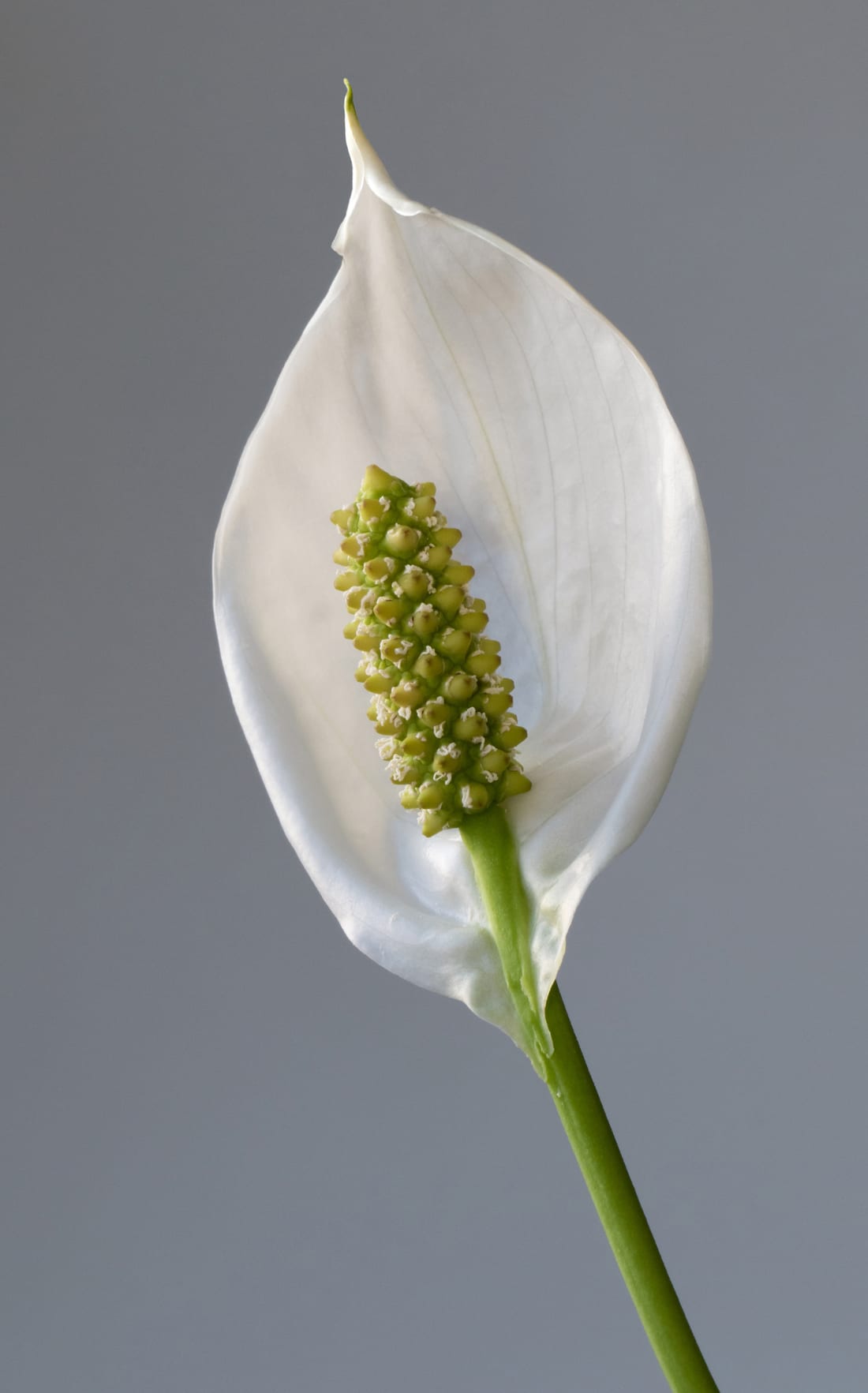
The peace lily (Spathiphyllum) is a low-light flowering plant that makes its needs obvious. It comes from the tropical forests of the Americas and Southeast Asia, growing in the shaded understory, which is why it copes with the dim corners most flowering plants refuse. It forms a clump around half a metre tall with glossy leaves and white hooded flower spathes. For a renter without much sun, it's one of the few plants that will both tolerate shade and bloom.
Watering is easy to judge because the leaves droop when the plant is thirsty and perk back up within hours of a drink. It flowers best in medium, indirect light rather than deep shade, and it dislikes cold drafts. Hard or mineral-heavy water can brown the leaf tips over time. The peace lily is toxic to cats and dogs if chewed, so keep it out of reach of pets.
What it’s like to grow
Few plants communicate as clearly as this one. Wilting leaves are the cue to water, and recovery is quick once you do. Brown leaf tips usually come from over-fertilizing or mineral-heavy tap water, and a shortage of flowers points to light that's too low. It's a good fit for shady rooms and people who want a visible watering signal. It is toxic to cats and dogs, so site it where animals can't chew the leaves.
What to expect
It’s forgiving, so it’s a good one to learn on. No sunny window? It also does fine under a clip-on grow light.
See what you’ll need to get started ↓Grow it alongside
Houseplants that want the same light, water and humidity are happy sharing a spot. See what thrives with Peace Lily →
Tips
- It droops when dry and recovers quickly after watering; use that as your cue.
- It flowers best in medium, indirect light rather than deep shade.
- Keep it away from cold drafts.
Common problems
- Brown leaf tips from over-fertilizing or mineral-heavy water.
- Few or no flowers in very low light.
Common questions
Is Peace Lily toxic to cats and dogs?
Peace Lily is toxic to cats and dogs if eaten, so keep it out of reach of pets that chew. Source: ASPCA.
How much light does Peace Lily need?
Peace Lily tolerates low light and can sit away from a window. It still grows faster with more light, but it won't sulk in a dim corner.
How often should I water Peace Lily?
Water Peace Lily when the top inch of soil feels dry, then let it drain. Aim for evenly moist, not soggy.
What temperature does Peace Lily need?
Peace Lily is happiest around 18–27 °C. It tolerates brief dips to about 10 °C, but cold drafts and sudden chills set it back.
Does Peace Lily need high humidity?
Peace Lily prefers humid air. Group it with other plants, stand it on a pebble tray, or run a humidifier — dry indoor air tends to brown the leaf tips.
Can I grow Peace Lily without a sunny window?
Yes. Peace Lily does well under an affordable clip-on grow light, so a bright window isn't essential.
How big does Peace Lily get?
A clumping plant ~0.3–0.6 m tall with glossy leaves and white hooded flower spathes.
How do I propagate Peace Lily?
Separate the clump into rooted crowns at repotting and pot each section up.
What pests affect Peace Lily?
Watch for spider mites, mealybugs, scale and aphids. Check new growth and the undersides of leaves often, and treat early with a rinse or insecticidal soap before they spread.
Is Peace Lily easy to grow?
Yes. Peace Lily is forgiving and one of the better plants to learn on.
Gear for Peace Lily
Gear suggestions to get you started — general picks, not paid placements.
Pet-toxicity from the ASPCA. Care details are general guidance, not professional or veterinary advice. Photo: W.carter, CC BY-SA 4.0, via Wikimedia Commons (CC-BY-SA). Care info last updated 2026-06-02.