flower
DecorativePhalaenopsis Orchid (Moth Orchid)
Phalaenopsis spp.
Considered non-toxic to cats and dogs (source: ASPCA).
Some direct sun — an east or west window, or a few hours of direct light.
Let the soil dry out between waterings; it dislikes staying wet.
Needs a little consistency, but nothing fancy.
The moth orchid is the most beginner-friendly orchid, blooming for weeks and asking only for bright indirect light and careful watering. It is pet-safe.
About Phalaenopsis Orchid (Moth Orchid)
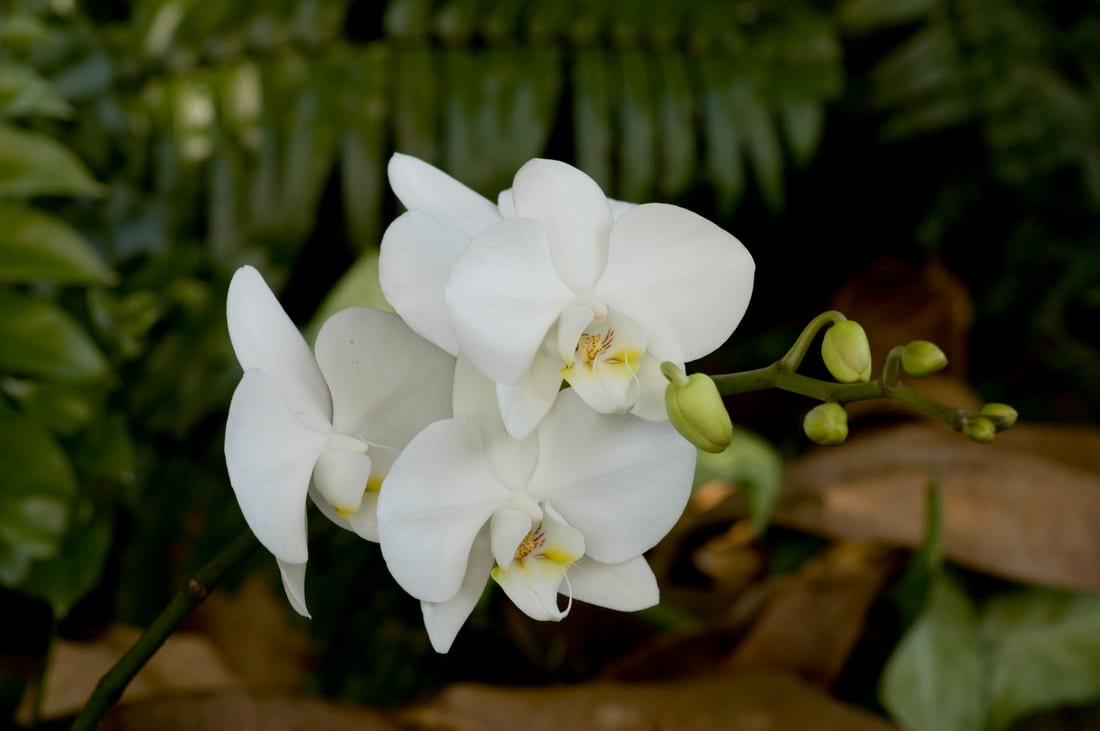
The moth orchid (Phalaenopsis) is the easiest orchid to start with and the one sold in every supermarket. The genus grows across tropical Southeast Asia and into Australia, mostly clinging to tree branches rather than rooting in soil, which is why it's potted in chunky bark rather than compost. It stays compact, with broad leaves and arching sprays of flowers that can last for weeks. It needs only a tiny pot and bright indirect light, so it fits neatly on a rental windowsill, and it's safe around cats and dogs.
Water roughly weekly by soaking the bark, then let it drain fully, and never leave the pot standing in water. Bright indirect light suits it, while direct midday sun yellows the leaves. After the flowers drop, trimming the spike can sometimes coax a second flush. The watering needs care, but the rest is undemanding for such a long-blooming plant.
What it’s like to grow
More approachable than its reputation suggests, the moth orchid still asks for careful watering. Limp, wrinkled leaves and crown rot both come from getting water wrong, either too much sitting in the pot or too little reaching the roots, so soak and drain rather than splash. Yellowing leaves mean too much direct sun. It's a good fit for a bright windowsill and a patient beginner. It is pet-safe, non-toxic to cats and dogs, which adds to its appeal in a busy home.
What to expect
It asks for a little consistency, but nothing fancy. No sunny window? It also does fine under a clip-on grow light.
See what you’ll need to get started ↓Grow it alongside
Houseplants that want the same light, water and humidity are happy sharing a spot. See what thrives with Phalaenopsis Orchid (Moth Orchid) →
Tips
- Water about weekly by soaking the bark, then let it drain fully; never leave it sitting in water.
- Give it bright indirect light, not direct midday sun.
- After flowers drop, you can trim the spike to encourage a possible rebloom.
Common problems
- Limp, wrinkled leaves and crown rot from over- or under-watering.
- Yellowing leaves from too much direct sun.
Common questions
Is Phalaenopsis Orchid (Moth Orchid) toxic to cats and dogs?
Phalaenopsis Orchid (Moth Orchid) is non-toxic to cats and dogs, which makes it a safe pick if you have pets. Source: ASPCA.
How much light does Phalaenopsis Orchid (Moth Orchid) need?
Phalaenopsis Orchid (Moth Orchid) does best in medium, indirect light: near an east or west window, or a little back from a bright one. Direct midday sun can scorch it.
How often should I water Phalaenopsis Orchid (Moth Orchid)?
Water Phalaenopsis Orchid (Moth Orchid) sparingly. Let the soil dry out fully between waterings — it's far more likely to rot from overwatering than to suffer from neglect.
What temperature does Phalaenopsis Orchid (Moth Orchid) need?
Phalaenopsis Orchid (Moth Orchid) is happiest around 18–29 °C. It tolerates brief dips to about 12 °C, but cold drafts and sudden chills set it back.
Does Phalaenopsis Orchid (Moth Orchid) need high humidity?
Phalaenopsis Orchid (Moth Orchid) prefers humid air. Group it with other plants, stand it on a pebble tray, or run a humidifier — dry indoor air tends to brown the leaf tips.
Can I grow Phalaenopsis Orchid (Moth Orchid) without a sunny window?
Yes. Phalaenopsis Orchid (Moth Orchid) does well under an affordable clip-on grow light, so a bright window isn't essential.
How big does Phalaenopsis Orchid (Moth Orchid) get?
A compact plant ~0.3–0.5 m tall with broad leaves and arching sprays of long-lasting flowers.
How do I propagate Phalaenopsis Orchid (Moth Orchid)?
Pot up a keiki (baby plantlet) once it grows its own roots from the flower spike.
What pests affect Phalaenopsis Orchid (Moth Orchid)?
Watch for mealybugs, scale, spider mites and aphids. Check new growth and the undersides of leaves often, and treat early with a rinse or insecticidal soap before they spread.
Is Phalaenopsis Orchid (Moth Orchid) easy to grow?
Phalaenopsis Orchid (Moth Orchid) is moderately easy. It asks for some consistency with light and water, but nothing advanced.
Gear for Phalaenopsis Orchid (Moth Orchid)
Gear suggestions to get you started — general picks, not paid placements.
Pet-toxicity from the ASPCA. Care details are general guidance, not professional or veterinary advice. Photo: Ianare Sévi, CC BY-SA 3.0, via Wikimedia Commons (CC-BY-SA). Care info last updated 2026-06-02.