foliage
DecorativeChinese Money Plant (Pilea)
Pilea peperomioides
Considered non-toxic to cats and dogs (source: ASPCA (not specifically listed; related Pilea listed non-toxic)).
Some direct sun — an east or west window, or a few hours of direct light.
Keep evenly moist — water when the top inch of soil is dry.
Forgiving and beginner-friendly.
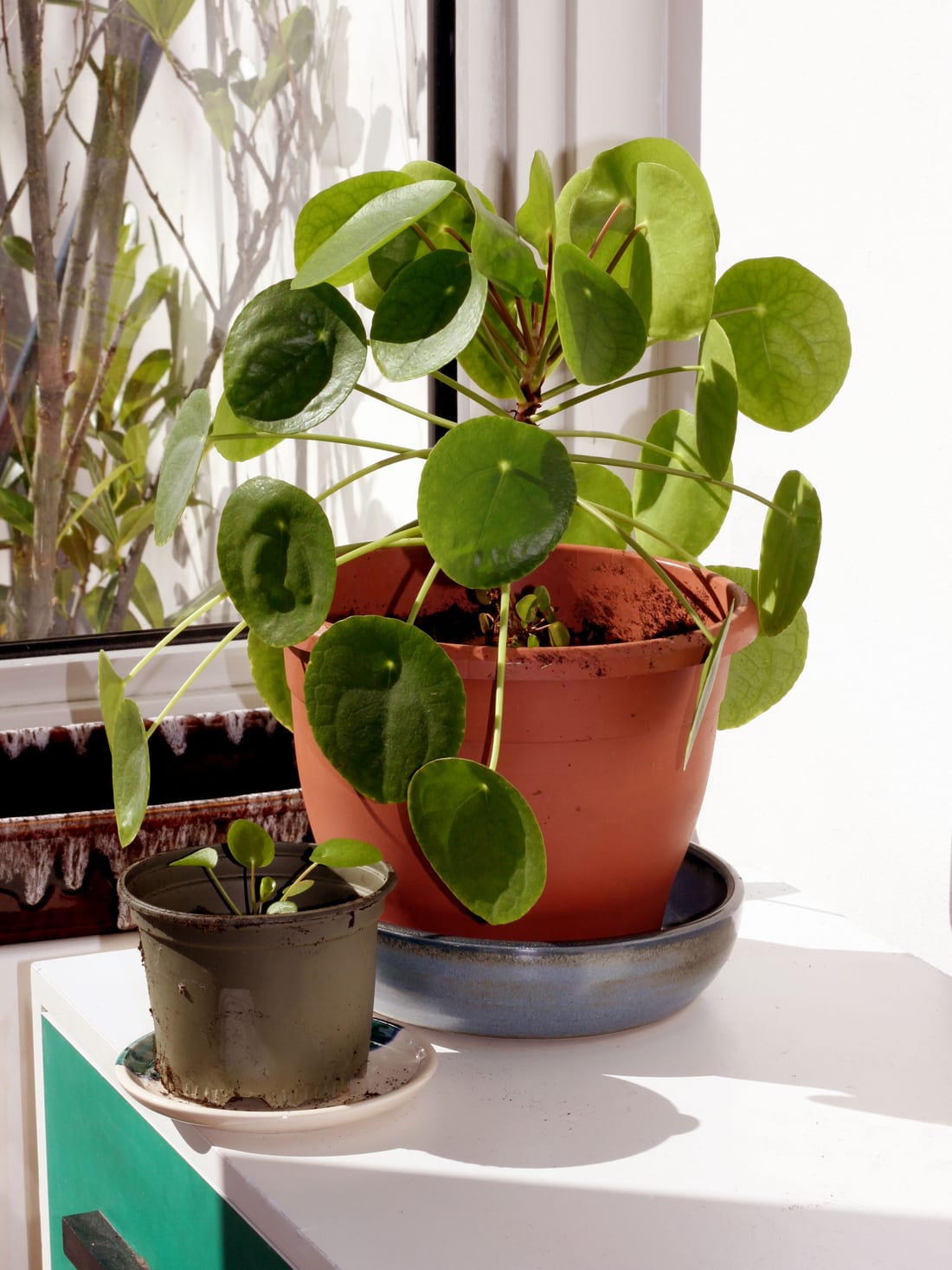
Pilea is a tidy, pet-friendly plant with round coin-shaped leaves that readily produces offshoot "pups" to share. Easy and compact for small spaces.
About Chinese Money Plant (Pilea)
The Chinese money plant (Pilea peperomioides) is a compact plant with round, coin-shaped leaves on slender stalks. It comes from the foothills of southwestern China and spread through home growers passing around its offshoots long before it hit the shops. It stays small, around a third of a metre tall, and produces little pups around its base that you can pot up and share. That tidy size, plus the fact that it's considered pet-safe, makes it a friendly choice for a small rental.
Give it medium, indirect light and rotate the pot regularly so it doesn't lean and grow lopsided toward the window. Let the top of the soil dry slightly before watering. Pot up the pups as they appear and you'll soon have spares for friends. It's easy and unfussy, with no toxic sap to worry about around cats and dogs.
What it’s like to grow
Pilea is straightforward and shows stress through its leaves. Drooping or curling can mean either too much or too little water, so check whether the soil is soggy or bone dry before deciding. Pale, stretched stems mean it needs more light, and a lean to one side means it needs turning. It's a good pick for small spaces, beginners, and homes with pets, since it is not listed as toxic to cats or dogs and stays compact.
What to expect
It’s forgiving, so it’s a good one to learn on. No sunny window? It also does fine under a clip-on grow light.
See what you’ll need to get started ↓Grow it alongside
Houseplants that want the same light, water and humidity are happy sharing a spot. See what thrives with Chinese Money Plant (Pilea) →
Tips
- Rotate it regularly so it grows evenly toward the light.
- Pot up the pups that appear in the soil to make new plants.
- Let the top of the soil dry slightly before watering.
Common problems
- Drooping or curling leaves from over- or under-watering.
- Pale, leggy stems in too little light.
Common questions
Is Chinese Money Plant (Pilea) toxic to cats and dogs?
Chinese Money Plant (Pilea) is non-toxic to cats and dogs, which makes it a safe pick if you have pets. Source: ASPCA (not specifically listed; related Pilea listed non-toxic).
How much light does Chinese Money Plant (Pilea) need?
Chinese Money Plant (Pilea) does best in medium, indirect light: near an east or west window, or a little back from a bright one. Direct midday sun can scorch it.
How often should I water Chinese Money Plant (Pilea)?
Water Chinese Money Plant (Pilea) when the top inch of soil feels dry, then let it drain. Aim for evenly moist, not soggy.
What temperature does Chinese Money Plant (Pilea) need?
Chinese Money Plant (Pilea) is happiest around 16–24 °C. It tolerates brief dips to about 10 °C, but cold drafts and sudden chills set it back.
Can I grow Chinese Money Plant (Pilea) without a sunny window?
Yes. Chinese Money Plant (Pilea) does well under an affordable clip-on grow light, so a bright window isn't essential.
How big does Chinese Money Plant (Pilea) get?
A compact plant ~0.2–0.3 m tall with round coin leaves; produces pups around the base.
How do I propagate Chinese Money Plant (Pilea)?
Detach the rooted baby plantlets that sprout from the soil or stem and pot them up.
What pests affect Chinese Money Plant (Pilea)?
Watch for fungus gnats, spider mites, mealybugs and aphids. Check new growth and the undersides of leaves often, and treat early with a rinse or insecticidal soap before they spread.
Is Chinese Money Plant (Pilea) easy to grow?
Yes. Chinese Money Plant (Pilea) is forgiving and one of the better plants to learn on.
Gear for Chinese Money Plant (Pilea)
Gear suggestions to get you started — general picks, not paid placements.
Pet-toxicity from the ASPCA. Care details are general guidance, not professional or veterinary advice. Photo: Husky, CC0, via Wikimedia Commons (CC0). Care info last updated 2026-06-02.