carnivorous
DecorativeTropical Pitcher Plant
Nepenthes spp.
Considered non-toxic to cats and dogs (source: ASPCA (not specifically listed; treated pet-safe)).
A sunny south-facing window with 6+ hours, or a grow light.
Likes consistently moist soil; don’t let it dry out.
Rewards patience and steady attention.
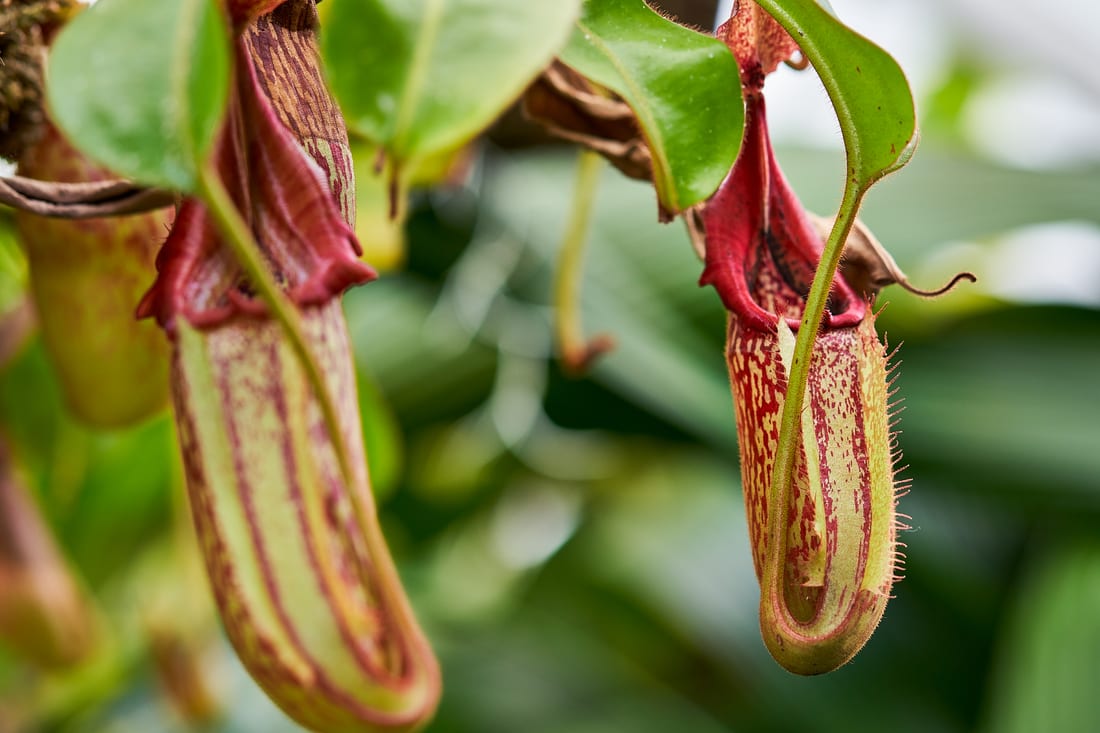
The tropical pitcher plant is a carnivorous vine that grows dangling pitcher-shaped traps filled with digestive fluid. It is generally pet-safe but demanding about humidity and water purity, so it suits committed growers.
About Tropical Pitcher Plant
The tropical pitcher plant (Nepenthes spp.) is a carnivorous vine from the humid forests of Southeast Asia, where its leaves extend into dangling, pitcher-shaped traps filled with digestive fluid. It trails or climbs and spreads over half a metre, so it suits a hanging pot where the pitchers can hang free. It's a conversation piece rather than an easy starter plant.
Water is the whole game: use only rain, distilled, or reverse-osmosis water, because tap-water minerals damage it. Keep humidity high and the mix damp but airy, with warmth and bright indirect light. Don't feed it kitchen meat; indoors it catches its own insects or needs none. The genus isn't specifically listed by the ASPCA and is treated as pet-safe.
What it’s like to grow
This is an advanced plant, demanding about humidity and water purity. The clearest sign of trouble is pitchers that fail to form, which happens in low humidity or low light, so a dry room is its enemy. Browning and slow decline usually mean mineral-rich tap water has built up, so switch to rain or distilled. It's for a committed grower who can supply pure water and a humid, bright spot. Not specifically listed by the ASPCA and treated as pet-safe.
What to expect
It rewards patience and steady attention. No sunny window? It also does fine under a clip-on grow light.
See what you’ll need to get started ↓Grow it alongside
Houseplants that want the same light, water and humidity are happy sharing a spot. See what thrives with Tropical Pitcher Plant →
Tips
- Use only rain, distilled, or reverse-osmosis water; tap-water minerals damage it.
- Keep humidity high and the mix damp but airy; it likes warmth and bright indirect light.
- Don’t feed it kitchen meat; it catches its own insects or needs none indoors.
Common problems
- Pitchers failing to form in low humidity or low light.
- Browning and decline from mineral-rich tap water.
Common questions
Is Tropical Pitcher Plant toxic to cats and dogs?
Tropical Pitcher Plant is non-toxic to cats and dogs, which makes it a safe pick if you have pets. Source: ASPCA (not specifically listed; treated pet-safe).
How much light does Tropical Pitcher Plant need?
Tropical Pitcher Plant wants bright light — a south-facing window with six or more hours of sun, or a grow light to make up for it.
How often should I water Tropical Pitcher Plant?
Keep Tropical Pitcher Plant's soil consistently moist. It likes regular water and dislikes drying out, so check it often in warm or dry rooms.
What temperature does Tropical Pitcher Plant need?
Tropical Pitcher Plant is happiest around 18–29 °C. It tolerates brief dips to about 12 °C, but cold drafts and sudden chills set it back.
Does Tropical Pitcher Plant need high humidity?
Tropical Pitcher Plant prefers humid air. Group it with other plants, stand it on a pebble tray, or run a humidifier — dry indoor air tends to brown the leaf tips.
Can I grow Tropical Pitcher Plant without a sunny window?
Yes. Tropical Pitcher Plant does well under an affordable clip-on grow light, so a bright window isn't essential.
How big does Tropical Pitcher Plant get?
A trailing or climbing plant with leaves that extend into hanging pitcher traps; spreads over 0.5 m.
How do I propagate Tropical Pitcher Plant?
Root a stem cutting with a node or two in damp sphagnum under high humidity.
What pests affect Tropical Pitcher Plant?
Watch for aphids, mealybugs, scale and spider mites. Check new growth and the undersides of leaves often, and treat early with a rinse or insecticidal soap before they spread.
Is Tropical Pitcher Plant easy to grow?
Tropical Pitcher Plant is more demanding than most. It rewards experience and steady attention rather than a hands-off approach.
Gear for Tropical Pitcher Plant
Gear suggestions to get you started — general picks, not paid placements.
Pet-toxicity from the ASPCA. Care details are general guidance, not professional or veterinary advice. Photo: geoff mckay, CC BY 2.0, via Wikimedia Commons (CC-BY). Care info last updated 2026-06-02.