foliage
DecorativePothos (Golden Pothos)
Epipremnum aureum
Toxic to cats and dogs — keep it out of reach (source: ASPCA).
A north-facing window or a few hours of indirect light is plenty.
Keep evenly moist — water when the top inch of soil is dry.
Forgiving and beginner-friendly.
Pothos is a near-indestructible trailing vine that grows in almost any light and is easy to propagate. It is toxic to cats and dogs if chewed.
About Pothos (Golden Pothos)
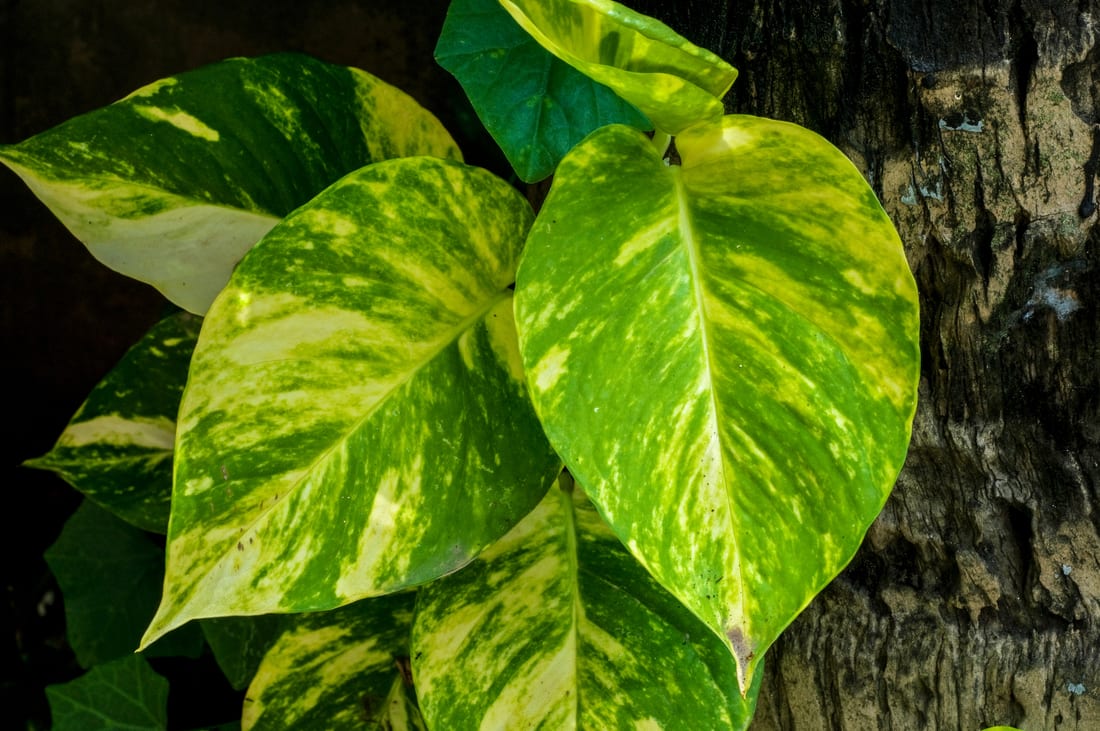
Pothos (Epipremnum aureum) is the trailing vine people reach for when they want something that just grows. It comes from the tropics of Southeast Asia and the western Pacific, where it scrambles up trees as a vigorous climber. Indoors it trails happily from a shelf or pot, with heart-shaped leaves on vines that can run two metres or more. It copes with low light and the occasional missed watering, which makes it close to foolproof for a first plant in a rental.
Let the soil dry partway between waterings and it forgives the rest. Brighter indirect light keeps the variegation strong, while deep shade tends to wash it out. Propagation is easy: snip a vine just below a node, stand it in water, and it roots within a couple of weeks. Pothos is toxic to cats and dogs if chewed, so hang or place it where pets can't get at the trailing stems.
What it’s like to grow
Pothos is about as easygoing as houseplants get and tells you plainly when it's unhappy. Yellow leaves point to overwatering, so let the pot dry out more between drinks. Long bare stretches of vine with leaves only at the tips mean the light is too low. It's a strong choice for beginners, dim apartments, and anyone who wants free plants from cuttings. It is toxic to cats and dogs, so keep the trailing vines up and out of reach of curious animals.
What to expect
It’s forgiving, so it’s a good one to learn on. No sunny window? It also does fine under a clip-on grow light.
See what you’ll need to get started ↓Grow it alongside
Houseplants that want the same light, water and humidity are happy sharing a spot. See what thrives with Pothos (Golden Pothos) →
Tips
- Let the soil dry out partway between waterings; it forgives the odd missed watering.
- Snip a vine below a node and root it in water to make new plants.
- Brighter indirect light keeps any variegation strong.
Common problems
- Yellow leaves from overwatering.
- Long bare vines with sparse leaves in very low light.
Common questions
Is Pothos (Golden Pothos) toxic to cats and dogs?
Pothos (Golden Pothos) is toxic to cats and dogs if eaten, so keep it out of reach of pets that chew. Source: ASPCA.
How much light does Pothos (Golden Pothos) need?
Pothos (Golden Pothos) tolerates low light and can sit away from a window. It still grows faster with more light, but it won't sulk in a dim corner.
How often should I water Pothos (Golden Pothos)?
Water Pothos (Golden Pothos) when the top inch of soil feels dry, then let it drain. Aim for evenly moist, not soggy.
What temperature does Pothos (Golden Pothos) need?
Pothos (Golden Pothos) is happiest around 18–27 °C. It tolerates brief dips to about 10 °C, but cold drafts and sudden chills set it back.
Can I grow Pothos (Golden Pothos) without a sunny window?
Yes. Pothos (Golden Pothos) does well under an affordable clip-on grow light, so a bright window isn't essential.
How big does Pothos (Golden Pothos) get?
A trailing or climbing vine with heart-shaped leaves; vines can reach 2 m or more.
How do I propagate Pothos (Golden Pothos)?
Snip a vine below a node and root it in a glass of water within a couple of weeks.
What pests affect Pothos (Golden Pothos)?
Watch for mealybugs, spider mites, scale and fungus gnats. Check new growth and the undersides of leaves often, and treat early with a rinse or insecticidal soap before they spread.
Is Pothos (Golden Pothos) easy to grow?
Yes. Pothos (Golden Pothos) is forgiving and one of the better plants to learn on.
Gear for Pothos (Golden Pothos)
Gear suggestions to get you started — general picks, not paid placements.
Pet-toxicity from the ASPCA. Care details are general guidance, not professional or veterinary advice. Photo: Joydeep, CC BY-SA 3.0, via Wikimedia Commons (CC-BY-SA). Care info last updated 2026-06-02.