foliage
DecorativeRubber Plant
Ficus elastica
Toxic to cats and dogs — keep it out of reach (source: ASPCA).
Some direct sun — an east or west window, or a few hours of direct light.
Keep evenly moist — water when the top inch of soil is dry.
Needs a little consistency, but nothing fancy.
The rubber plant is a sturdy, upright foliage plant with thick glossy leaves that is easier than the fiddle leaf fig. Its sap is toxic to pets and irritating to skin.
About Rubber Plant
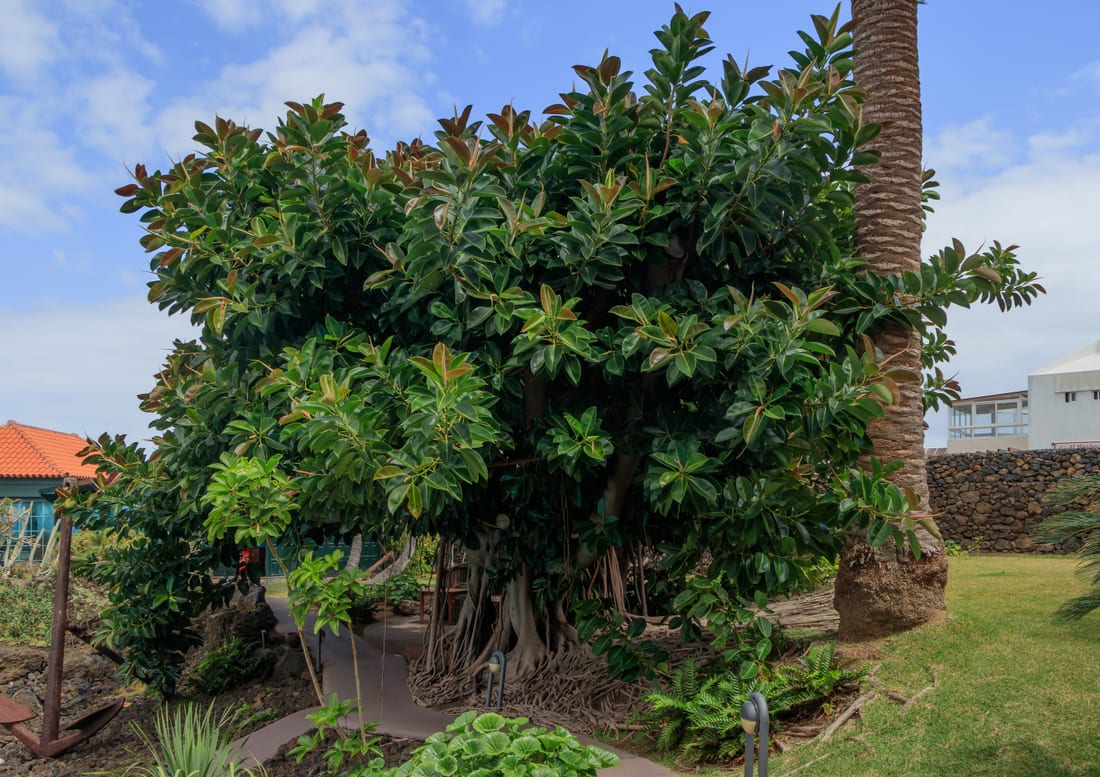
The rubber plant (Ficus elastica) is an upright foliage tree with thick, leathery leaves and a glossy finish. It's native to the forests of South and Southeast Asia, where it grows into a large tree. As a houseplant it reaches one to two metres and stays more forgiving than its cousin the fiddle leaf fig, which makes it a good step up for someone building confidence. It does well in medium light and a decent-sized pot, so it suits a moderately bright rental room.
Let the top of the soil dry between waterings and keep it in bright indirect light for strong, even growth. Wiping the broad leaves keeps them glossy and dust-free. It doesn't like sudden cold or being soaked, but otherwise it's steady and undemanding. The sap is toxic to cats and dogs and can irritate skin, so keep pets away from it and handle cut stems with care.
What it’s like to grow
Sturdier and more relaxed than a fiddle leaf, the rubber plant still has clear tells. Lower leaves dropping usually mean overwatering or a sudden chill. Growth that stretches and reaches with widely spaced leaves means the light is too dim. It's a reasonable pick for someone ready for a small indoor tree but not yet up for a finicky one. The sap is toxic to cats and dogs and irritating to skin, so keep it clear of animals and wash your hands after pruning.
What to expect
It asks for a little consistency, but nothing fancy. No sunny window? It also does fine under a clip-on grow light.
See what you’ll need to get started ↓Grow it alongside
Houseplants that want the same light, water and humidity are happy sharing a spot. See what thrives with Rubber Plant →
Tips
- Let the top of the soil dry between waterings.
- Bright indirect light keeps growth strong.
- Wipe leaves to keep them glossy and dust-free.
Common problems
- Lower leaves dropping from overwatering or sudden cold.
- Leggy growth reaching toward a too-dim light source.
Common questions
Is Rubber Plant toxic to cats and dogs?
Rubber Plant is toxic to cats and dogs if eaten, so keep it out of reach of pets that chew. Source: ASPCA.
How much light does Rubber Plant need?
Rubber Plant does best in medium, indirect light: near an east or west window, or a little back from a bright one. Direct midday sun can scorch it.
How often should I water Rubber Plant?
Water Rubber Plant when the top inch of soil feels dry, then let it drain. Aim for evenly moist, not soggy.
What temperature does Rubber Plant need?
Rubber Plant is happiest around 18–27 °C. It tolerates brief dips to about 10 °C, but cold drafts and sudden chills set it back.
Can I grow Rubber Plant without a sunny window?
Yes. Rubber Plant does well under an affordable clip-on grow light, so a bright window isn't essential.
How big does Rubber Plant get?
An upright indoor tree with broad leathery leaves; reaches 1–2 m indoors.
How do I propagate Rubber Plant?
Root a stem-tip cutting with a node in water or moist soil, then pot up.
What pests affect Rubber Plant?
Watch for spider mites, scale, mealybugs and thrips. Check new growth and the undersides of leaves often, and treat early with a rinse or insecticidal soap before they spread.
Is Rubber Plant easy to grow?
Rubber Plant is moderately easy. It asks for some consistency with light and water, but nothing advanced.
Gear for Rubber Plant
Gear suggestions to get you started — general picks, not paid placements.
Pet-toxicity from the ASPCA. Care details are general guidance, not professional or veterinary advice. Photo: H. Zell, CC BY-SA 3.0, via Wikimedia Commons (CC-BY-SA). Care info last updated 2026-06-02.