succulent
DecorativeString of Hearts
Ceropegia woodii
Considered non-toxic to cats and dogs (source: ASPCA (not specifically listed; treated pet-safe)).
A sunny south-facing window with 6+ hours, or a grow light.
Let the soil dry out between waterings; it dislikes staying wet.
Forgiving and beginner-friendly.
String of hearts is a delicate trailing succulent with heart-shaped, marbled leaves on thin purple stems. It is generally considered pet-safe and is one of the easier trailing succulents.
About String of Hearts
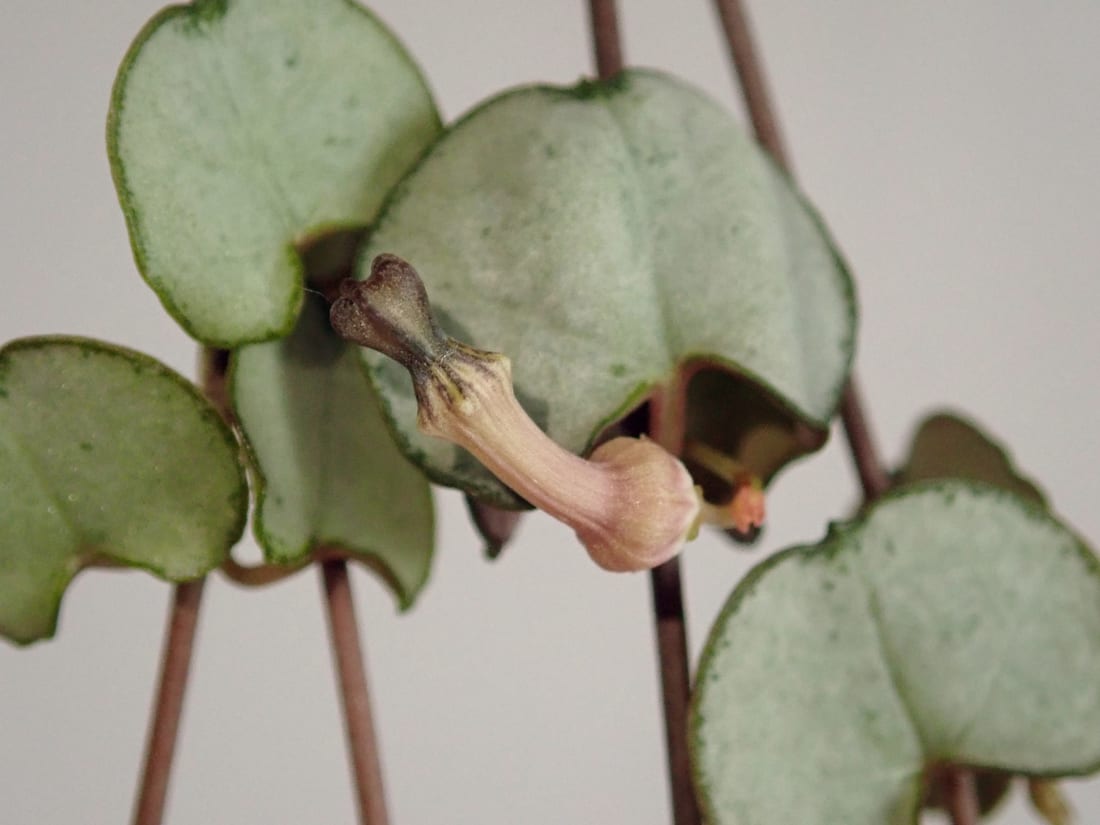
String of hearts (Ceropegia woodii) is a fine trailing vine from southern Africa, with paired heart-shaped leaves marbled in silver on thin purple stems. The strands can hang a metre or more, so it belongs in a hanging pot or on a high shelf where it can drape. A small container suits it, which makes it an easy fit for a renter working with limited surfaces.
It's one of the more forgiving trailing succulents. Bright, indirect light with some gentle sun keeps the silver markings strong, and the small tubers along the stems let it store water, so let the soil dry between drinks. You can lay a strand on soil to root those aerial tubers into new plants. The species isn't specifically listed by the ASPCA and is treated as pet-safe.
What it’s like to grow
String of hearts is easy and signals its needs clearly. Long bare gaps between the leaves mean the light is too low, so move it brighter. Yellow, mushy leaves are the overwatering warning, easy to avoid since the tubers carry it through dry spells. A good pick for a beginner who wants a trailing plant without the fussiness of string of pearls. It's treated as pet-safe rather than formally cleared by the ASPCA, so it's a low-concern option around cats and dogs.
What to expect
It’s forgiving, so it’s a good one to learn on. No sunny window? It also does fine under a clip-on grow light.
See what you’ll need to get started ↓Grow it alongside
Houseplants that want the same light, water and humidity are happy sharing a spot. See what thrives with String of Hearts →
Tips
- Bright indirect light, with some gentle sun, keeps the silver markings strong.
- Let the soil dry out between waterings; the small tubers store water.
- Lay a strand on soil to root the little aerial tubers into new plants.
Common problems
- Long bare gaps between leaves in too little light.
- Yellow, mushy leaves from overwatering.
Common questions
Is String of Hearts toxic to cats and dogs?
String of Hearts is non-toxic to cats and dogs, which makes it a safe pick if you have pets. Source: ASPCA (not specifically listed; treated pet-safe).
How much light does String of Hearts need?
String of Hearts wants bright light — a south-facing window with six or more hours of sun, or a grow light to make up for it.
How often should I water String of Hearts?
Water String of Hearts sparingly. Let the soil dry out fully between waterings — it's far more likely to rot from overwatering than to suffer from neglect.
What temperature does String of Hearts need?
String of Hearts is happiest around 18–26 °C. It tolerates brief dips to about 7 °C, but cold drafts and sudden chills set it back.
Can I grow String of Hearts without a sunny window?
Yes. String of Hearts does well under an affordable clip-on grow light, so a bright window isn't essential.
How big does String of Hearts get?
A fine trailing vine with paired heart-shaped marbled leaves; strands can hang 1 m or more.
How do I propagate String of Hearts?
Root a strand in water or soil, or plant the small tubers that form along the vine.
What pests affect String of Hearts?
Watch for mealybugs, aphids and spider mites. Check new growth and the undersides of leaves often, and treat early with a rinse or insecticidal soap before they spread.
Is String of Hearts easy to grow?
Yes. String of Hearts is forgiving and one of the better plants to learn on.
Gear for String of Hearts
Gear suggestions to get you started — general picks, not paid placements.
Pet-toxicity from the ASPCA. Care details are general guidance, not professional or veterinary advice. Photo: Salicyna, CC BY-SA 4.0, via Wikimedia Commons (CC-BY-SA). Care info last updated 2026-06-02.