foliage
DecorativeZZ Plant
Zamioculcas zamiifolia
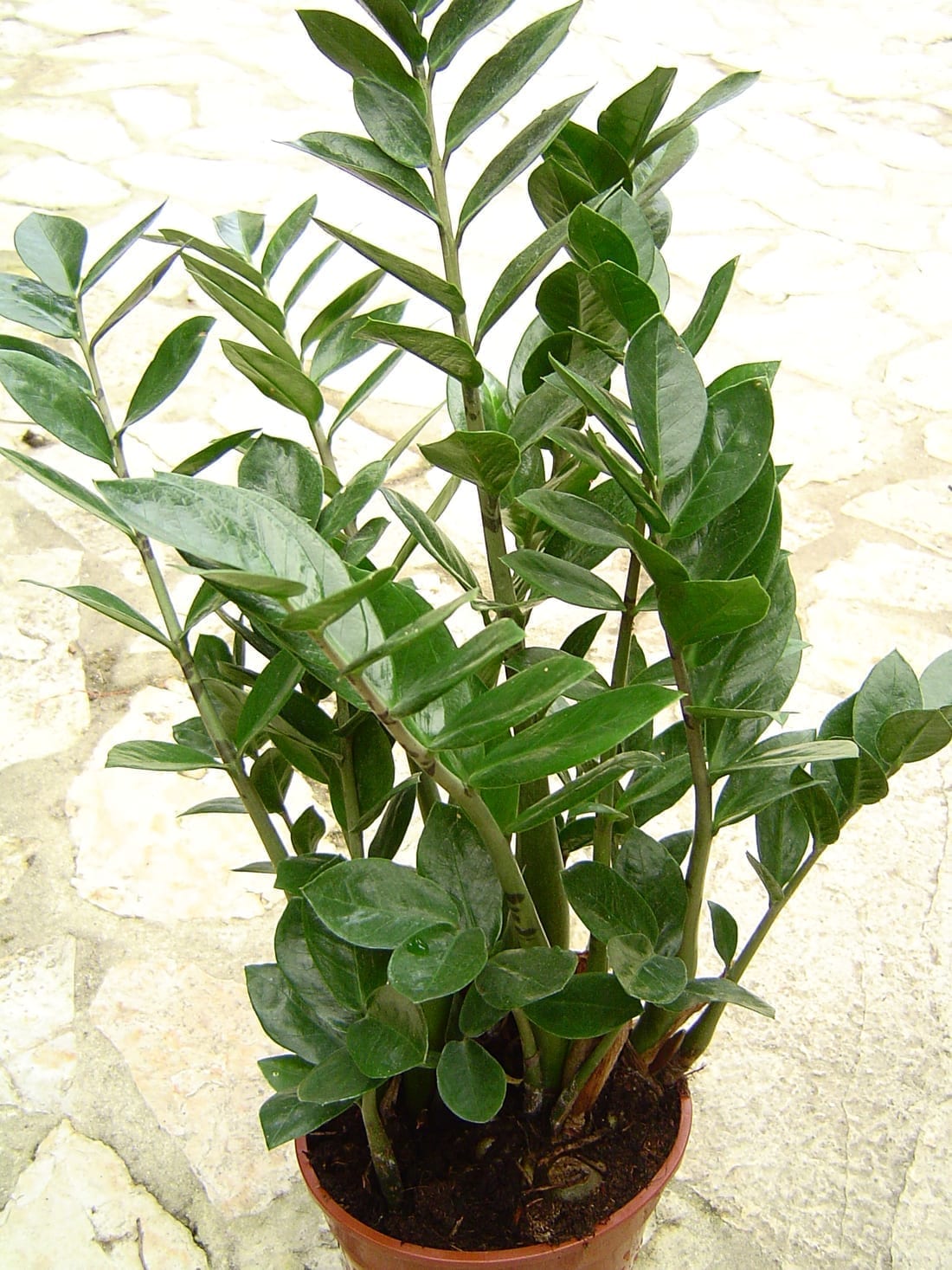
Toxic to cats and dogs — keep it out of reach (source: ASPCA).
A north-facing window or a few hours of indirect light is plenty.
Let the soil dry out between waterings; it dislikes staying wet.
Forgiving and beginner-friendly.
The ZZ plant thrives on neglect, low light, and infrequent watering, making it a solid choice for forgetful or low-light growers. It is toxic to pets if chewed.
About ZZ Plant
The ZZ plant (Zamioculcas zamiifolia) is built for neglect. It grows naturally in the dry grasslands and forests of eastern Africa, storing water in fat underground rhizomes that let it ride out long dry spells. Indoors that translates to a plant you can forget for weeks, with glossy upright leaves forming a clump around two thirds of a metre tall. It handles low light and infrequent watering, so it fits a dim hallway or office corner where fussier plants sulk.
Water only when the soil has dried out completely, since those rhizomes rot if left sitting wet. It tolerates deep shade but grows faster in medium light, and it never needs much fuss beyond that. Keep it out of standing water and it will hold its shape for years. The ZZ plant is toxic to cats and dogs if chewed, so place it where animals can't reach the foliage.
What it’s like to grow
This plant does best left alone, and most harm comes from watering it too often. Yellowing stalks are the classic sign of overwatering, so let it dry fully before the next drink. In deep shade it slows almost to a stop but stays alive, so dark rooms are no problem. It's a good match for forgetful owners, low-light spots, and people new to houseplants who want something nearly indestructible. It is toxic to cats and dogs, so keep it away from pets that chew.
What to expect
It’s forgiving, so it’s a good one to learn on. No sunny window? It also does fine under a clip-on grow light.
See what you’ll need to get started ↓Grow it alongside
Houseplants that want the same light, water and humidity are happy sharing a spot. See what thrives with ZZ Plant →
Tips
- Water only when the soil is fully dry; its rhizomes store water.
- It handles low light but grows slowly there; medium light speeds it up.
- Avoid leaving it in standing water, which rots the rhizomes.
Common problems
- Yellowing stalks from overwatering.
- Very slow growth in deep shade.
Common questions
Is ZZ Plant toxic to cats and dogs?
ZZ Plant is toxic to cats and dogs if eaten, so keep it out of reach of pets that chew. Source: ASPCA.
How much light does ZZ Plant need?
ZZ Plant tolerates low light and can sit away from a window. It still grows faster with more light, but it won't sulk in a dim corner.
How often should I water ZZ Plant?
Water ZZ Plant sparingly. Let the soil dry out fully between waterings — it's far more likely to rot from overwatering than to suffer from neglect.
What temperature does ZZ Plant need?
ZZ Plant is happiest around 18–27 °C. It tolerates brief dips to about 10 °C, but cold drafts and sudden chills set it back.
Can I grow ZZ Plant without a sunny window?
Yes. ZZ Plant does well under an affordable clip-on grow light, so a bright window isn't essential.
How big does ZZ Plant get?
Upright, glossy compound leaves forming a clump roughly 0.6–0.9 m tall.
How do I propagate ZZ Plant?
Split the rhizomes at repotting; leaf cuttings also root slowly over many months.
What pests affect ZZ Plant?
Watch for mealybugs, spider mites and fungus gnats. Check new growth and the undersides of leaves often, and treat early with a rinse or insecticidal soap before they spread.
Is ZZ Plant easy to grow?
Yes. ZZ Plant is forgiving and one of the better plants to learn on.
Gear for ZZ Plant
Gear suggestions to get you started — general picks, not paid placements.
Pet-toxicity from the ASPCA. Care details are general guidance, not professional or veterinary advice. Photo: WeFt, CC BY-SA 3.0, via Wikimedia Commons (CC-BY-SA). Care info last updated 2026-06-02.