leafy green
EdibleEscarole
Cichorium endivia var. latifolia
Considered non-toxic to cats and dogs (source: ASPCA (not listed; Cichorium)).
Some direct sun — an east or west window, or a few hours of direct light.
Keep evenly moist — water when the top inch of soil is dry.
Needs a little consistency, but nothing fancy.
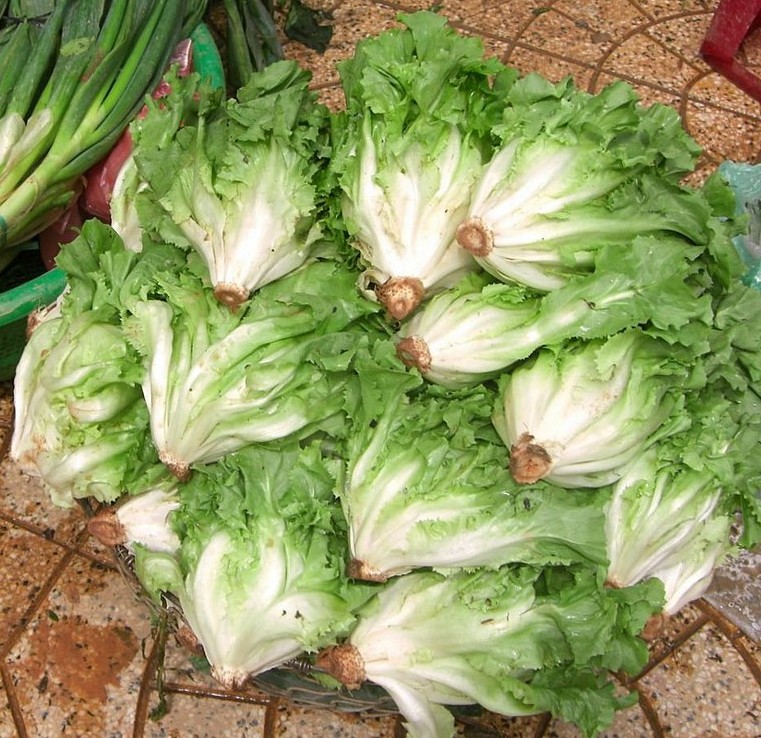
Escarole is the broad-leaved form of endive, with flatter, less bitter leaves that hold up well to braising and soups as well as salads. The pale inner leaves are noticeably milder and sweeter than the outer ones.
About Escarole
Escarole (Cichorium endivia var. latifolia) is the broad-leaved form of endive, with flatter, less bitter leaves that hold up well to braising and soups as well as salads. The pale inner leaves are noticeably milder and sweeter than the outer ones. It forms a broad rosette and fits a 5-litre pot, so it works as a windowsill crop in medium light for a renter who likes a sturdy cooking green.
As with endive, blanching the center by tying it up or covering it for a week or two before harvest sweetens the inner leaves. Keep it cool and evenly watered to hold the bitterness down. A practical approach is to cook the tougher outer leaves and save the tender inner ones for raw use. It takes medium light and moderate water, with heads ready around 70 to 90 days.
What it’s like to grow
Escarole behaves much like its sibling endive and rates moderate for the same reasons: it needs cool conditions and a blanching step to taste its best. Warm spells bring bitterness and bolting, while a head left wet in the center can develop crown rot. It grows in medium light with moderate, even water. It is a good fit for someone who wants a green that works in soups and braises as much as salads, and it is non-toxic to cats and dogs.
What to expect
First harvest in about 70–90 days. It asks for a little consistency, but nothing fancy. No sunny window? It also does fine under a clip-on grow light.
See what you’ll need to get started ↓Companions
Tips
- Blanch the center (tie up or cover) before harvest to sweeten the inner leaves.
- Keep it cool and evenly watered to limit bitterness.
- Use the tougher outer leaves cooked and the tender inner ones raw.
Common problems
- Bitterness and bolting in warm conditions.
- Crown rot if the dense head stays wet.
Common questions
Is Escarole toxic to cats and dogs?
Escarole is non-toxic to cats and dogs, which makes it a safe pick if you have pets. Source: ASPCA (not listed; Cichorium).
How much light does Escarole need?
Escarole does best in medium, indirect light: near an east or west window, or a little back from a bright one. Direct midday sun can scorch it.
How often should I water Escarole?
Water Escarole when the top inch of soil feels dry, then let it drain. Aim for evenly moist, not soggy.
What temperature does Escarole need?
Escarole is happiest around 13–21 °C. It tolerates brief dips to about -3 °C, but cold drafts and sudden chills set it back.
How long does Escarole take to grow?
Expect a first harvest about 70–90 days from sowing under good conditions. Forms a broad, loose head of mildly bitter leaves good cooked or in salads; the inner leaves are the sweetest.
Can I grow Escarole without a sunny window?
Yes. Escarole does well under an affordable clip-on grow light, so a bright window isn't essential.
How big does Escarole get?
A broad leafy rosette ~0.2–0.3 m wide; space several with room to head.
How do I propagate Escarole?
Sow seed and thin to give each plant room to form its broad, loose head.
What pests affect Escarole?
Watch for aphids, slugs and leaf miners. Check new growth and the undersides of leaves often, and treat early with a rinse or insecticidal soap before they spread.
Is Escarole easy to grow?
Escarole is moderately easy. It asks for some consistency with light and water, but nothing advanced.
Gear for Escarole
Gear suggestions to get you started — general picks, not paid placements.
Pet-toxicity from the ASPCA. Care details are general guidance, not professional or veterinary advice; only eat plants you can positively identify as the edible plant and part described. Photo: Dinkum, CC0, via Wikimedia Commons (CC0). Care info last updated 2026-06-02.