root
EdibleCarrot
Daucus carota subsp. sativus
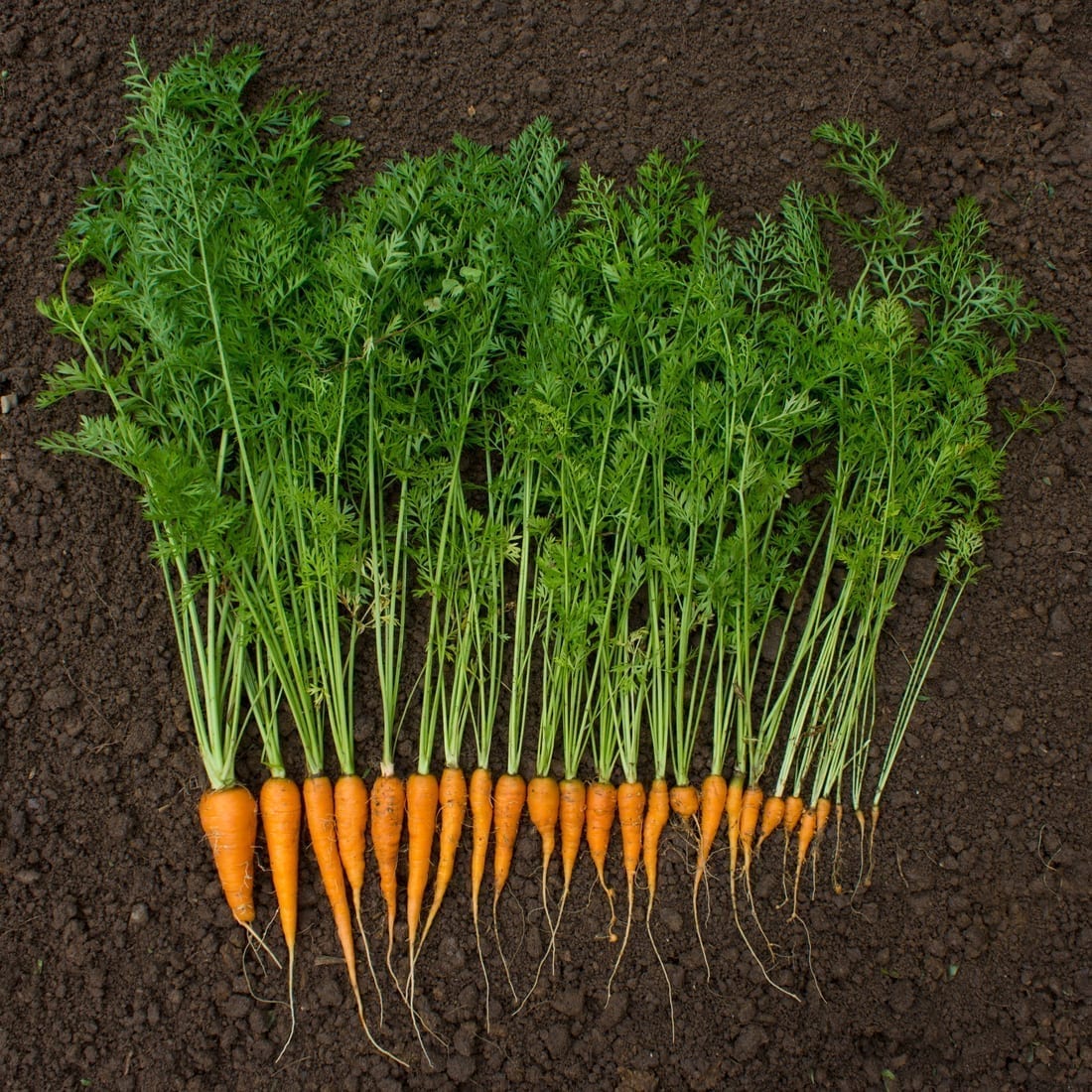
Considered non-toxic to cats and dogs (source: ASPCA).
A sunny south-facing window with 6+ hours, or a grow light.
Keep evenly moist — water when the top inch of soil is dry.
Needs a little consistency, but nothing fancy.
Carrots need a deep, loose, stone-free pot and patience, but they are very rewarding fresh. Choose short, round, or “baby” types for containers rather than long market carrots.
About Carrot
Carrot (Daucus carota subsp. sativus) is a root crop grown for its sweet, crunchy taproot. The cultivated carrot traces back to Central Asia and the Middle East. Growing one in a rental comes down to the pot: carrots need a deep, loose, stone-free container so the roots can grow straight, at least 20 to 25 cm deep. Short, round, or baby varieties suit containers far better than the long market types. Get those two things right and they're rewarding fresh.
They want bright light and even moisture, and they reward patience over speed. The trickiest stretch is germination, since the surface can't be allowed to dry out before the seeds sprout, which is slow and patchy at the best of times. Thin the seedlings early so each root has room to size up. They're rated moderate mainly for those fussy early weeks. A harvest of small, sweet roots usually comes around 60 to 80 days from sowing.
What it’s like to grow
Carrots are undemanding once up, but the start takes care. Forked or stubby roots come from shallow, rocky, or compacted soil, so loose deep mix matters more than anything. Patchy germination means the surface dried out too soon. Keep the watering even to avoid cracked or split roots, and thin early so they don't crowd. They're non-toxic to cats and dogs. Best for a patient grower with a deep pot and a bright spot who's happy to wait a couple of months for a modest, sweet harvest.
What to expect
First harvest in about 60–80 days. It asks for a little consistency, but nothing fancy. No sunny window? It also does fine under a clip-on grow light.
See what you’ll need to get started ↓Companions
Tips
- Use a deep pot (at least 20–25 cm) with loose, stone-free soil so roots grow straight.
- Pick short or round varieties suited to containers.
- Thin seedlings early so each root has room to size up.
Common problems
- Forked or stubby roots in shallow, rocky, or compacted soil.
- Slow, patchy germination if the surface dries out before sprouting.
Common questions
Is Carrot toxic to cats and dogs?
Carrot is non-toxic to cats and dogs, which makes it a safe pick if you have pets. Source: ASPCA.
How much light does Carrot need?
Carrot wants bright light — a south-facing window with six or more hours of sun, or a grow light to make up for it.
How often should I water Carrot?
Water Carrot when the top inch of soil feels dry, then let it drain. Aim for evenly moist, not soggy.
What temperature does Carrot need?
Carrot is happiest around 13–24 °C. It tolerates brief dips to about -5 °C, but cold drafts and sudden chills set it back.
How long does Carrot take to grow?
Expect a first harvest about 60–80 days from sowing under good conditions. A deep pot of short or round varieties gives a single harvest of small sweet roots; pull as needed once sized up.
Can I grow Carrot without a sunny window?
Yes. Carrot does well under an affordable clip-on grow light, so a bright window isn't essential.
How big does Carrot get?
A feathery top over a slender root; sow thinly and thin in a deep pot.
How do I propagate Carrot?
Sow seeds directly into deep, loose, stone-free soil; carrots cannot be transplanted.
What pests affect Carrot?
Watch for aphids, carrot flies and fungus gnats. Check new growth and the undersides of leaves often, and treat early with a rinse or insecticidal soap before they spread.
Is Carrot easy to grow?
Carrot is moderately easy. It asks for some consistency with light and water, but nothing advanced.
Gear for Carrot
Gear suggestions to get you started — general picks, not paid placements.
Pet-toxicity from the ASPCA. Care details are general guidance, not professional or veterinary advice; only eat plants you can positively identify as the edible plant and part described. Photo: woodleywonderworks, CC BY 2.0, via Wikimedia Commons (CC-BY). Care info last updated 2026-06-02.