root
EdibleDaikon Radish
Raphanus sativus var. longipinnatus
Considered non-toxic to cats and dogs (source: ASPCA (cultivated radish not listed)).
A sunny south-facing window with 6+ hours, or a grow light.
Keep evenly moist — water when the top inch of soil is dry.
Forgiving and beginner-friendly.
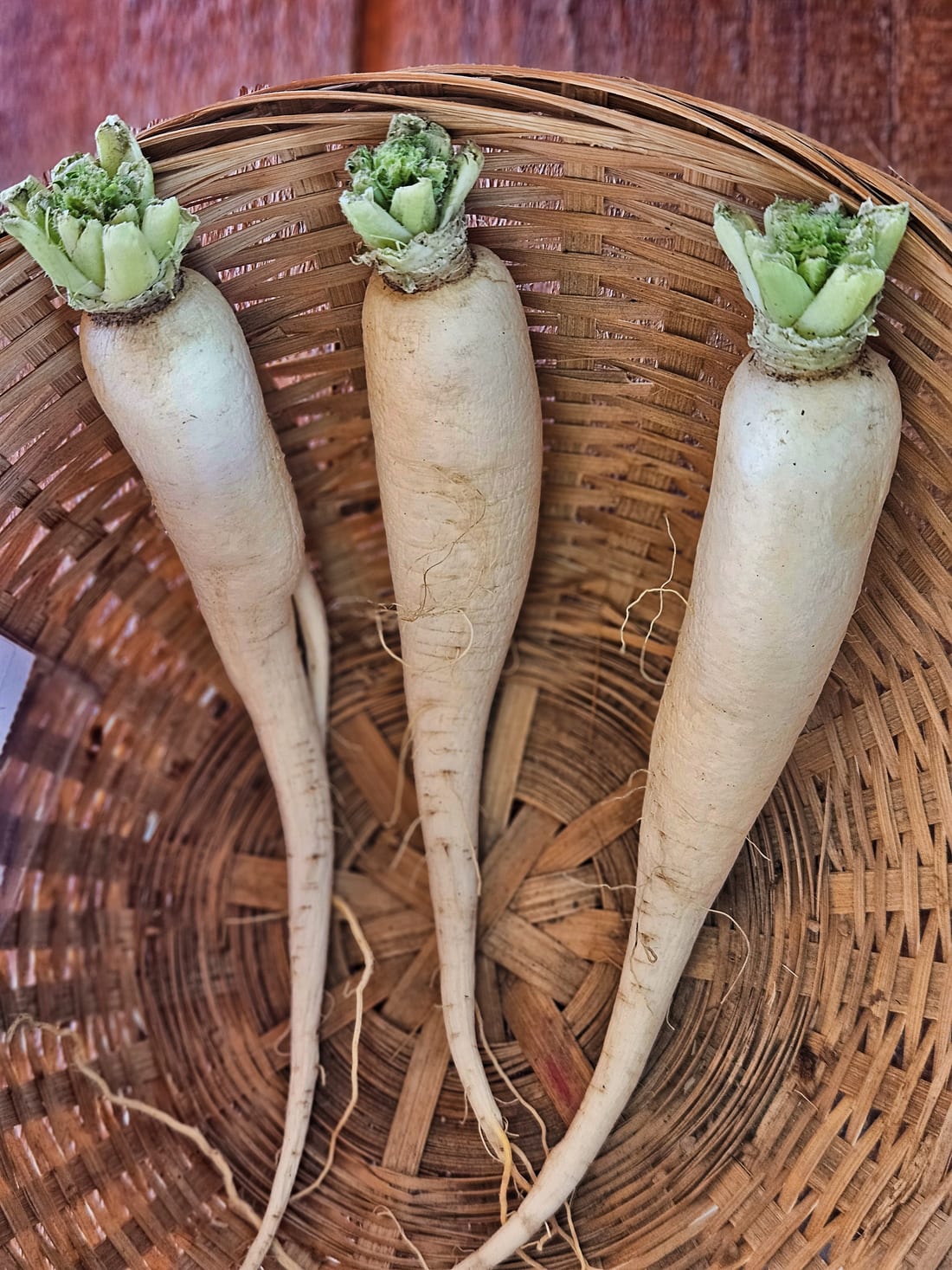
Daikon is a large, mild East Asian radish grown for crisp white roots used raw, pickled, or cooked. It grows quickly but needs a genuinely deep container to form a full-length root.
About Daikon Radish
Daikon (Raphanus sativus var. longipinnatus) is a large, mild East Asian radish grown for crisp white roots used raw, pickled, or cooked. It grows quickly like its smaller radish cousins but forms a long root, so depth is the main requirement. For a renter, that means a deep container of 30 cm or more, around 11 litres, in a bright spot. Sow direct and thin generously, because crowded roots stay small and twisted.
Daikon is easy and fast for its size, wanting bright light and steady, medium water. Sow straight into the final pot, since the long root resents disturbance, and harvest before the roots get over-large or they turn pithy and sharp. A single deep pot can give several substantial roots. From sowing, a harvest usually comes around 50 to 70 days.
What it’s like to grow
Daikon is easy as long as it has depth. Short, forked, or stunted roots are the giveaway that the mix is too shallow or stony, and pithy, hollow, or overly hot roots mean it was left in the ground too long. Sow direct, thin generously, water evenly at the medium level, and harvest on time. Non-toxic to cats and dogs, daikon is best for a grower with a deep pot who wants a fast, substantial root crop from a single sowing.
What to expect
First harvest in about 50–70 days. It’s forgiving, so it’s a good one to learn on. No sunny window? It also does fine under a clip-on grow light.
See what you’ll need to get started ↓Companions
Tips
- Use a deep pot (30 cm+) so the long root can grow down without forking.
- Sow direct and thin generously — crowded roots stay small and twisted.
- Harvest before the roots get over-large, or they turn pithy and sharp.
Common problems
- Short, forked, or stunted roots in shallow or stony mix.
- Pithy, hollow, or overly hot roots if left in the ground too long.
Common questions
Is Daikon Radish toxic to cats and dogs?
Daikon Radish is non-toxic to cats and dogs, which makes it a safe pick if you have pets. Source: ASPCA (cultivated radish not listed).
How much light does Daikon Radish need?
Daikon Radish wants bright light — a south-facing window with six or more hours of sun, or a grow light to make up for it.
How often should I water Daikon Radish?
Water Daikon Radish when the top inch of soil feels dry, then let it drain. Aim for evenly moist, not soggy.
What temperature does Daikon Radish need?
Daikon Radish is happiest around 10–24 °C. It tolerates brief dips to about -2 °C, but cold drafts and sudden chills set it back.
How long does Daikon Radish take to grow?
Expect a first harvest about 50–70 days from sowing under good conditions. A large, fast-growing mild radish; needs depth, but a single deep pot can produce several substantial roots.
Can I grow Daikon Radish without a sunny window?
Yes. Daikon Radish does well under an affordable clip-on grow light, so a bright window isn't essential.
How big does Daikon Radish get?
A leafy top over a long thick root; sow thinly and thin in a deep pot.
How do I propagate Daikon Radish?
Sow seed directly in a deep pot and thin so each long root has room to develop.
What pests affect Daikon Radish?
Watch for flea beetles, aphids and cabbage root fly. Check new growth and the undersides of leaves often, and treat early with a rinse or insecticidal soap before they spread.
Is Daikon Radish easy to grow?
Yes. Daikon Radish is forgiving and one of the better plants to learn on.
Gear for Daikon Radish
Gear suggestions to get you started — general picks, not paid placements.
Pet-toxicity from the ASPCA. Care details are general guidance, not professional or veterinary advice; only eat plants you can positively identify as the edible plant and part described. Photo: Eric Polk, CC BY-SA 4.0, via Wikimedia Commons (CC-BY-SA). Care info last updated 2026-06-02.