fruiting
EdibleSugar Snap Pea
Pisum sativum var. macrocarpon
Considered non-toxic to cats and dogs (source: ASPCA (not listed; food pea)).
A sunny south-facing window with 6+ hours, or a grow light.
Keep evenly moist — water when the top inch of soil is dry.
Forgiving and beginner-friendly.
Sugar snap peas are a sweet, beginner-friendly crop you eat pod and all, and they crop in cool conditions when many fruiting plants stall. Give them a small trellis or strings to climb.
About Sugar Snap Pea
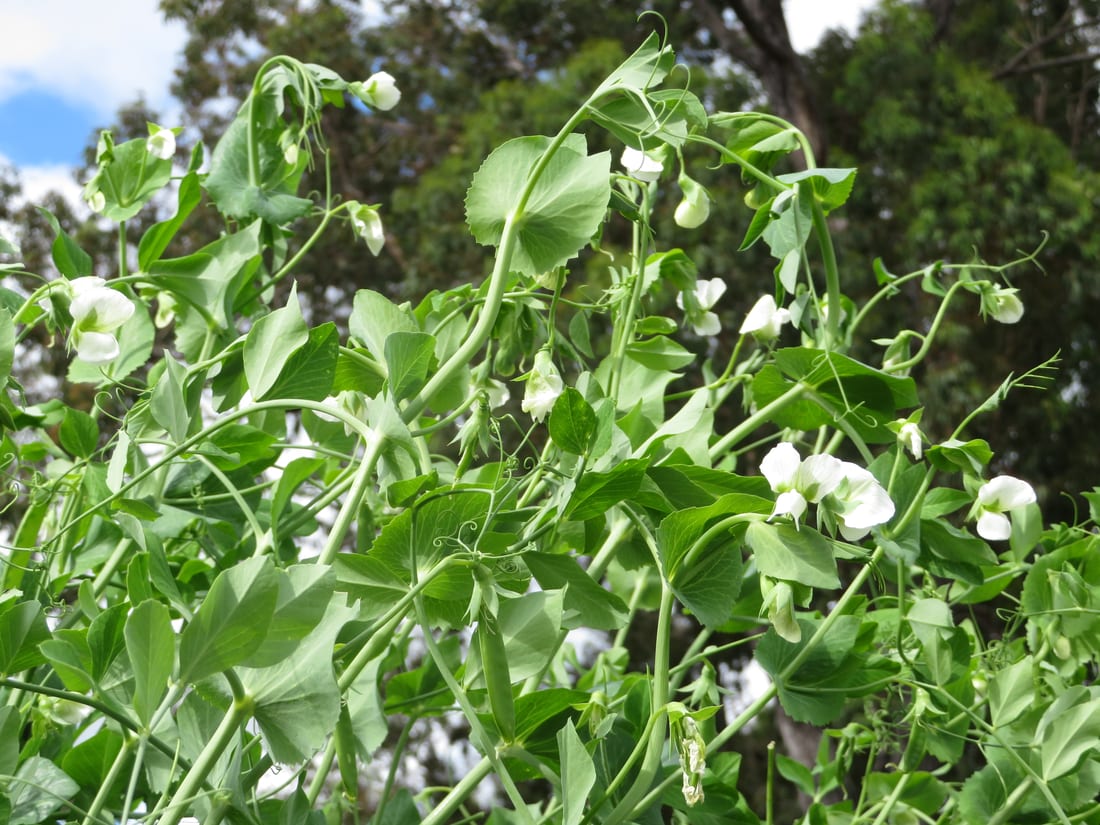
Sugar snap pea (Pisum sativum var. macrocarpon) is a climbing vine grown for sweet, crunchy pods you eat whole. Peas are an old cool-season crop with roots in the Mediterranean and Near East. For an indoor grower their advantage is timing: they crop in cool conditions when many fruiting plants stall, so they suit a chilly windowsill. They do climb to around 1 to 1.5 m, so they need a small trellis, netting, or strings to scramble up, and a 5-litre pot with several plants along the support works.
They want bright light and grow best kept on the cool side, since heat makes them stop setting pods or bolt. Pick the pods young and often while they snap crisply, and the plant keeps producing for a few weeks. Provide the support early so the tendrils have something to grab. A first picking usually comes around 60 to 70 days from sowing.
What it’s like to grow
Snap peas are easy and tolerant of cool rooms, which is their main appeal. The two things to watch are heat, which halts pod set, and still, humid air, which invites powdery mildew on the leaves. Pods left too long turn starchy and tough, so pick while they're crisp. They take medium water. They're non-toxic to cats and dogs. A good fit for a grower with a bright but cool spot who wants a sweet, snackable crop and doesn't mind rigging up a bit of support.
What to expect
First harvest in about 60–70 days. It’s forgiving, so it’s a good one to learn on. No sunny window? It also does fine under a clip-on grow light.
See what you’ll need to get started ↓Companions
Tips
- Provide a trellis, netting, or strings — even “bush” types appreciate support.
- Grow them on the cool side; they dislike heat and bolt or stop setting.
- Pick pods young and often while they snap crisply.
Common problems
- Powdery mildew on leaves in still, humid air.
- Tough, starchy pods if picked too late.
Common questions
Is Sugar Snap Pea toxic to cats and dogs?
Sugar Snap Pea is non-toxic to cats and dogs, which makes it a safe pick if you have pets. Source: ASPCA (not listed; food pea).
How much light does Sugar Snap Pea need?
Sugar Snap Pea wants bright light — a south-facing window with six or more hours of sun, or a grow light to make up for it.
How often should I water Sugar Snap Pea?
Water Sugar Snap Pea when the top inch of soil feels dry, then let it drain. Aim for evenly moist, not soggy.
What temperature does Sugar Snap Pea need?
Sugar Snap Pea is happiest around 10–21 °C. It tolerates brief dips to about -6 °C, but cold drafts and sudden chills set it back.
How long does Sugar Snap Pea take to grow?
Expect a first harvest about 60–70 days from sowing under good conditions. A vining plant gives sweet pods in a flush; pick often and it keeps setting more for a few weeks.
Can I grow Sugar Snap Pea without a sunny window?
Yes. Sugar Snap Pea does well under an affordable clip-on grow light, so a bright window isn't essential.
How big does Sugar Snap Pea get?
A climbing vine ~1–1.5 m tall that needs a trellis; sow several along the support.
How do I propagate Sugar Snap Pea?
Sow seeds directly into cool soil and give the vines a small trellis to climb.
What pests affect Sugar Snap Pea?
Watch for aphids, spider mites and thrips. Check new growth and the undersides of leaves often, and treat early with a rinse or insecticidal soap before they spread.
Is Sugar Snap Pea easy to grow?
Yes. Sugar Snap Pea is forgiving and one of the better plants to learn on.
Gear for Sugar Snap Pea
Gear suggestions to get you started — general picks, not paid placements.
Pet-toxicity from the ASPCA. Care details are general guidance, not professional or veterinary advice; only eat plants you can positively identify as the edible plant and part described. Photo: Forest and Kim Starr, CC BY 2.0, via Wikimedia Commons (CC-BY). Care info last updated 2026-06-02.