herb
EdibleCilantro / Coriander
Coriandrum sativum
Considered non-toxic to cats and dogs (source: ASPCA).
A sunny south-facing window with 6+ hours, or a grow light.
Keep evenly moist — water when the top inch of soil is dry.
Needs a little consistency, but nothing fancy.
Cilantro grows quickly but bolts to seed in heat, so it suits cooler spots and frequent resowing. The same plant gives leaf (cilantro) and seed (coriander).
About Cilantro / Coriander
Cilantro (Coriandrum sativum) is fast off the mark but short-lived, and it earns its place by giving you both the leaf and, later, the coriander seed from one plant. It comes originally from the eastern Mediterranean and western Asia. For renters it works as a small patch you keep replacing rather than one long-term plant. A 3-litre pot in a bright window suits it, and it takes to a grow light if your sills are dim.
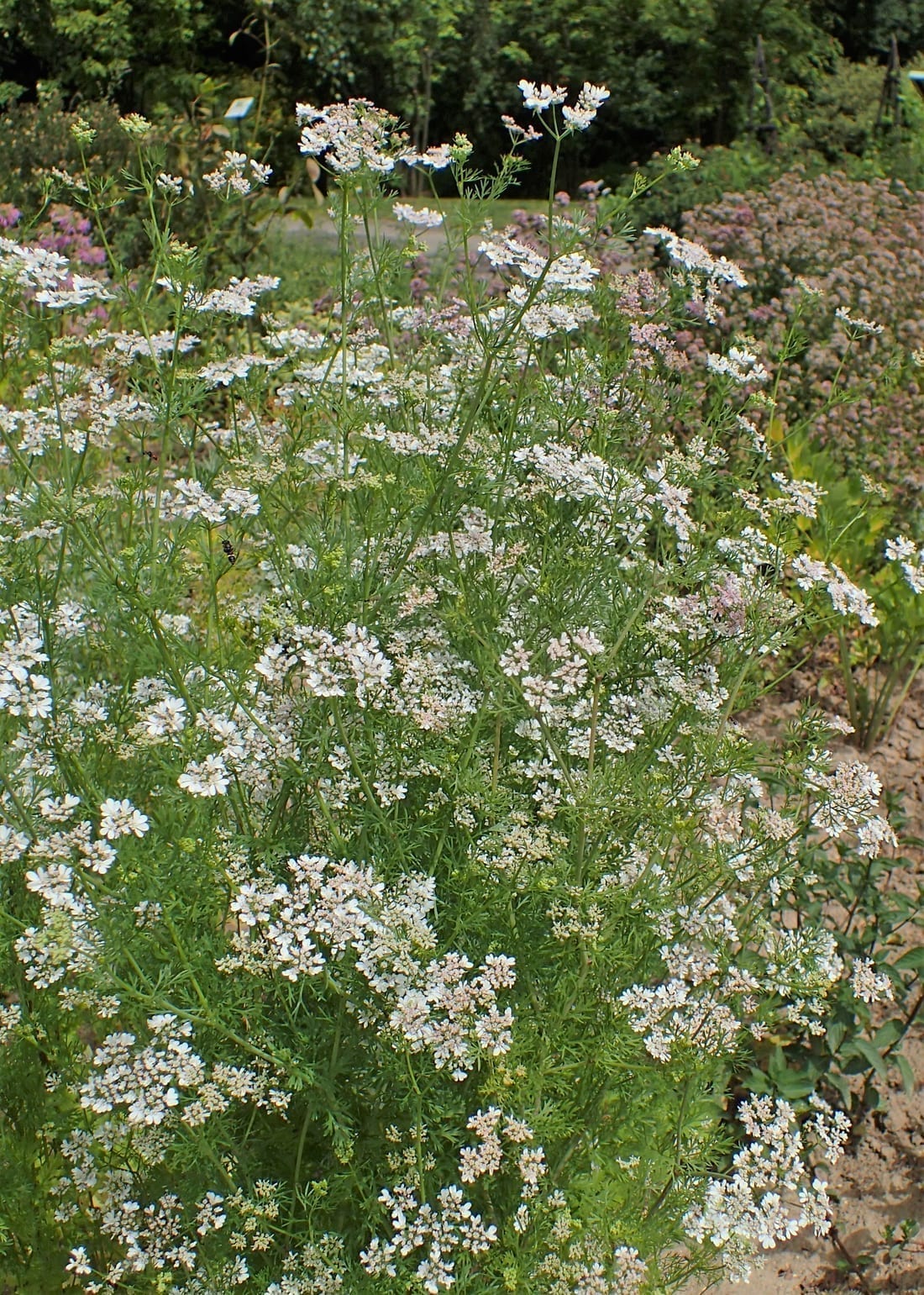
The catch is heat. Warmth or stress sends cilantro racing to flower, and once it bolts the leaf production stops. The fix is to sow a fresh batch every two or three weeks and keep it on the cooler side. Harvest the outer leaves and leave the centre to keep growing. A first cutting comes quickly, usually around 40 to 60 days from sowing.
What it’s like to grow
Cilantro is rated moderate rather than easy, mostly because of its habit of bolting just when you want more leaf. Premature flowering is the main warning sign, and it usually means the plant got too warm or too stressed. Sparse, leggy growth points instead to weak light. Keep it cool and bright, sow in succession, and it behaves. It's non-toxic to cats and dogs, so it's a safe herb to keep within reach of pets.
What to expect
First harvest in about 40–60 days. It asks for a little consistency, but nothing fancy. No sunny window? It also does fine under a clip-on grow light.
See what you’ll need to get started ↓Companions
Tips
- Sow a fresh batch every 2–3 weeks since each plant is short-lived.
- Keep it cool; heat triggers fast bolting.
- Harvest outer leaves and let the center keep growing.
Common problems
- Premature bolting (flowering) in warm or stressed conditions.
- Sparse, leggy growth in low light.
Common questions
Is Cilantro / Coriander toxic to cats and dogs?
Cilantro / Coriander is non-toxic to cats and dogs, which makes it a safe pick if you have pets. Source: ASPCA.
How much light does Cilantro / Coriander need?
Cilantro / Coriander wants bright light — a south-facing window with six or more hours of sun, or a grow light to make up for it.
How often should I water Cilantro / Coriander?
Water Cilantro / Coriander when the top inch of soil feels dry, then let it drain. Aim for evenly moist, not soggy.
What temperature does Cilantro / Coriander need?
Cilantro / Coriander is happiest around 10–24 °C. It tolerates brief dips to about -5 °C, but cold drafts and sudden chills set it back.
How long does Cilantro / Coriander take to grow?
Expect a first harvest about 40–60 days from sowing under good conditions. Fast to leaf but short-lived; succession-sow every few weeks for a steady supply.
Can I grow Cilantro / Coriander without a sunny window?
Yes. Cilantro / Coriander does well under an affordable clip-on grow light, so a bright window isn't essential.
How big does Cilantro / Coriander get?
A leafy upright herb ~0.2–0.4 m tall; sow several together and cut as a small patch.
How do I propagate Cilantro / Coriander?
Sow seeds directly into the pot every few weeks; it resents transplanting and bolts in heat.
What pests affect Cilantro / Coriander?
Watch for aphids, whitefly and spider mites. Check new growth and the undersides of leaves often, and treat early with a rinse or insecticidal soap before they spread.
Is Cilantro / Coriander easy to grow?
Cilantro / Coriander is moderately easy. It asks for some consistency with light and water, but nothing advanced.
Gear for Cilantro / Coriander
Gear suggestions to get you started — general picks, not paid placements.
Pet-toxicity from the ASPCA. Care details are general guidance, not professional or veterinary advice; only eat plants you can positively identify as the edible plant and part described. Photo: Krzysztof Ziarnek, Kenraiz, CC BY-SA 4.0, via Wikimedia Commons (CC-BY-SA). Care info last updated 2026-06-02.