leafy green
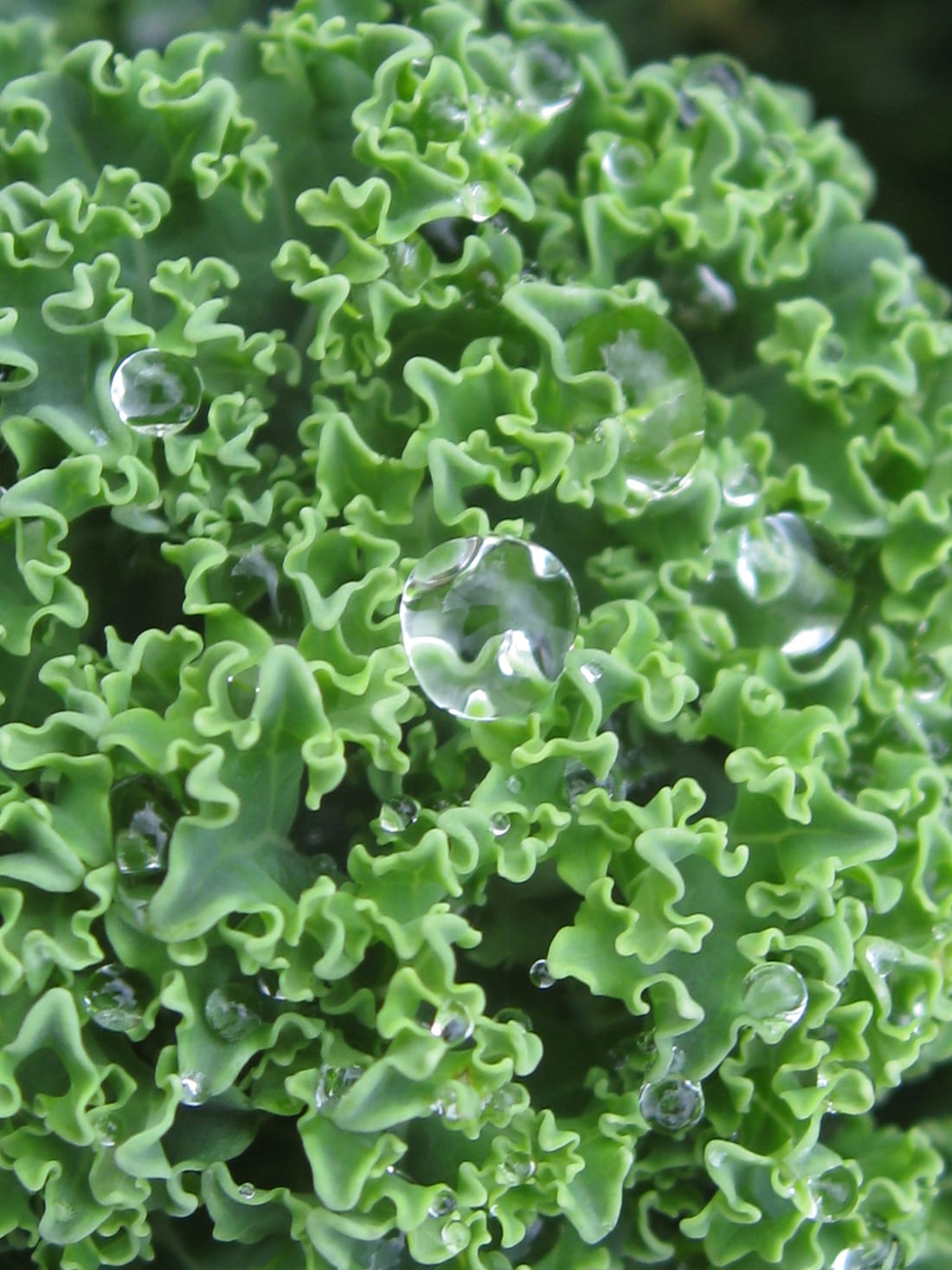
EdibleKale (Curly)
Brassica oleracea (Acephala Group)
Considered non-toxic to cats and dogs (source: ASPCA (not listed; brassica)).
A sunny south-facing window with 6+ hours, or a grow light.
Keep evenly moist — water when the top inch of soil is dry.
Forgiving and beginner-friendly.
Kale is one of the toughest, most productive greens and keeps giving leaves over a long season. Pick from the bottom and let the top keep growing.
About Kale (Curly)
Curly kale (Brassica oleracea, Acephala Group) is one of the toughest, most productive greens you can keep indoors, and it crops for months rather than weeks. It descends from wild cabbage along the coasts of the Mediterranean and Atlantic Europe. It's a bigger plant than salad leaves, so a renter should give it an 8-litre pot and the brightest light available. In return one or two plants supply a steady leaf-by-leaf harvest.
The method is to pick the oldest outer leaves from the bottom and leave the crown to keep pushing new growth from the top. A roomy, deeper pot and strong light keep the leaves sturdy rather than floppy. A first harvest comes around 55 to 75 days, and the flavour sweetens after a spell of cooler temperatures. Watch leaf undersides for aphids, which like to cluster there.
What it’s like to grow
Kale is easy and remarkably durable, a good choice for someone who wants a green that keeps giving without much fuss. Pale, floppy leaves are its way of asking for more light. Aphids gathering under the leaves are the other common nuisance, worth a check whenever you harvest. Water at a medium pace and pick from the bottom up. Kale is non-toxic to cats and dogs, so the pot is safe around pets.
What to expect
First harvest in about 55–75 days. It’s forgiving, so it’s a good one to learn on. No sunny window? It also does fine under a clip-on grow light.
See what you’ll need to get started ↓Companions
Tips
- Harvest the oldest outer leaves first and leave the crown intact.
- Give it a roomy, deeper pot and bright light for sturdy leaves.
- Flavor sweetens after cooler temperatures.
Common problems
- Aphids clustering on leaf undersides.
- Pale, floppy leaves in insufficient light.
Common questions
Is Kale (Curly) toxic to cats and dogs?
Kale (Curly) is non-toxic to cats and dogs, which makes it a safe pick if you have pets. Source: ASPCA (not listed; brassica).
How much light does Kale (Curly) need?
Kale (Curly) wants bright light — a south-facing window with six or more hours of sun, or a grow light to make up for it.
How often should I water Kale (Curly)?
Water Kale (Curly) when the top inch of soil feels dry, then let it drain. Aim for evenly moist, not soggy.
What temperature does Kale (Curly) need?
Kale (Curly) is happiest around 13–24 °C. It tolerates brief dips to about -10 °C, but cold drafts and sudden chills set it back.
How long does Kale (Curly) take to grow?
Expect a first harvest about 55–75 days from sowing under good conditions. A long-lived plant you harvest leaf-by-leaf for months from the bottom up.
Can I grow Kale (Curly) without a sunny window?
Yes. Kale (Curly) does well under an affordable clip-on grow light, so a bright window isn't essential.
How big does Kale (Curly) get?
An upright leafy plant ~0.3–0.5 m tall; grow one or two and pick outer leaves.
How do I propagate Kale (Curly)?
Sow seeds directly; seedlings transplant easily once they have a few true leaves.
What pests affect Kale (Curly)?
Watch for aphids, whitefly, cabbage worms and flea beetles. Check new growth and the undersides of leaves often, and treat early with a rinse or insecticidal soap before they spread.
Is Kale (Curly) easy to grow?
Yes. Kale (Curly) is forgiving and one of the better plants to learn on.
Gear for Kale (Curly)
Gear suggestions to get you started — general picks, not paid placements.
Pet-toxicity from the ASPCA. Care details are general guidance, not professional or veterinary advice; only eat plants you can positively identify as the edible plant and part described. Photo: Ruth Hartnup, CC BY 2.0, via Wikimedia Commons (CC-BY). Care info last updated 2026-06-02.