herb
EdibleThyme
Thymus vulgaris
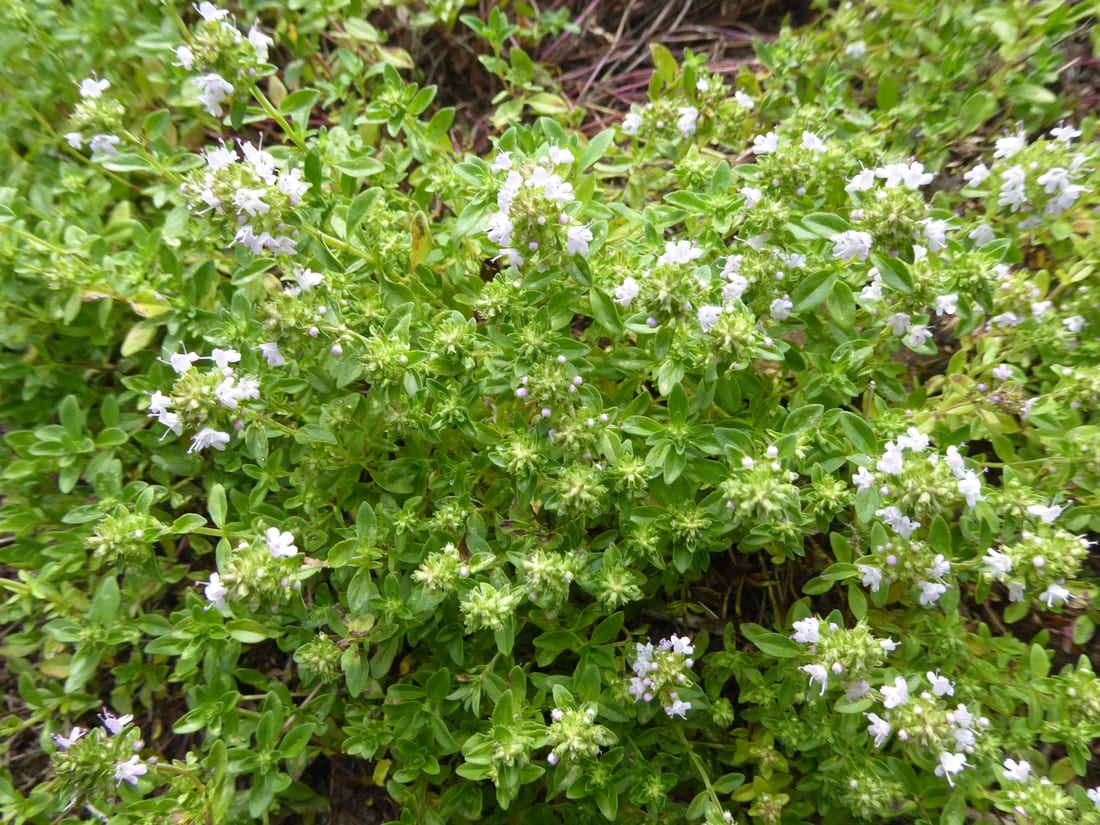
Considered non-toxic to cats and dogs (source: ASPCA).
A sunny south-facing window with 6+ hours, or a grow light.
Let the soil dry out between waterings; it dislikes staying wet.
Forgiving and beginner-friendly.
Thyme is a small, tough, drought-tolerant herb that does well in a sunny window and shrugs off occasional dryness. It stays compact, so it suits small containers.
About Thyme
Thyme (Thymus vulgaris) is a small, tough, drought-tolerant herb from the dry Mediterranean, and it shrugs off the occasional missed watering. It stays compact, which makes it one of the easiest herbs to fit into a tight space. A renter can keep it in a 2-litre pot on a sunny sill with no special kit. It gives small but steady sprigs and tolerates a fair bit of neglect once its roots take hold.
The care leans toward restraint. Water sparingly and let it dry between drinks, since thyme prefers lean, well-drained soil over rich, wet conditions. Trim it regularly to stop it going woody and leggy, and keep it in strong light for the most aromatic leaves. A first harvest comes around 60 to 90 days. Soft, non-flowering cuttings root readily if you want a second plant.
What it’s like to grow
Thyme is easy and undemanding, well suited to a forgetful waterer or a beginner short on space. Its low water needs mean the main risk is rot from overwatering or heavy, water-retentive soil. Left untrimmed, it develops woody, sparse centres, so a regular haircut keeps it productive. Give it bright light and a dry-ish pot and it largely looks after itself. Thyme is non-toxic to cats and dogs, so the pot is safe near pets.
What to expect
First harvest in about 60–90 days. It’s forgiving, so it’s a good one to learn on. No sunny window? It also does fine under a clip-on grow light.
See what you’ll need to get started ↓♻ Regrow from scraps
Root a soft non-flowering cutting in water or moist soil, then pot it; established plants also layer where stems touch soil.
Companions
Tips
- Water sparingly and let it dry between drinks; it prefers lean, well-drained soil.
- Trim regularly to keep it from going woody and leggy.
- Give it strong light for the most aromatic leaves.
Common problems
- Rot from overwatering or heavy, water-retentive soil.
- Woody, sparse centers if never trimmed back.
Common questions
Is Thyme toxic to cats and dogs?
Thyme is non-toxic to cats and dogs, which makes it a safe pick if you have pets. Source: ASPCA.
How much light does Thyme need?
Thyme wants bright light — a south-facing window with six or more hours of sun, or a grow light to make up for it.
How often should I water Thyme?
Water Thyme sparingly. Let the soil dry out fully between waterings — it's far more likely to rot from overwatering than to suffer from neglect.
What temperature does Thyme need?
Thyme is happiest around 15–27 °C. It tolerates brief dips to about -12 °C, but cold drafts and sudden chills set it back.
How long does Thyme take to grow?
Expect a first harvest about 60–90 days from sowing under good conditions. A compact low herb that gives small but steady sprigs and tolerates neglect once rooted.
Can I grow Thyme without a sunny window?
Yes. Thyme does well under an affordable clip-on grow light, so a bright window isn't essential.
How big does Thyme get?
A low spreading woody herb ~0.1–0.2 m tall; one trailing plant per small pot.
How do I propagate Thyme?
Root a soft non-flowering cutting in moist soil; established stems also layer where they touch soil.
What pests affect Thyme?
Watch for spider mites, aphids and whitefly. Check new growth and the undersides of leaves often, and treat early with a rinse or insecticidal soap before they spread.
Is Thyme easy to grow?
Yes. Thyme is forgiving and one of the better plants to learn on.
Gear for Thyme
Gear suggestions to get you started — general picks, not paid placements.
Pet-toxicity from the ASPCA. Care details are general guidance, not professional or veterinary advice; only eat plants you can positively identify as the edible plant and part described. Photo: Syrio, CC BY-SA 4.0, via Wikimedia Commons (CC-BY-SA). Care info last updated 2026-06-02.