leafy green
EdibleMizuna (Japanese Mustard Green)
Brassica rapa var. nipposinica
Considered non-toxic to cats and dogs (source: ASPCA (not listed; brassica)).
Some direct sun — an east or west window, or a few hours of direct light.
Keep evenly moist — water when the top inch of soil is dry.
Forgiving and beginner-friendly.
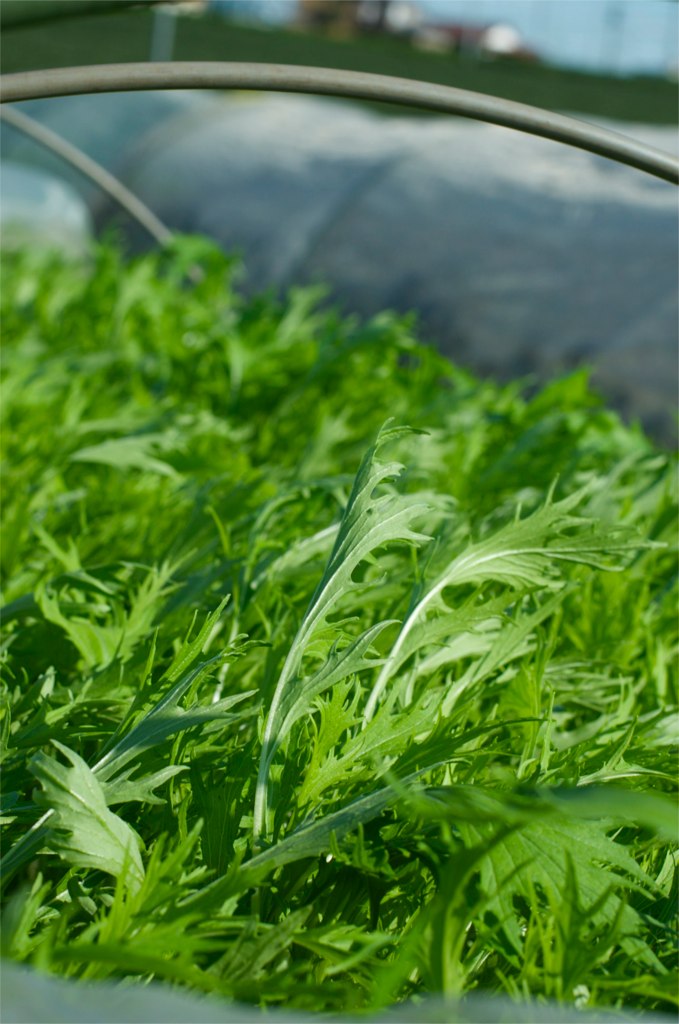
Mizuna is a fast Japanese mustard green with feathery leaves and a mild peppery bite, ideal for salads. It is one of the quicker indoor greens and regrows well after cutting.
About Mizuna (Japanese Mustard Green)
Mizuna (Brassica rapa var. nipposinica) is a Japanese mustard green with feathery leaves and a mild peppery bite, well suited to salads. It's long grown in Japan and is one of the gentler members of the mustard family. For a small space it's quick and undemanding: sow thickly in a 3-litre pot, cut as a patch, and it rebounds for several harvests. It takes medium light, so it doesn't need a south-facing window, and grows well under a clip-on light.
Growing it is mostly about timing the cut. Snip the leaves about 3 cm above the crown and it regrows for another round, and harvesting young keeps the flavor mild. Keep it cool to slow bolting, since warmth turns the leaves sharper and pushes the plant to flower. It forms a frilly clump of around 0.2 to 0.3 m. A first cut comes fast, usually within 30 to 45 days of sowing.
What it’s like to grow
Mizuna is one of the easier, quicker greens and bounces back well after cutting. Heat is the main thing to manage: warmth brings a sharper flavor and earlier bolting, so keep it cool and pick young. Flea-beetle pinholes can appear if the pot goes outdoors. It takes medium light and medium water without much fuss. It's non-toxic to cats and dogs. A good choice for a beginner who wants a fast, mild salad green that delivers within a few weeks and keeps regrowing from the same sowing.
What to expect
First harvest in about 30–45 days. It’s forgiving, so it’s a good one to learn on. No sunny window? It also does fine under a clip-on grow light.
See what you’ll need to get started ↓Companions
Tips
- Cut leaves about 3 cm above the crown so it regrows for another harvest.
- Harvest young for the mildest flavor.
- Keep it cool to slow bolting.
Common problems
- Bolting and a sharper flavor in heat.
- Flea-beetle pinholes if exposed to outdoor air.
Common questions
Is Mizuna (Japanese Mustard Green) toxic to cats and dogs?
Mizuna (Japanese Mustard Green) is non-toxic to cats and dogs, which makes it a safe pick if you have pets. Source: ASPCA (not listed; brassica).
How much light does Mizuna (Japanese Mustard Green) need?
Mizuna (Japanese Mustard Green) does best in medium, indirect light: near an east or west window, or a little back from a bright one. Direct midday sun can scorch it.
How often should I water Mizuna (Japanese Mustard Green)?
Water Mizuna (Japanese Mustard Green) when the top inch of soil feels dry, then let it drain. Aim for evenly moist, not soggy.
What temperature does Mizuna (Japanese Mustard Green) need?
Mizuna (Japanese Mustard Green) is happiest around 13–21 °C. It tolerates brief dips to about -4 °C, but cold drafts and sudden chills set it back.
How long does Mizuna (Japanese Mustard Green) take to grow?
Expect a first harvest about 30–45 days from sowing under good conditions. A fast, frilly cut-and-come-again green that rebounds for several mild-mustard harvests.
Can I grow Mizuna (Japanese Mustard Green) without a sunny window?
Yes. Mizuna (Japanese Mustard Green) does well under an affordable clip-on grow light, so a bright window isn't essential.
How big does Mizuna (Japanese Mustard Green) get?
A feathery mild green ~0.2–0.3 m tall; sow thickly and cut as a patch.
How do I propagate Mizuna (Japanese Mustard Green)?
Sow seed thickly and cut as a baby-leaf crop; it regrows for several cuttings.
What pests affect Mizuna (Japanese Mustard Green)?
Watch for aphids, flea beetles and whitefly. Check new growth and the undersides of leaves often, and treat early with a rinse or insecticidal soap before they spread.
Is Mizuna (Japanese Mustard Green) easy to grow?
Yes. Mizuna (Japanese Mustard Green) is forgiving and one of the better plants to learn on.
Gear for Mizuna (Japanese Mustard Green)
Gear suggestions to get you started — general picks, not paid placements.
Pet-toxicity from the ASPCA. Care details are general guidance, not professional or veterinary advice; only eat plants you can positively identify as the edible plant and part described. Photo: Masahiko Satoh, CC BY 2.0, via Wikimedia Commons (CC-BY). Care info last updated 2026-06-02.