herb
EdibleSweet Basil
Ocimum basilicum
Considered non-toxic to cats and dogs (source: ASPCA).
A sunny south-facing window with 6+ hours, or a grow light.
Keep evenly moist — water when the top inch of soil is dry.
Forgiving and beginner-friendly.
Basil is the friendliest herb to start with indoors and rewards frequent harvesting with bushier growth. It wants warmth and the brightest spot you can give it.
About Sweet Basil
Sweet basil (Ocimum basilicum) is the herb most people grow first. It doesn't ask for much: warmth, steady water, and the brightest windowsill you have. It comes originally from the warm parts of Africa and tropical Asia, though most of us know it from Mediterranean and Thai cooking. You don't need anything permanent to grow it in a rental. A 4-litre pot on a sunny sill works, and a clip-on grow light covers you if your windows don't get much sun.
Basil grows back faster the more you pick it. Pinch out the top pair of leaves and the plant puts out two new shoots below the cut, so regular harvesting keeps it bushy instead of tall and bare. Once it starts to flower the leaves turn bitter, so remove any flower buds as they appear. Most plants are ready for a first real harvest about 50 to 70 days from sowing.
What it’s like to grow
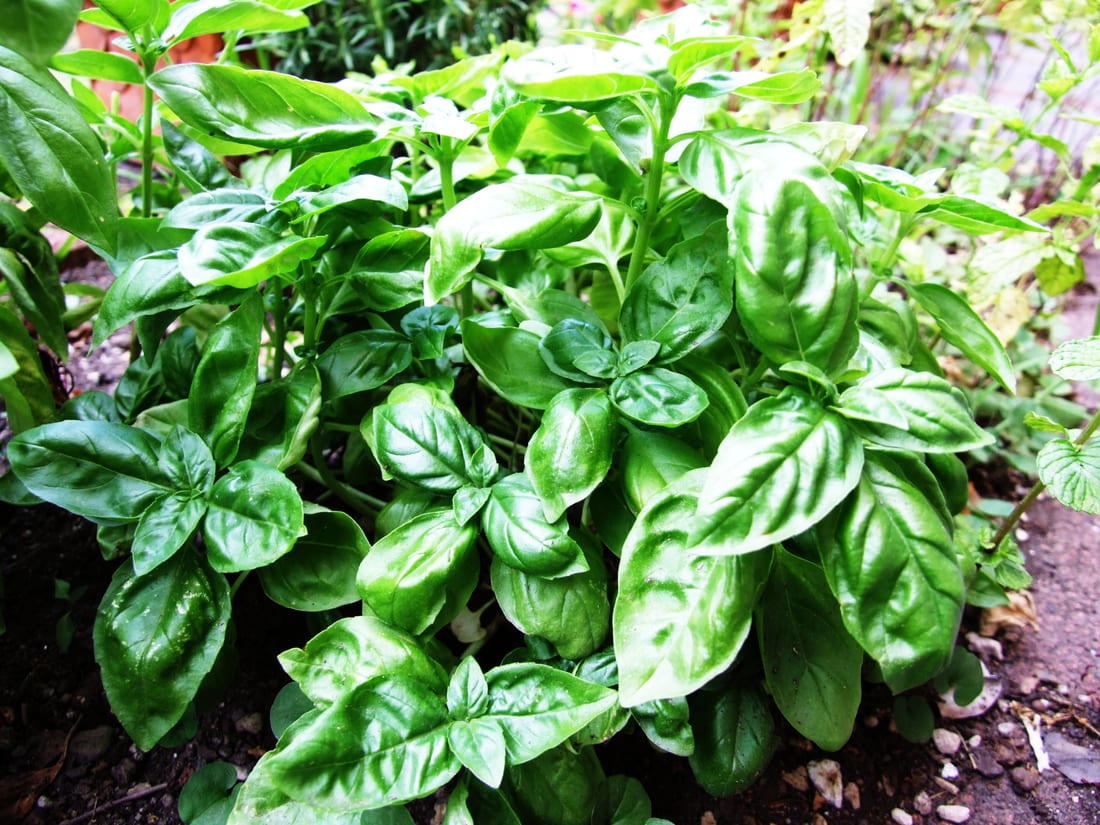
Basil is forgiving for a beginner, but it lets you know when it's unhappy. Tall, pale, stretched stems usually mean it wants more light. Lower leaves that yellow and droop point to overwatering or a cold draft. Keep it somewhere bright and above about 18 °C, water when the top inch of soil is dry, and it keeps producing through the warm months. It's also non-toxic to cats and dogs, which makes it a safe pick if you have pets around the kitchen.
What to expect
First harvest in about 50–70 days. It’s forgiving, so it’s a good one to learn on. No sunny window? It also does fine under a clip-on grow light.
See what you’ll need to get started ↓♻ Regrow from scraps
Root a 10 cm cut stem in a glass of water for 1–2 weeks, then pot it up.
Companions
Tips
- Pinch off the top set of leaves regularly to keep it bushy and delay flowering.
- Remove flower buds as they appear to keep the leaves sweet.
- Keep it warm (above ~18°C) and out of cold drafts.
Common problems
- Leggy, stretched stems from too little light.
- Drooping or yellow lower leaves from overwatering or cold.
Common questions
Is Sweet Basil toxic to cats and dogs?
Sweet Basil is non-toxic to cats and dogs, which makes it a safe pick if you have pets. Source: ASPCA.
How much light does Sweet Basil need?
Sweet Basil wants bright light — a south-facing window with six or more hours of sun, or a grow light to make up for it.
How often should I water Sweet Basil?
Water Sweet Basil when the top inch of soil feels dry, then let it drain. Aim for evenly moist, not soggy.
What temperature does Sweet Basil need?
Sweet Basil is happiest around 18–30 °C. It tolerates brief dips to about 10 °C, but cold drafts and sudden chills set it back.
How long does Sweet Basil take to grow?
Expect a first harvest about 50–70 days from sowing under good conditions. One healthy plant supplies regular handfuls of leaves through a warm season if you pinch often.
Can I grow Sweet Basil without a sunny window?
Yes. Sweet Basil does well under an affordable clip-on grow light, so a bright window isn't essential.
How big does Sweet Basil get?
A bushy upright herb ~0.3–0.5 m tall and wide; grow one plant per small pot.
How do I propagate Sweet Basil?
Root a 10 cm stem cutting in a glass of water for one to two weeks, then pot up.
What pests affect Sweet Basil?
Watch for aphids, whitefly, spider mites and thrips. Check new growth and the undersides of leaves often, and treat early with a rinse or insecticidal soap before they spread.
Is Sweet Basil easy to grow?
Yes. Sweet Basil is forgiving and one of the better plants to learn on.
Gear for Sweet Basil
Gear suggestions to get you started — general picks, not paid placements.
Pet-toxicity from the ASPCA. Care details are general guidance, not professional or veterinary advice; only eat plants you can positively identify as the edible plant and part described. Photo: Castielli, CC BY-SA 3.0, via Wikimedia Commons (CC-BY-SA). Care info last updated 2026-06-02.