fruiting
EdibleOkra
Abelmoschus esculentus
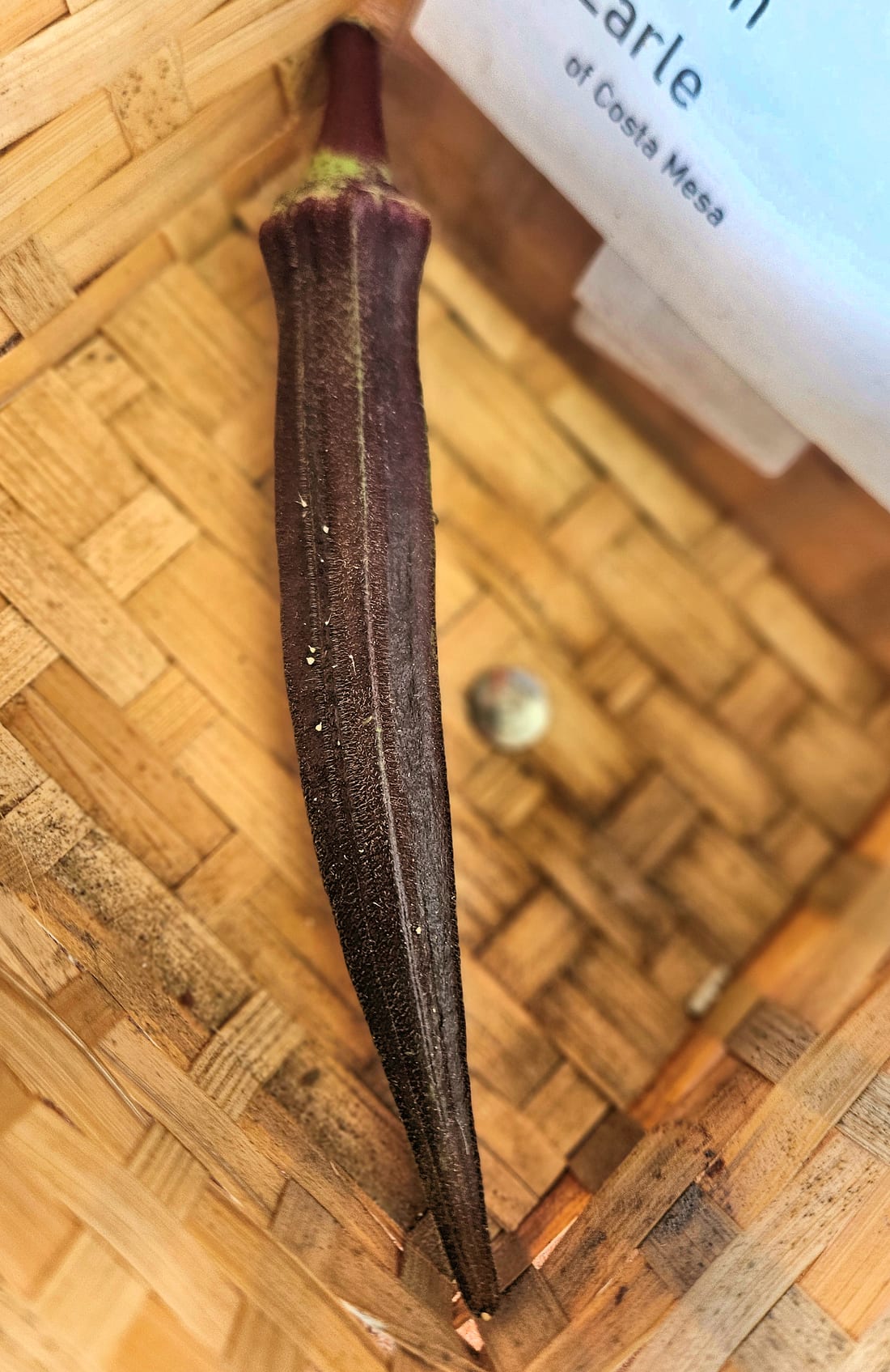
Considered non-toxic to cats and dogs (source: ASPCA (not listed; edible pod)).
A sunny south-facing window with 6+ hours, or a grow light.
Keep evenly moist — water when the top inch of soil is dry.
Needs a little consistency, but nothing fancy.
Okra is a warmth-loving relative of hibiscus grown for its tender immature pods, with attractive flowers as a bonus. It needs real heat and strong light to crop well indoors.
About Okra
Okra (Abelmoschus esculentus) is a warmth-loving relative of hibiscus, grown across Africa, South Asia, and the American South for its tender immature pods. The flowers are a genuine bonus, large and hibiscus-like. Indoors it needs real heat and strong light to crop, plus an 11-litre pot, so it suits a renter with a hot, bright window or a good grow light. It sulks and stalls when conditions turn cool, so the warmest spot you have is the right one.
Okra is moderate to grow given the right warmth, with bright light and steady, medium water. The pods toughen fast, so pick them young at around 5 to 8 cm and harvest every day or two once cropping starts. That keeps new pods coming through a warm season. A first harvest usually arrives around 55 to 65 days from sowing.
What it’s like to grow
Okra is straightforward once it has heat, and most of its problems trace back to cold. In cool or low-light conditions it stalls and sets no pods. The other warning is speed: pods left even a few days too long turn woody and fibrous, so check daily during the peak. Give it the warmest, brightest spot and even watering at the medium level. Non-toxic to cats and dogs, okra is best for a grower with a reliably hot, sunny window and the habit of frequent picking.
What to expect
First harvest in about 55–65 days. It asks for a little consistency, but nothing fancy. No sunny window? It also does fine under a clip-on grow light.
See what you’ll need to get started ↓Companions
Tips
- Give it the warmest, brightest spot you have — it sulks when cool.
- Pick pods young at 5–8 cm; larger pods turn woody fast.
- Harvest every day or two during the peak to keep pods coming.
Common problems
- Tough, fibrous pods from harvesting even a few days late.
- Stalled growth and no pods in cool or low-light conditions.
Common questions
Is Okra toxic to cats and dogs?
Okra is non-toxic to cats and dogs, which makes it a safe pick if you have pets. Source: ASPCA (not listed; edible pod).
How much light does Okra need?
Okra wants bright light — a south-facing window with six or more hours of sun, or a grow light to make up for it.
How often should I water Okra?
Water Okra when the top inch of soil feels dry, then let it drain. Aim for evenly moist, not soggy.
What temperature does Okra need?
Okra is happiest around 21–32 °C. It tolerates brief dips to about 10 °C, but cold drafts and sudden chills set it back.
How long does Okra take to grow?
Expect a first harvest about 55–65 days from sowing under good conditions. A heat-loving plant that, once cropping, produces new pods every couple of days through a warm season.
Can I grow Okra without a sunny window?
Yes. Okra does well under an affordable clip-on grow light, so a bright window isn't essential.
How big does Okra get?
A tall upright plant ~0.6–1 m tall; grow one or two self-fertile plants per pot.
How do I propagate Okra?
Soak then sow seed directly in warm soil; okra strongly dislikes cool conditions.
What pests affect Okra?
Watch for aphids, whiteflies, spider mites and stink bugs. Check new growth and the undersides of leaves often, and treat early with a rinse or insecticidal soap before they spread.
Is Okra easy to grow?
Okra is moderately easy. It asks for some consistency with light and water, but nothing advanced.
Gear for Okra
Gear suggestions to get you started — general picks, not paid placements.
Pet-toxicity from the ASPCA. Care details are general guidance, not professional or veterinary advice; only eat plants you can positively identify as the edible plant and part described. Photo: Eric Polk, CC BY-SA 4.0, via Wikimedia Commons (CC-BY-SA). Care info last updated 2026-06-02.