fruiting
EdibleBell Pepper
Capsicum annuum
Considered non-toxic to cats and dogs (source: ASPCA (culinary Capsicum not listed)).
A sunny south-facing window with 6+ hours, or a grow light.
Keep evenly moist — water when the top inch of soil is dry.
Needs a little consistency, but nothing fancy.
Bell peppers are a rewarding but patient fruiting crop that needs the brightest light you can give and steady warmth. Choose a compact variety and let fruit ripen to red or yellow for the sweetest flavor.
About Bell Pepper
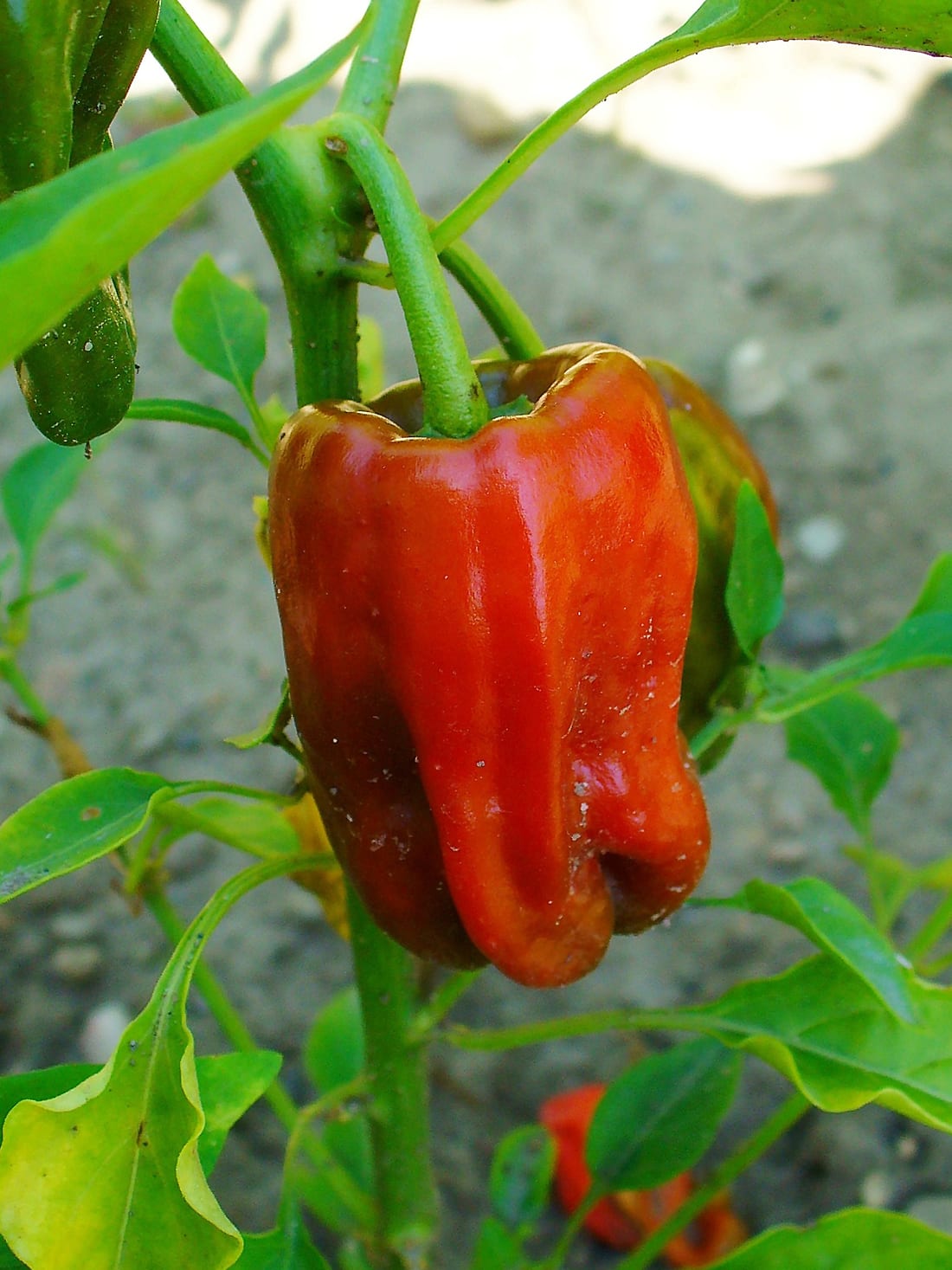
Bell pepper (Capsicum annuum) is a sweet, blocky fruiting plant grown for its crisp pods. The species comes from Central and South America and has been cultivated there for thousands of years. Peppers stay compact enough for a pot, so a single bushy plant of about 0.4 to 0.6 m fits an 11-litre container, and they're self-fertile, so you don't need a second one for fruit. It does take patience: this is a slow crop that ripens over a long season.
The real requirement is light. Bell peppers need the brightest spot you have, ideally six or more hours of sun or a strong grow light, plus steady warmth to set fruit. Keep the watering even, and tap or shake the flowers indoors to help pollination along. Let the pods ripen to red or yellow for the sweetest flavor rather than picking them green. Harvest runs roughly 70 to 100 days from transplant.
What it’s like to grow
Bell pepper is rated moderate mostly because of what it needs to fruit, not day-to-day fuss. The usual disappointment is flowers dropping without setting, which traces to cool temperatures, weak light, or watering that comes and goes. Uneven moisture or low calcium can bring blossom-end rot on the fruit. Keep it warm, bright, and consistently watered and it crops steadily. It's non-toxic to cats and dogs. Best for someone with a properly sunny window or a good grow light who's willing to wait out a long season.
What to expect
First harvest in about 70–100 days. It asks for a little consistency, but nothing fancy. No sunny window? It also does fine under a clip-on grow light.
See what you’ll need to get started ↓Companions
Tips
- Give it the strongest light available — 6+ hours of sun or a good grow light.
- Keep it warm; cool temperatures stall fruit set.
- Tap or gently shake flowers indoors to help them pollinate.
Common problems
- Flower drop in cool temperatures, low light, or erratic watering.
- Blossom-end rot from inconsistent moisture or low calcium.
Common questions
Is Bell Pepper toxic to cats and dogs?
Bell Pepper is non-toxic to cats and dogs, which makes it a safe pick if you have pets. Source: ASPCA (culinary Capsicum not listed).
How much light does Bell Pepper need?
Bell Pepper wants bright light — a south-facing window with six or more hours of sun, or a grow light to make up for it.
How often should I water Bell Pepper?
Water Bell Pepper when the top inch of soil feels dry, then let it drain. Aim for evenly moist, not soggy.
What temperature does Bell Pepper need?
Bell Pepper is happiest around 18–29 °C. It tolerates brief dips to about 10 °C, but cold drafts and sudden chills set it back.
How long does Bell Pepper take to grow?
Expect a first harvest about 70–100 days from sowing under good conditions. A compact plant can ripen a handful of peppers over a long season; fruit set needs strong light and warmth.
Can I grow Bell Pepper without a sunny window?
Yes. Bell Pepper does well under an affordable clip-on grow light, so a bright window isn't essential.
How big does Bell Pepper get?
A bushy plant ~0.4–0.6 m tall and wide; one self-fertile plant per large pot.
How do I propagate Bell Pepper?
Sow seeds in warm soil around 25 to 30 degrees; germination and growth are slow.
What pests affect Bell Pepper?
Watch for aphids, spider mites, whitefly and thrips. Check new growth and the undersides of leaves often, and treat early with a rinse or insecticidal soap before they spread.
Is Bell Pepper easy to grow?
Bell Pepper is moderately easy. It asks for some consistency with light and water, but nothing advanced.
Gear for Bell Pepper
Gear suggestions to get you started — general picks, not paid placements.
Pet-toxicity from the ASPCA. Care details are general guidance, not professional or veterinary advice; only eat plants you can positively identify as the edible plant and part described. Photo: H. Zell, CC BY-SA 3.0, via Wikimedia Commons (CC-BY-SA). Care info last updated 2026-06-02.