leafy green
EdibleKomatsuna (Mustard Spinach)
Brassica rapa var. perviridis
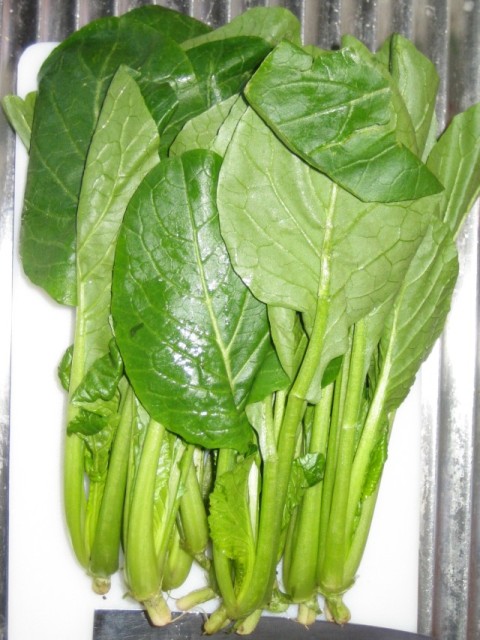
Considered non-toxic to cats and dogs (source: ASPCA (not listed; brassica)).
Some direct sun — an east or west window, or a few hours of direct light.
Keep evenly moist — water when the top inch of soil is dry.
Forgiving and beginner-friendly.
Komatsuna is a fast, forgiving Asian green with a mild flavor between mustard and spinach, usable raw young or cooked when larger. It tolerates a wide range of conditions and is more heat- and cold-tolerant than many greens.
About Komatsuna (Mustard Spinach)
Komatsuna (Brassica rapa var. perviridis), sometimes called mustard spinach, is a fast, forgiving Asian green from Japan with a mild flavour between mustard and spinach. Young leaves are good raw and larger ones cook well. It tolerates a wider range of temperatures than many greens, handling both warmth and cold better, so it is a low-stress crop for a renter sowing in a 4-litre pot under medium light.
It is quick and productive. Sow thickly for a baby-leaf cut, or thin the seedlings and grow plants on to full size, picking the outer leaves continually for a steady supply. Keep it evenly watered and it carries on cropping. It is more relaxed about heat than most brassicas, though it will still bolt eventually in long, hot days. Baby leaves come in about 30 days, with larger plants by around 45.
What it’s like to grow
Komatsuna is one of the easier greens, tolerant of conditions that stall fussier crops. It does eventually bolt in long, hot days, which slows the leaves, and like other brassicas it attracts flea beetles and aphids, so check the undersides if it lives near open windows. It grows happily in medium light with moderate water. This is a forgiving pick for a beginner or anyone with an imperfect window, and it is non-toxic to cats and dogs.
What to expect
First harvest in about 30–45 days. It’s forgiving, so it’s a good one to learn on. No sunny window? It also does fine under a clip-on grow light.
See what you’ll need to get started ↓Companions
Tips
- Pick outer leaves continually for a cut-and-come-again supply.
- Sow thickly for a baby-leaf cut, or thin for full-size plants.
- More forgiving of warmth than most brassicas, but still bolts eventually.
Common problems
- Flea beetles and aphids, like other brassicas.
- Bolting in long, hot days.
Common questions
Is Komatsuna (Mustard Spinach) toxic to cats and dogs?
Komatsuna (Mustard Spinach) is non-toxic to cats and dogs, which makes it a safe pick if you have pets. Source: ASPCA (not listed; brassica).
How much light does Komatsuna (Mustard Spinach) need?
Komatsuna (Mustard Spinach) does best in medium, indirect light: near an east or west window, or a little back from a bright one. Direct midday sun can scorch it.
How often should I water Komatsuna (Mustard Spinach)?
Water Komatsuna (Mustard Spinach) when the top inch of soil feels dry, then let it drain. Aim for evenly moist, not soggy.
What temperature does Komatsuna (Mustard Spinach) need?
Komatsuna (Mustard Spinach) is happiest around 10–24 °C. It tolerates brief dips to about -5 °C, but cold drafts and sudden chills set it back.
How long does Komatsuna (Mustard Spinach) take to grow?
Expect a first harvest about 30–45 days from sowing under good conditions. A fast, productive green with a mild mustard-spinach flavor; harvest as baby leaves in weeks or grow on to full size.
Can I grow Komatsuna (Mustard Spinach) without a sunny window?
Yes. Komatsuna (Mustard Spinach) does well under an affordable clip-on grow light, so a bright window isn't essential.
How big does Komatsuna (Mustard Spinach) get?
An upright leafy green ~0.2–0.3 m tall; sow several and pick as a patch.
How do I propagate Komatsuna (Mustard Spinach)?
Sow seed directly and thin the seedlings; harvest as baby leaves or grow on to full size.
What pests affect Komatsuna (Mustard Spinach)?
Watch for flea beetles, aphids, cabbage loopers and slugs. Check new growth and the undersides of leaves often, and treat early with a rinse or insecticidal soap before they spread.
Is Komatsuna (Mustard Spinach) easy to grow?
Yes. Komatsuna (Mustard Spinach) is forgiving and one of the better plants to learn on.
Gear for Komatsuna (Mustard Spinach)
Gear suggestions to get you started — general picks, not paid placements.
Pet-toxicity from the ASPCA. Care details are general guidance, not professional or veterinary advice; only eat plants you can positively identify as the edible plant and part described. Photo: 日陰猫Joga, CC BY-SA 3.0, via Wikimedia Commons (CC-BY-SA). Care info last updated 2026-06-02.