herb
EdibleSummer Savory
Satureja hortensis
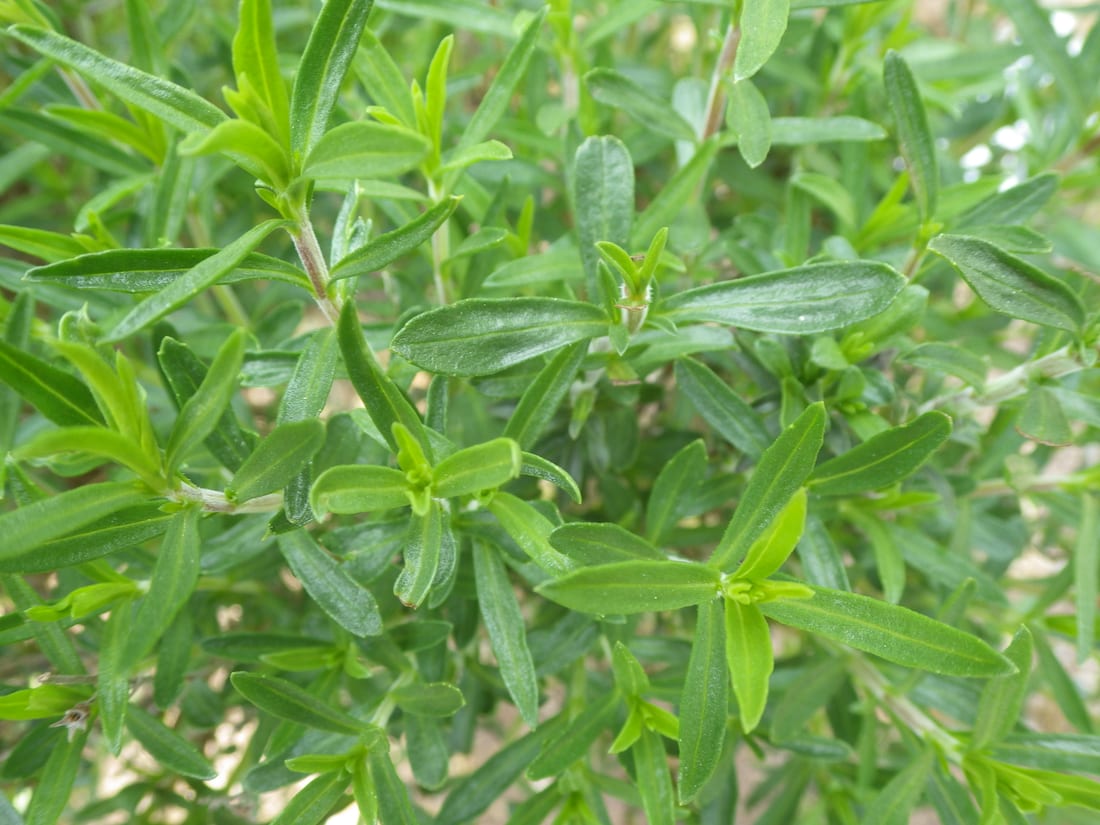
Considered non-toxic to cats and dogs (source: ASPCA (not specifically listed; culinary annual)).
A sunny south-facing window with 6+ hours, or a grow light.
Let the soil dry out between waterings; it dislikes staying wet.
Forgiving and beginner-friendly.
Summer savory is a peppery culinary annual, somewhere between thyme and marjoram in flavor, that is classically cooked with beans. It is undemanding and prefers a sunny spot with lean, well-drained soil.
About Summer Savory
Summer savory (Satureja hortensis) is a Mediterranean annual with a peppery flavour that lands somewhere between thyme and marjoram. It has been cooked with beans for centuries, which is still its classic use. The plant stays wiry and compact at around 30 to 40 cm, so one or a few in a 3-litre pot fit a sunny windowsill without much fuss, making it an easy herb for a small rental.
It likes the same lean, well-drained conditions as other Mediterranean herbs. Let the soil dry slightly between waterings, since it dislikes wet feet, and give it the brightest window you have for the best flavour. Pinching the tips regularly keeps it bushy rather than straggly. It is quick from seed, with usable sprigs ready about 50 to 70 days after sowing.
What it’s like to grow
Summer savory is easy and undemanding once you respect its dislike of soggy soil. Thin, stretched, sparse growth means the light is too weak, while a plant that wilts and collapses at the base is usually root rot from overwatering. Its water needs are low, so err on the dry side and let the top of the soil dry out. A beginner with a bright sill who tends to underwater rather than fuss will do well here. Non-toxic to cats and dogs as a culinary annual.
What to expect
First harvest in about 50–70 days. It’s forgiving, so it’s a good one to learn on. No sunny window? It also does fine under a clip-on grow light.
See what you’ll need to get started ↓Companions
Tips
- Let the soil dry slightly between waterings; it dislikes wet feet.
- Pinch tips regularly to keep growth bushy.
- Give it the brightest window you have for the best flavor.
Common problems
- Leggy, sparse growth in low light.
- Root rot if kept too wet.
Common questions
Is Summer Savory toxic to cats and dogs?
Summer Savory is non-toxic to cats and dogs, which makes it a safe pick if you have pets. Source: ASPCA (not specifically listed; culinary annual).
How much light does Summer Savory need?
Summer Savory wants bright light — a south-facing window with six or more hours of sun, or a grow light to make up for it.
How often should I water Summer Savory?
Water Summer Savory sparingly. Let the soil dry out fully between waterings — it's far more likely to rot from overwatering than to suffer from neglect.
What temperature does Summer Savory need?
Summer Savory is happiest around 16–27 °C. It tolerates brief dips to about 4 °C, but cold drafts and sudden chills set it back.
How long does Summer Savory take to grow?
Expect a first harvest about 50–70 days from sowing under good conditions. A compact annual that gives steady sprigs of a peppery, thyme-like herb traditionally paired with beans.
Can I grow Summer Savory without a sunny window?
Yes. Summer Savory does well under an affordable clip-on grow light, so a bright window isn't essential.
How big does Summer Savory get?
A wiry upright herb ~0.3–0.4 m tall; grow one or a few plants per pot.
How do I propagate Summer Savory?
Sow seed shallowly on warm moist mix and thin the seedlings once they emerge.
What pests affect Summer Savory?
Watch for aphids and spider mites. Check new growth and the undersides of leaves often, and treat early with a rinse or insecticidal soap before they spread.
Is Summer Savory easy to grow?
Yes. Summer Savory is forgiving and one of the better plants to learn on.
Gear for Summer Savory
Gear suggestions to get you started — general picks, not paid placements.
Pet-toxicity from the ASPCA. Care details are general guidance, not professional or veterinary advice; only eat plants you can positively identify as the edible plant and part described. Photo: Schlaghecken Josef, CC BY-SA 4.0, via Wikimedia Commons (CC-BY-SA). Care info last updated 2026-06-02.